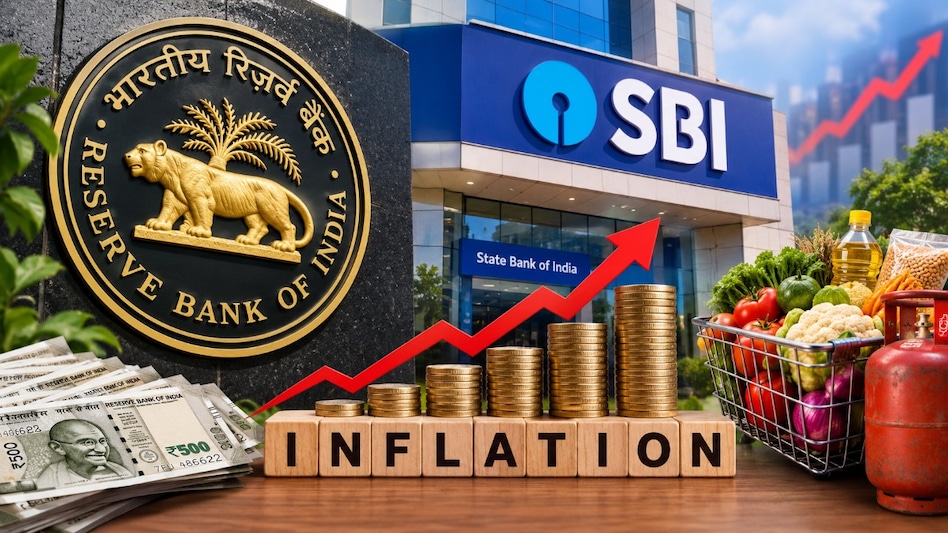
Data on retail and wholesale inflation has drawn attention as it directly affects consumers' monthly installments (EMIs). Before delving into the mechanism of this influence, it is important to understand the scale of current inflationary pressure.
In August, retail inflation reached 4.82%, the highest figure in eight months, compared to 4.45% in July. The rise in food prices, such as onions, garlic, and ginger, has increased the financial burden on ordinary citizens. Furthermore, wholesale inflation also rose to 9.92% in August.
Rising inflation could potentially impact the size of monthly payments in the coming months. This is based on a new report from SBI Research, which recommends that the Reserve Bank of India (RBI) make two hikes of 25 basis points each in October and December. However, the RBI has not yet decided on a repo rate hike; it currently remains stable at 5.25%, and the RBI did not change it for the fourth time at the August meeting.
Nevertheless, according to SBI Research, rising crude oil prices, external shocks, and inflation risks may necessitate an increase in interest rates.
International crude oil prices recently exceeded $100 per barrel. One SBI Research model forecasts that the price of crude oil could reach $123 per barrel within the next 15 days, although the report classifies this as a stress scenario rather than a normal forecast. Another model suggests that the average price of crude oil over the next 15 days will be $105 per barrel. The increase in crude oil prices affects not only gasoline and diesel; it increases transportation and production costs for companies, which can subsequently be reflected in the prices of various goods and services. In August, fuel and energy inflation in wholesale inflation reached 22.93%.
SBI Research analysis also indicates signs of inflationary pressure spreading to more sectors. The number of goods covering 90% of the weighted contribution to the CPI increased from 22 in January 2026 to 53 in July. According to the report, sectors such as crude oil and natural gas, beverages, pharmaceuticals, and electronics are showing faster growth in input costs compared to output prices. Under these conditions, there is increasing pressure on companies to pass on some of the increased costs to consumers.
Now let's look at the factor that will directly affect the consumer's wallet. If the RBI raises the rate by 25-25 basis points in October and December, the total increase in the repo rate will be 50 basis points, or half a percent. This will have a particular impact on floating-rate loans. For example, for a home loan of 50 lakh for 20 years with a current interest rate of 8.25%, the monthly payment is about 42,603 rupees. If the bank fully passes on the 50 basis point increase to the customer, the interest rate could rise to 8.75%, leading to an increase in EMI to approximately 44,186 rupees. Thus, an additional payment of about 1,583 rupees will be required monthly, amounting to about 19 thousand rupees over a year. However, the actual impact will depend on how much the bank raises the interest rate and what your loan refinancing policy is.
A repo rate hike can benefit customers who place funds in Fixed Deposits (FDs). If banks raise interest rates, new customers opening FDs may get the opportunity to lock in their funds at a higher interest rate compared to previous terms. That is, while borrowers face pressure from rising interest rates, new depositors can expect higher returns.
Currently, all attention is focused on the next MPC meeting of the RBI. It is scheduled for October 5 to 7. It is at this meeting that the RBI will make its next decision on interest rates, considering inflation, crude oil prices, and the overall state of the economy. This means that in the near future, inflation indicators will be important not only for the market and the government but also for people's pockets, as well as for the EMI amount on home loans and FD returns.