
Central employees demand to reduce the salary and pension review cycle from 10 to 5 years within the framework of the 8th departmental commission council
Read more
Aaj Tak
www.aajtak.in

Central employees demand to reduce the salary and pension review cycle from 10 to 5 years within the framework of the 8th departmental commission council

Central civil servants expect about ten years before another review of their salaries will take place. Now that the 8th departmental commission council has been formed and is consulting with unions of employees and pensioners in various cities, an important demand has been put forward.

The main claim is that the review cycle for state employees' salaries and pensions should be every five years, not every ten. This would allow employees to avoid waiting a whole decade for the next salary and pension review.

This demand goes beyond a simple pay raise. If the salary review period is shorter, the wage structure can be adjusted more regularly in line with inflation, economic conditions, and changing employee needs. It is important to understand the current system, the reasons for the five-year review demand, and the potential impact on employees and pensioners.

Currently, changes in the salary structure of central civil servants occur approximately every ten years. It was within this system that the 7th departmental commission council was introduced in 2016, and now the 8th departmental commission council is working. This means that after a major salary review, employees have to wait a long time for the next update.

The demand to reduce this period from ten to five years is now presented to the 8th departmental commission council. If the review cycle is shortened to five years, it will lead to a more frequent review of the employees' salary structure. For example, if a major change in the salary structure is introduced in 2026, under a five-year regime, the next review could take place around 2031, whereas under the current ten-year cycle, one would have to wait until 2036.

However, this does not guarantee that the salary will increase by a certain percentage every five years; it will depend on the government's recommendations and the relevant departmental commission council.

Since inflation, rent, children's education costs, healthcare, and daily necessities change rapidly in the long term, long intervals between salary reviews can negatively affect workers' real income. With a five-year cycle, the review of the salary structure can happen relatively faster, allowing for the consideration of changing economic conditions when setting wages. This is why employee unions insist on greater regularity of salary reviews.

Furthermore, this demand also affects pensioners. The recommendations of the departmental commission council also concern pensions. If the salary review cycle is reduced from ten to five years, it may also affect the system of changes related to pensions. However, the exact nature and degree of changes in pensions will depend on future government and commission recommendations.

The 8th departmental commission council has been formed and is collecting proposals from employees, pensioners, and their organizations. During meetings and discussions held in different cities, opinions are gathered on issues related to salaries, allowances, pensions, and service conditions. Among such proposals are demands to shorten the salary review period. Thus, at the moment, this demand is at the level of proposals and discussions, and a decision on its implementation has not yet been made.

No, it is important to understand that presenting the demand to the 8th departmental commission council does not mean it has been adopted. The commission will review proposals from various employee and pensioner unions and then present its recommendations. After that, the government will make a decision on these recommendations. Therefore, at the moment, the five-year salary review should be considered a key demand, not an approved rule.

Similar stories

Eighth Pay Commission Council: Salary Hike of ₹51,000 Conditional on Government Acceptance of Demands
Read more
www.aajtak.in

Eighth Pay Commission Council: Salary Hike of ₹51,000 Conditional on Government Acceptance of Demands

The meetings of the Eighth Pay Commission (8th Pay Commission) are ongoing. Following sessions held in Chennai-Puducherry, meetings will take place in Chandigarh from September 16 to 18. Among the most significant demands voiced in Chennai is raising the Fitment Factor to the level of 3.83.

The demand for increasing the Fitment Factor is central to discussions with unions of central government employees and other stakeholders. If the government under N. Modi accepts this demand, over 50 million central employees will receive a substantial salary increase. Upon acceptance of this requirement, the minimum salary for Level-1 employees will increase by approximately ₹51,000, positively impacting employees across various pay scales. Furthermore, this will benefit around 69 million pensioners.

This demand was put forward in Chennai by the All India Union of Pensioners. However, it is not the only union insisting on a high fitment factor; the National Council of Joint Consultative Mechanisms (NC-JCM), the All India Defence Employees Federation (AIDEF), and the All India Union of New Pension System Employees have also proposed a fitment factor of 3.833. If this demand is met, there will be a significant rise in salaries for all central employees from Level-1 to Level-10.

The minimum basic salary for Level-1 will reach approximately ₹69,000. In addition to the fitment factor, demands are being made regarding pay matrices, Dearness Allowance (DA), House Rent Allowance (HRA), and other benefits and allowances. Nevertheless, the final official decision is yet to be made.

Since the final report of the Eighth Pay Commission Committee, chaired by Justice Ranjana Prakash Desai, is planned to be submitted in May-June 2027, no decision has been reached yet.

The fitment factor that is being demanded to be increased is an indicator used by the Pay Commission to convert the previously adjusted basic salary of an employee or retired pensioner into a new adjusted basic salary. The calculation is done using the formula: (current basic salary x fitment factor = new basic salary). Under the Seventh Pay Commission, the fitment factor was 2.57, which led to an increase in the minimum basic salary from ₹7,000 to ₹18,000. Now, the Eighth Pay Commission demands it be set at 3.833, which is 1.26 higher.

Regarding the fitment factor formula, it is 'new basic salary: current basic salary x FF'. Currently, the fitment factor for central employees is 2.57, according to the Seventh Pay Commission, which caused the minimum basic salary to rise from ₹7,000 to ₹18,000. If it is raised to 3.83, the minimum basic rate will be ₹68,940 (₹18,000 x 3.83). This means a direct increase in the minimum salary for employees of ₹50,940.

If we consider the salary hike for Levels 2 to 10, the basic salary of a Level-2 employee of ₹19,900 will rise to ₹76,217, and for Level-3—from ₹21,700 to ₹83,111. Further, the minimum salary for a Level-4 employee will increase from ₹25,500 to ₹97,665, for Level-5—from ₹29,200 to ₹1,11,836, for Level-6—from ₹35,400 to ₹1,35,582, and for a Level-10 employee—from ₹56,100 to ₹1,14,863.

Thanks to this increase in the fitment factor, in addition to 50.14 million government employees receiving a salary hike, about 69 million pensioners will also see an increase in their pension. At a factor of 3.833, if the government approves it, a monthly pension of ₹25,000 will rise to ₹95,750.

SSC releases notification of vacancies for government positions for 12th-grade graduates with salary up to 92,000 rupees
Read more
www.aajtak.in

SSC releases notification of vacancies for government positions for 12th-grade graduates with salary up to 92,000 rupees

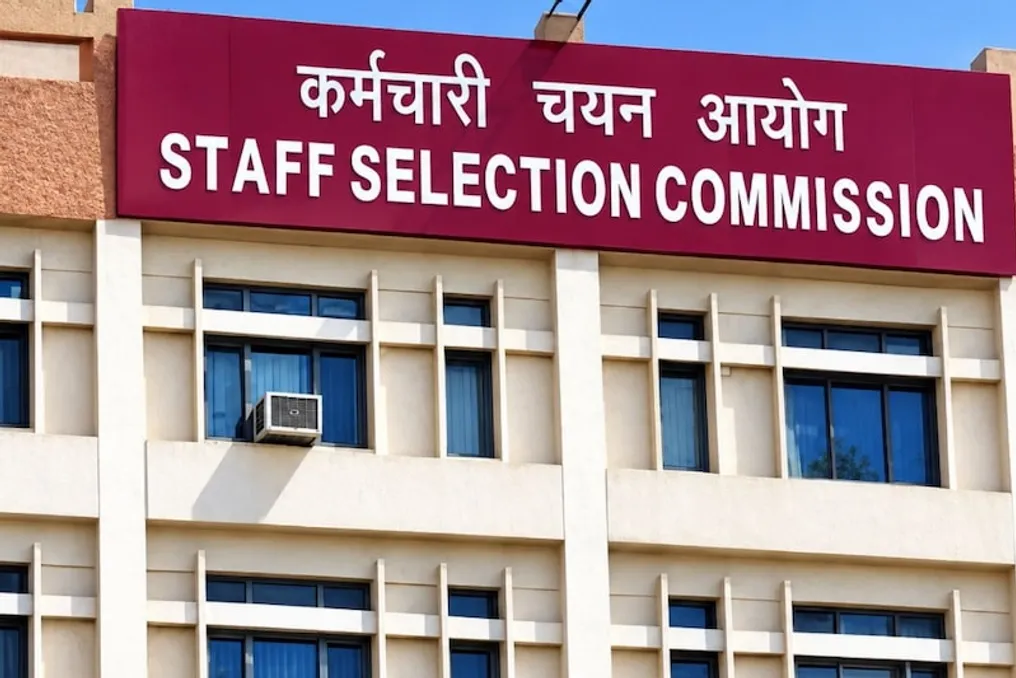
The Staff Selection Commission (SSC) has published a notification regarding recruitment for positions under the Combined Higher Secondary Level (CHSL) program, and the application process has begun. This presents an excellent opportunity for candidates who have long been preparing for civil service, as 12th-grade graduates can apply for these posts.

The total number of vacancies is 2,536. It should be noted that SSC has made several changes to the recruitment procedure. First, let's look at the details of the application process.

Applications for these positions opened on September 7 and will remain open until October 7. The deadline for fee payment is set for October 8. 12th-grade graduates are eligible to apply for these positions. However, mandatory subject requirements have been set for some posts. For instance, data entry operator positions in SSC, as well as in the Ministry of Culture and the Ministry of Consumer Affairs, Food and Public Distribution, require completion of 12th grade with a science stream including mathematics.

Regarding the age for these positions, candidates aged between 18 and 27 years are eligible. Age calculation will be based on August 1, 2026. Furthermore, candidates from reserved categories will be granted a discount of 3 to 5 years according to their category.

Since recruitment is being conducted for multiple positions, the salary will vary depending on the specific post. Nevertheless, the monthly salary can range from 19,900 to 92,300 rupees. The selection process will be based on a written examination, requiring candidates to participate in Tier-1 and Tier-2 exams. Additionally, candidates who pass into the merit list will be appointed after document verification.

Popular