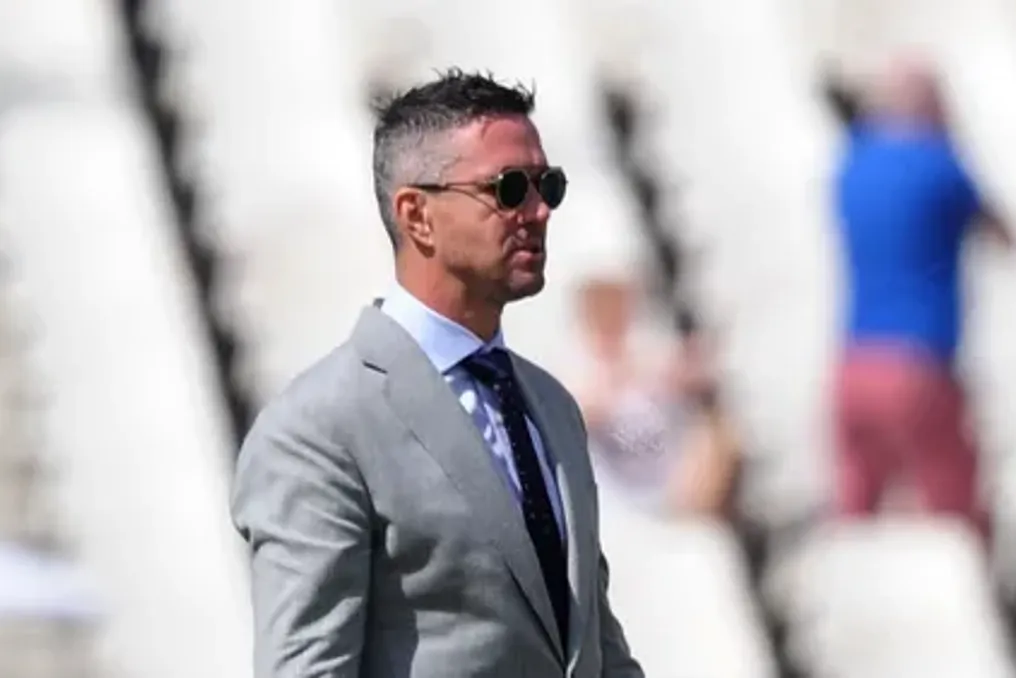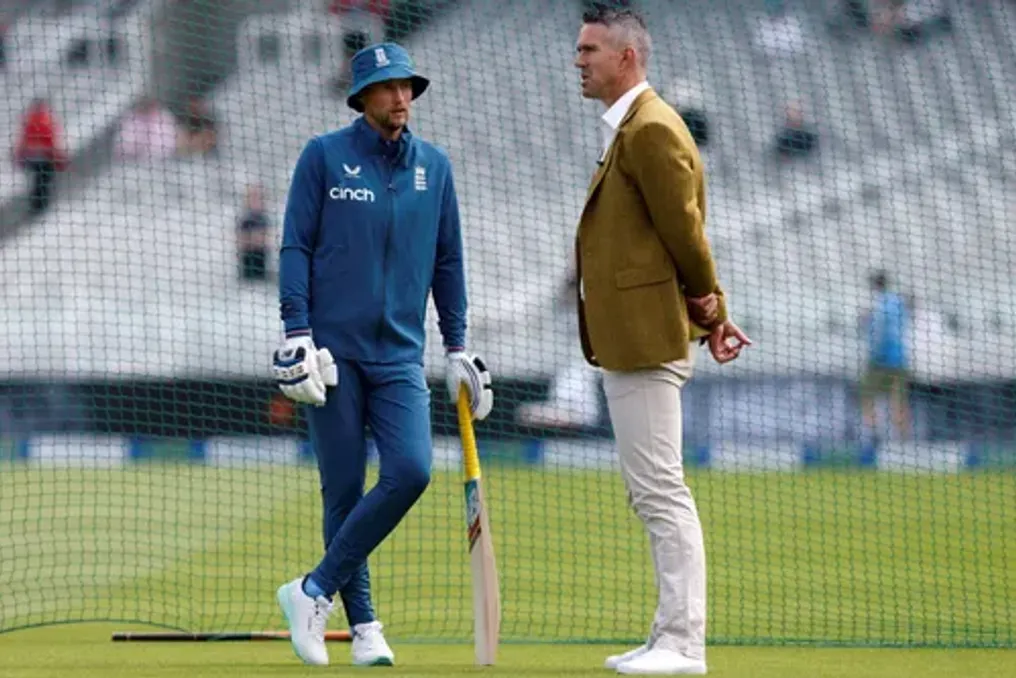
The invitation for Kevin Pietersen to rejoin the England team has presented a significant test for manager Brendan McCullum. Welcoming the new staff member, Brendan McCullum used reserved phrasing: 'For a person with such experience, knowledge, and status, who wants to play in this team, that is a fantastic result.' However, this decision appears surprising given past events.
Kevin Pietersen, whom the England and Wales Cricket Board (ECB) tried to exclude for a decade, has returned to the England shirt as a specialist mentor for white-ball cricket. His task is to prepare the team for the 2027 World Cup, which will be held in South Africa, Zimbabwe, and Namibia.
Pietersen himself avoided the usual sharpness that characterized him after retiring in his appointment statement: 'To wear the England shirt again for the first time since 2014 is a deep honour and a very special moment.' These words are particularly valuable considering he spent ten years actively using social media and speaking out about the leadership of English cricket.
To understand the full irony of the situation, one must recall how severely relations deteriorated. It was the ECB, not any franchises or teams from South Africa or Hampshire, that first stripped Pietersen of the England captaincy in January 2009. This happened just a few months after he received the position, following his attempt to remove coach Peter Moore failing.
Three years later, the 'Textgate' scandal occurred: Pietersen exchanged messages criticizing the then-captain Andrew Strauss with Proteas players during a Test series. This scandal was serious enough to lead to his exclusion, followed by a cautious return after both men publicly 'reconciled.' Pietersen claimed it was 'joking banter between friends' and admitted that 'I sometimes need to restrain myself.'
However, this reconciliation did not last. In February 2014, after England's humiliating 0-5 defeat in the Ashes in Australia—a series where Pietersen was the leading run-scorer—the ECB finally excluded him, citing the need to restore 'team spirit and philosophy.'
Pietersen's subsequent autobiography was directed against Matt Prior, Andy Flower, and Alastair Cook, naming them specifically. When he attempted to return in 2015, scoring many runs for Surrey, Andrew Strauss, then ECB cricket director, permanently closed the door on him, citing a 'serious trust issue.'
Michael Vaughan long argued that Pietersen had become a 'scapegoat' of the board; others, including Graham Gooch, expressed the opposite view, warning that his return would be a mistake.
After retirement, he did not soften. As a Sky Sports pundit and one of the most popular voices on social media, Pietersen built a second career, primarily voicing what players and coaches could not say. He criticized the internal structure of England, ECB management, selection choices, and the schedule of The Hundred tournament.
Just last year, he publicly criticized England's training methods under McCullum during the tour of India. Pietersen stated on X: 'I am sorry, but I am completely astonished that England had NOT had a single team practice after losing the first ODI and the T20 series.' He added: 'Losing is normal if you are doing everything possible to improve every day, but if England didn't train during this series, it means they weren't trying. It breaks my heart for any England fan!'
This is not a man who has calmed down and become diplomatic. He has simply changed platforms to criticize the board. This makes McCullum's willingness to accept him much more interesting.
Joe Archer's reaction—'he is a legend of the game, it will be great to have him in the group'—perfectly reflects the positive side: few players of his generation combine technical skill with the pure determination Pietersen showed at the crease, and the mentoring role, focused on batting development, directly aligns with this strong quality.
McCullum also publicly responded to Pietersen's comments last year. The New Zealander told BBC Sport: 'We talked about these [Pietersen's comments] early on.' He noted: 'He said: 'um, I was just criticizing you recently.' I replied: 'I don't care. Part of it is fair, and part requires explanation, but I have no problem with that.' I said: 'It's great when you create an environment where you can challenge.' That's one thing I want him to do. It's not just about batting, but looking at the whole environment, looking at how we manage things and what we do, and if you notice something, come and challenge me on it.'
There is also an obvious tactical reason for this appointment: since the next World Cup will be held in South Africa, having a voice born in South Africa and familiar with the franchises, who knows the conditions, the pitch, and many players within the SA20, is important.
However, institutions remember for a long time, and the ECB's history with Pietersen is not a series of misunderstandings, but a pattern. Every previous reconciliation, starting from the 'reconciliation' press conference in 2012, ultimately collapsed under the weight of the same core tension: Pietersen's conviction that he is usually the smartest person in the dressing room, and the corporate culture of the board, which rarely tolerated this confidence for long.
McCullum, one must give him credit, created a white-ball environment free enough to withstand Pietersen's external criticism; the real test is whether it will withstand him internally when the romantic quotes fade and the pressure of the World Cup intensifies.
For now, England has brought back its prodigal son. Whether this looks like a reconciliation or just another chapter in a very protracted dispute depends entirely on 'KP.'