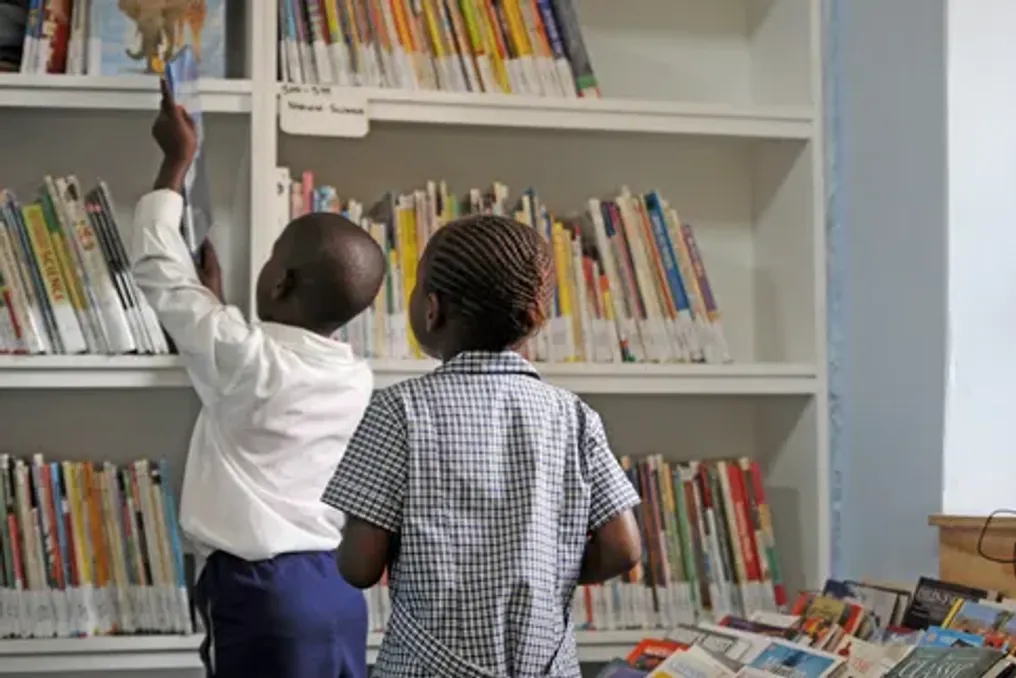
The reading crisis in South Africa most acutely affects children from poor and rural communities, as many of them lack books, educational materials, and the necessary support to develop strong reading skills.
According to the latest data from the Funda Uphumelele Foundation, only 31% of first-grade students, 33% of second-grade students, and 31% of third-grade students reached the national level in reading in their home language. By the third grade, 15% of tested pupils could not read a single word.
This survey, conducted in 2025 with approximately 28,000 students across 710 schools, was the first nationwide assessment of basic reading skills in all 11 official languages. It also revealed sharp inequalities related to language, province, and socioeconomic status, with children from more affluent schools more frequently achieving established standards.
The Seriti Institute stated that these figures reflect observations made by its teams in homes and communities as part of the aRe Bapaleng program, which worked with over 135,000 parents and guardians across all nine provinces.
Program coordinator Nkhlofiseng Mazisa noted that families in deep rural areas often face limited access to resources that could support their children's learning and reading. She emphasized that one of the main obstacles is the lack of access to books and other age-appropriate reading materials.
Mazisa reported that many families did not have books at home, and some communities lacked libraries where parents and children could access print or digital resources. Furthermore, parents who work far from home often do not have time to help children with homework and reading. Nevertheless, she urged against blaming parents for a problem they cannot solve alone.
In her view, families can integrate reading into daily life through simple activities such as shared storytelling, discussing pictures, asking questions to children, and allowing them to choose books they enjoy. Mazisa particularly stressed: 'Most importantly, parents and guardians should understand that they are not obliged to be teachers.'
She also pointed to the need for practical assistance to families, including access to age-appropriate books, simple home activities, and guidance on how to make reading enjoyable even with limited time. Mazisa added that classroom practices must also be improved by providing teachers with practical support, quality teaching materials, and continuous training.
She insisted on placing greater emphasis on phonemic awareness, phonics, vocabulary, reading comprehension, fluency, and reading for meaning, as well as early identification of struggling students.
As part of the aRe Bapaleng program, National Youth Service team leader Motushi Jacob Moatse visited about 30 households in Biesisvlei in the North West region and provided support to students from kindergarten to Grade 3 at Zoohuis Primary School. Moatse reported encountering children who struggled with basic literacy, including those who could not confidently write their own names. He noted that support and regular practice helped them improve.
Education expert Professor Mary Metcalf warned that South Africa cannot afford to wait until children reach higher grades to address reading problems. Metcalf wrote in June 2025 that children who do not read for meaning by Grade 4 fall further and further behind, given that the curriculum increasingly requires students to read independently across all subjects.
She strongly recommended that investments in literacy at the primary education stage become a national priority requiring evidence-based planning and resources to bridge gaps before children fall too far behind.
The government has an existing strategy for improving literacy in classrooms and at home. The National Reading and Literacy Strategy for 2024–2030 aims to improve reading and text comprehension in junior grades, and the government is also developing benchmarks for the early identification of struggling students. The strategy emphasizes literacy in the home language and monitors its implementation at the district level.
In March 2026, Minister of Basic Education Sivive Gwarube told parliament that the strategy focuses on reading for meaning, strengthening literacy in African languages and in a bilingual environment, improving access to quality reading materials, supporting teachers through professional development and classroom mentorship, and involving parents and guardians in reading at home and school.
However, in June 2026, the Parliamentary Portfolio Committee on Basic Education expressed concern that too many children are leaving primary school without being able to read for meaning. The committee demanded urgent and coordinated intervention measures, including enhanced teacher training, quality teaching materials, teacher coaching, and classroom support.