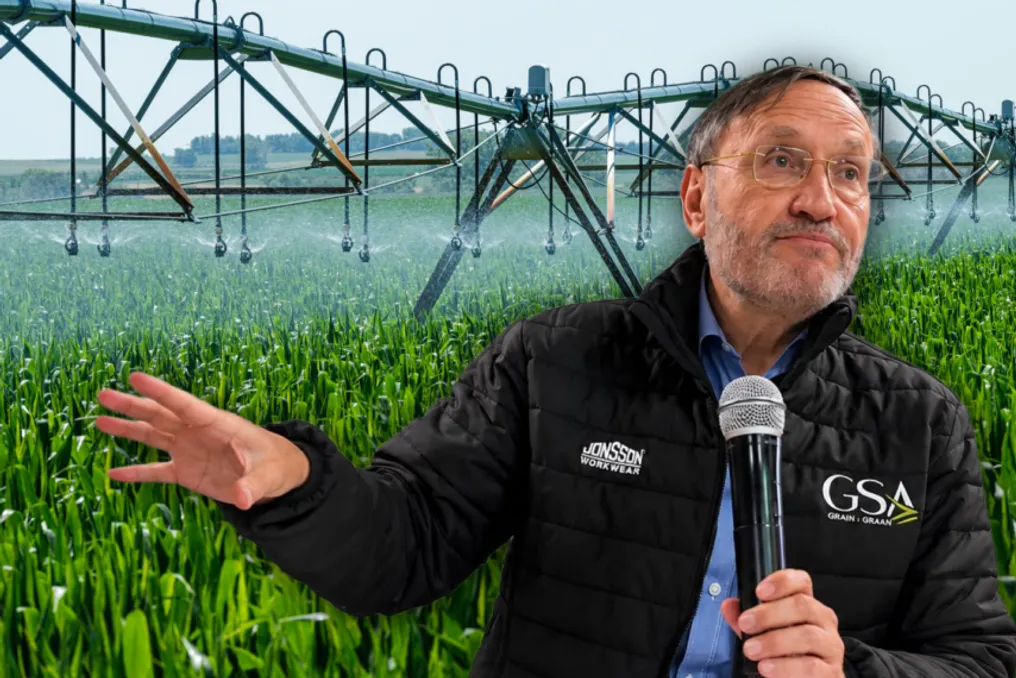
In South Africa's agricultural sector, rising resource costs and the persistent issue of water scarcity remain significant obstacles to commercial viability, especially for small and resource-limited producers. To address these challenges, innovative solutions within the circular economy must be sought, moving beyond traditional resource sources.
The Deputy Minister of Water Resources and Sanitation, Dr. Jack Bloom, who took office just over two months ago, emphasized the urgent need for a fundamental shift in the country's approach to municipal waste. Instead of viewing sanitation as a perpetual municipal expense, Bloom advocates for a functional sanitation economy that safely converts wastewater and fecal sludge into high-value agricultural components, including organic fertilizers and irrigation water.
When asked about mechanisms for holding municipalities accountable for faulty infrastructure and poor service quality, Dr. Jack Bloom stated that amendments allowing officials to face personal liability are being considered in parliament. Currently, only fines and similar measures are possible, but without personal accountability, it will be impossible to truly demand fulfillment of duties, as municipal productivity is a weak link in the chain.
Pilot testing of decentralized sanitation waste treatment is currently underway in South Africa. Regarding the timeline for the first full-scale fecal sludge treatment plant, it is expected that public-private partnerships will accelerate this process. Dr. Bloom noted that specialized sludge treatment plants are already operational in other African countries, such as Kenya, making the domestic lag seem strange to him. He expressed a desire to stimulate such projects through active collaboration.
Although private sector projects for sludge treatment are already underway, they require significant expansion. The Water Partnerships Office can facilitate this development, and he anticipates these projects will launch quickly as suitable partners are identified.
Confirming that safely treated sewage can become a reliable and low-cost source of fertilizer for smallholder farmers, Dr. Bloom stated that pilot projects have already demonstrated the complete absence of E. coli bacteria in properly processed products, which are within safe working limits. This approach needs to be scaled up because South Africa currently imports the vast majority of its fertilizers. When global prices surge or geopolitical conflicts arise, our farmers become vulnerable. There is real economic value contained in this waste, and all scientific tests confirm the safety and high efficacy of these recovered products for agricultural use.
Furthermore, the potential of using treated wastewater as a greater source of irrigation water for farmers, especially in water-scarce areas, is considerable. Treated wastewater provides a stable and reliable water supply near suburban areas and small towns. Pilot tests confirm that when strict scientific standards are met, the treated water meets safe limits for agricultural application.
Utilizing this local resource simultaneously solves two major problems for small producers: reducing soil nutrient costs and ensuring a consistent supply of irrigation water in regions with limited traditional water distribution.
Dr. Bloom explained that this is precisely where new partnerships and pilot projects are being sought. Many small towns are facing economic difficulties due to population migration to large metropolises in search of growth. Decentralizing sanitation treatment closer to where waste is generated and agricultural inputs are consumed allows for the expansion of the rural economy and the creation of real local jobs. Farmers and local cooperatives can participate directly in the entire value chain—from collection and treatment to composting, biogas generation, and distribution. He called on interested parties to contact him directly to determine locations for pilot projects and advance these partnerships.