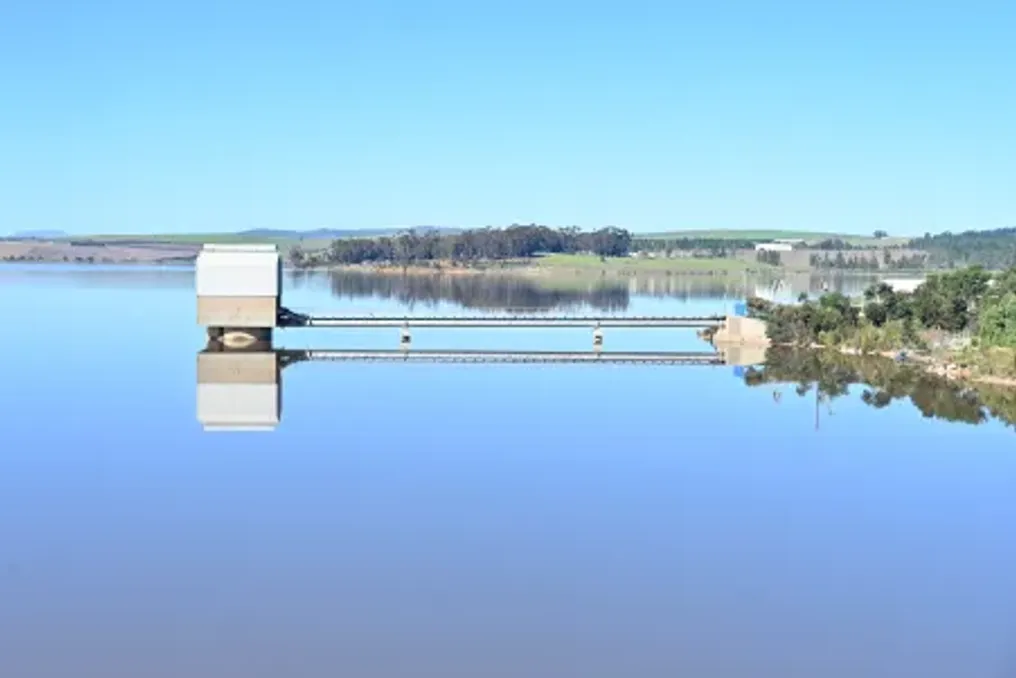
The city of Cape Town is studying the possibility of introducing measures to restrict water consumption amid the decline in reservoir levels to 75.4%. As part of a multilateral water conservation plan implemented by municipal services and infrastructure, steps are being taken ranging from pipe replacement and leak detection to prioritizing the repair timelines for pipe bursts.
These actions are taking place against the backdrop of a forecast for a drier and hotter summer. Zahid Badroodien, a member of the Mayor's committee on water and sanitation, noted that the City is applying a responsible and balanced approach to managing Cape Town's water resources.
Badroodien stated that although the current Water Forecast does not indicate an immediate threat to water supply, authorities are closely monitoring reservoir levels, precipitation patterns, and water demand to be prepared for various scenarios.
According to City data, reservoir levels last week were at 75.5%, significantly lower than the 92.4% recorded a year ago. Daily water consumption reaches 855 million liters. Data published on September 15, 2026, showed that Berg River Dam was filled to 91.5%, Steenbras Lower to 48.5%, Steenbras Upper to 85.2%, Tywaartskloof to 76.5%, Welwley to 58.5%, and Wemmershoek to 88.5%.
Although the latest Water Forecast for 2026 does not signal an immediate danger to water supply, the risk of imposing restrictions has increased compared to previous years, especially if demand rises and rainfall is lower than expected.
The City's Water Restrictions Committee holds regular meetings as part of a responsible and proactive approach to managing Cape Town's water resources. The committee's main task is to assess water availability, track consumption trends, analyze the effectiveness of water-saving measures, and consider additional actions to reduce demand.
The City emphasized that stored water must meet needs until the next winter. The Water Restrictions Committee has the authority to decide on imposing restrictions based on its own assessment. Various factors are currently being considered, including reservoir levels, current and projected water demand, peak usage trends in summer, and rainfall forecasts for both the current and next year.
Nevertheless, Badroodien reported that the City has invested in key projects to reduce water losses. 88.7 km of water pipes have been replaced, 1069 leaks repaired, and 25,625 connection leaks fixed. These measures have saved over 8 million liters of water daily. Furthermore, through the cleaning and control of invasive alien species, about 54 million liters of water are recovered daily.
A wider range of residents, businesses, and municipal departments now use treated wastewater for non-potable purposes such as irrigation and industrial needs. The City notes that the use of treated wastewater has resulted in an average saving of 7.4% of water supply monthly between July 2025 and June 2026.
Badroodien reminded that sensible water consumption must remain part of daily habits in the water-scarce city. He stressed that joint efforts and maintaining a stable, responsible approach will help conserve water resources for the coming months.
Meanwhile, the City has called on businesses and organizations to intensify their efforts to save water and use every drop as efficiently as possible. Badroodien noted that every sector plays a role in reducing unnecessary water consumption, as the coming months are expected to bring more challenging conditions.
He added that while the City continues to invest in new and alternative water sources and strengthening water infrastructure, businesses can contribute by improving efficiency, reducing reliance on potable water, and using alternative sources where appropriate.
The City has a 'Water Star Rising Awards' program that recognizes organizations for their commitment to responsible water management. Badroodien recently visited and congratulated a car wash in Somerset West for receiving a Water Star rating for transforming its operations by incorporating collected rainwater into washing processes. This program evaluates organizations based on water supply, usage, conservation, and discharge metrics.
Badroodien concluded that while the City invests in new water sources, more reliable infrastructure, and better system management, becoming a truly water-saving city also requires a more careful attitude towards high-quality drinking water. He added that if businesses can reduce demand, increase efficiency, or safely replace municipal drinking water with suitable alternative sources, it will strengthen the resilience of the entire city, as water supply needs diversification while simultaneously reducing unnecessary demand.