Refugees leave Durban after four months of uncertainty
Read more
IOL
iol.co.za

Refugees leave Durban after four months of uncertainty

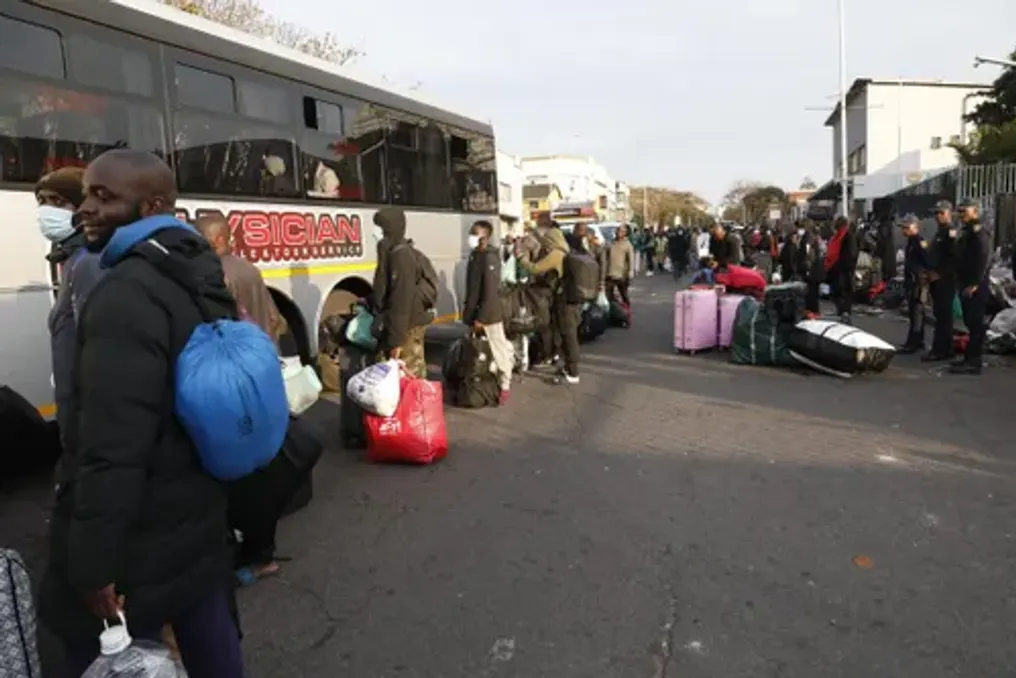
After four months staying near the Department of Internal Affairs Refugee Reception Centre on Che Guevara Street in Durban, displaced refugees have begun the resettlement process thanks to the intervention of the government and humanitarian organizations.

It is reported that at least 274 people were transported by bus to the Lindela Repatriation Centre in Krugersdorp, Gauteng province. Meanwhile, about 150 people preferred to remain in Durban, temporarily moving to Bulwer Park for housing and reintegration support.

For four months, refugees from countries such as the Democratic Republic of Congo (DRC), Burundi, and Ghana lived on sidewalks in front of the reception centre after fleeing war in their home countries and alleged attacks and robberies in South Africa.

Despite official confirmation that almost all had valid documents for staying in the country, they were rejected at the Durban police station, exposing them to the risk of harsh weather, diseases, unemployment, and lack of access to healthcare and education.

At five o'clock in the morning the day before, the Department of Internal Affairs, acting on the instruction of the Interdepartmental Migration Committee (IMC), began the resettlement process for this group. The IMC offered two options: return to local communities or move to Lindela. Ndileka Kola, Head of Public Relations for Home Affairs, stated that the government would continue consultations with the United Nations High Commissioner for Refugees (UNHCR) regarding possible resettlement in a third country.

Kirill Mnthwabe, Manager of Home Affairs for KwaZulu-Natal province, reported that five buses were allocated to transport 282 people from the database, but by Monday, this figure dropped to 278, as one mother had to stay with a sick child who could not travel. Two others were excluded due to a recent clash with demonstrators, leading to their arrest and trial.

He specified: 'I was informed that out of 278 people, four decided to opt out of the process.' He added that 274 people boarded buses and headed to Lindela. Mnthwabe emphasized that reintegration does not necessarily mean returning to where the people fled; it means finding a place where peace and safety prevail.

Catherine Aylott, founder of Durban Cares, coordinated the movement of approximately 150 refugees who chose to stay in Bulwer Park. She explained that this relocation was necessary to confirm numbers, implement a transportation plan for women and children to the shelter, and begin implementing a placement plan for men.

Aylott noted: 'With a much smaller number, it is easier to temporarily house people. My priority now is to allow the City to do its job. Let them clear the area. We will have lunch, gather, and then disperse.' She also reported that they are dealing with unique individual cases, and a short pause will allow them to address personal needs, whether it be self-return home, travel to Lindela, or assistance with reintegration into new communities.

Holani Zuma, Executive Director of SA First Forum, had previously demanded a seven-day period from the eThekwini municipality to vacate the area due to violations of sanitation and public order rules. Zuma stated: 'We are pleased that what we see today matches what we asked the government to do,' adding that they do not oppose legal foreigners and refugees.

Princess Agee from Ghana recalled the severe impact the last few months have had on vulnerable individuals, including cases of illness and death. She said from the bus: 'Everyone going to Lindela did so based on two options offered by the government. Those who remain must reintegrate into the local community.'

Antoine Cassaka, a DRC citizen and permanent resident, recounted that he moved from Pietermaritzburg to Durban seeking help after his landlord evicted him. Mukulu Yohane, a self-employed artisan from South Kivu, DRC, declined Lindela due to its status as a repatriation centre, fearing a return to the war in the DRC, despite having valid documents. Yohane stated: 'I made the decision with my family to reintegrate. We will try to find out if the community will allow us.'
Similar stories

Refugees moved from Durban Immigration Department center, easing business situation in Umbhilo
Read more
iol.co.za

Refugees moved from Durban Immigration Department center, easing business situation in Umbhilo

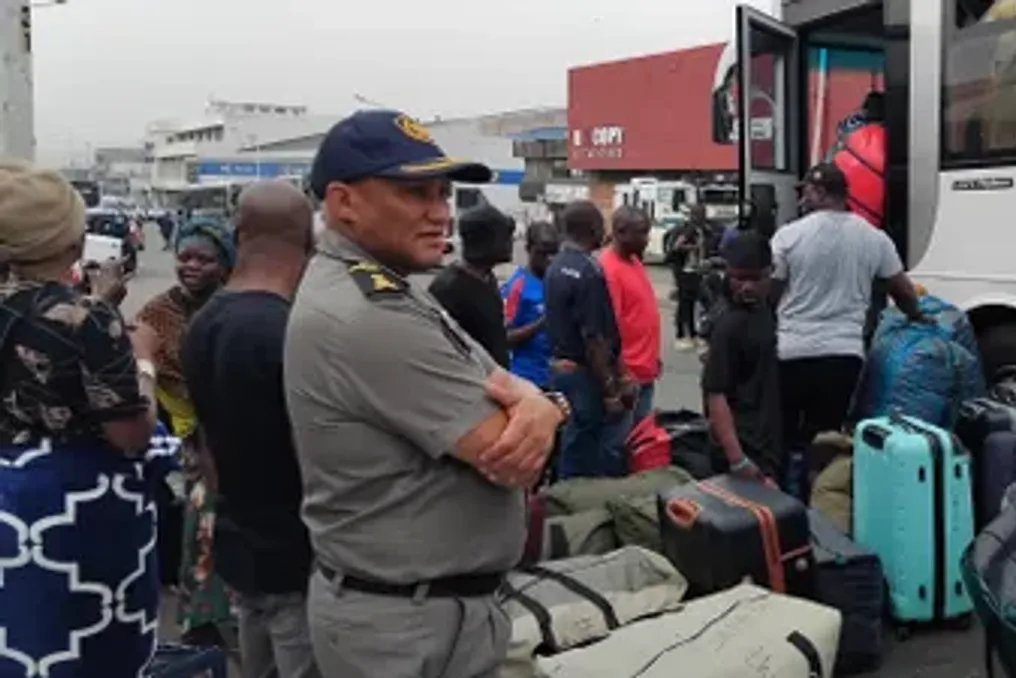
Over 250 refugees were transported from the Immigration Department's Refugee Reception Centre in Durban to the Lindela Repatriation Centre in Gauteng province on Tuesday. These individuals loaded their luggage onto buses near the Immigration Department's Refugee Reception Centre on Che Guevara Street.

The Umbhilo Business Association (UBA) welcomed the relocation of refugees who had been in the camp near the Immigration Department's Refugee Reception Centre in Durban since May 2026. On Tuesday, four buses carrying refugees and one bus with their belongings left Che Guevara Street, formerly known as Moor Road. The transport was organized by the Immigration Department, directing the refugees to the Lindela Repatriation Centre in Gauteng.

Approximately 250 refugees lived in the camp near the centre following a series of anti-immigration protests calling for foreigners to leave South Africa by June 30. The refugees occupying the Immigration Department's territory on Che Guevara Street were from the Democratic Republic of Congo, Burundi, Uganda, Mozambique, and Tanzania.

Return to normal business operations

Doran Suia, chairman of the Umbhilo Business Association, stated that this recent event brings long-awaited relief to businesses, employees, and residents of the Umbhilo area. UBA thanked Premier Ntuli and MEC Martin Meyer for their involvement in simplifying the relocation process on Friday.

Suia noted that the leadership demonstrated a willingness of the provincial government to act when community and business issues attract attention. He emphasized that such intervention is a clear sign that the partnership between business and government can yield tangible results. For several months, UBA highlighted serious health, safety, and economic consequences related to the occupation of Che Guevara Street. Suia reported that businesses were reporting decreased customer traffic, staff safety issues, and threats of closure.

He added: "Today these businesses can breathe a cautious sigh of relief. However, UBA must point out a critical issue that remains unresolved in King Dinuzulu Park, where resettlement issues persist." The Etkutwini municipality's cleaning and solid waste service removed all bedding and garbage left after the removal of refugees from the Immigration Department's Refugee Reception Centre in Durban to the Lindela Repatriation Centre on Tuesday.

Drug addiction problem

Suia referred to informal camps established by hundreds of homeless people and drug addicts in King Dinuzulu Park. He called on all levels of government to urgently address this situation. According to him, without a comprehensive and coordinated approach, there is a risk of merely shifting the problem from one part of the area to another, perpetuating a cycle of uncertainty and economic damage.

UBA stated that the relocation should be part of a sustainable long-term solution. The association appealed to the government to ensure that all relocated individuals have decent housing, access to social services, and appropriate immigration processing if necessary. Suia concluded by stating that UBA remains committed to partnering with the government to find humane and long-term solutions that balance compassion with the economic viability of the area. They aim to restore Umbhilo to its rightful status as a thriving economic hub and gateway to the Port of Durban.

Leanne Sefu, an immigrant who decided to stay in South Africa, recounted that since May they relied on donors for food and clothing. She mentioned that some areas of the DRC were affected by war, and living conditions were dangerous. She also reported that they had valid documents for staying in South Africa. She expressed happiness for those leaving (returning to the DRC), saying: "We are all in this together. We are sad and it is hard. We lived outdoors and were exposed to wind, rain, and heat. We are not sure where we will go, but it must be a peaceful place. We pray that our country becomes better so that one day we can return."

Violation of statutes

The Durban metropolitan police, which monitored the situation at the Immigration Department center, stated that the occupation of Che Guevara Street violates local Etkutwini bylaws and poses a health risk. The police noted that the conditions are unsuitable for permanent human habitation. The cleaning and solid waste service was engaged to remove debris, bedding, and dirt left after the departure of immigrants. The police stated that they are controlling the area and will verify the immigration status of those refugees who remained.

Deportation figures

In July 2026, the South African government reported that a total of 53,449 foreign nationals had been processed and repatriated. Among them, Malawians predominated (over 80%), followed by Zimbabweans and Mozambicans. The number of repatriations to countries outside SADC was 2,615, including returns to Kenya (total 431), Nigeria (1,159), Democratic Republic of Congo (86), and Uganda (939).

Popular