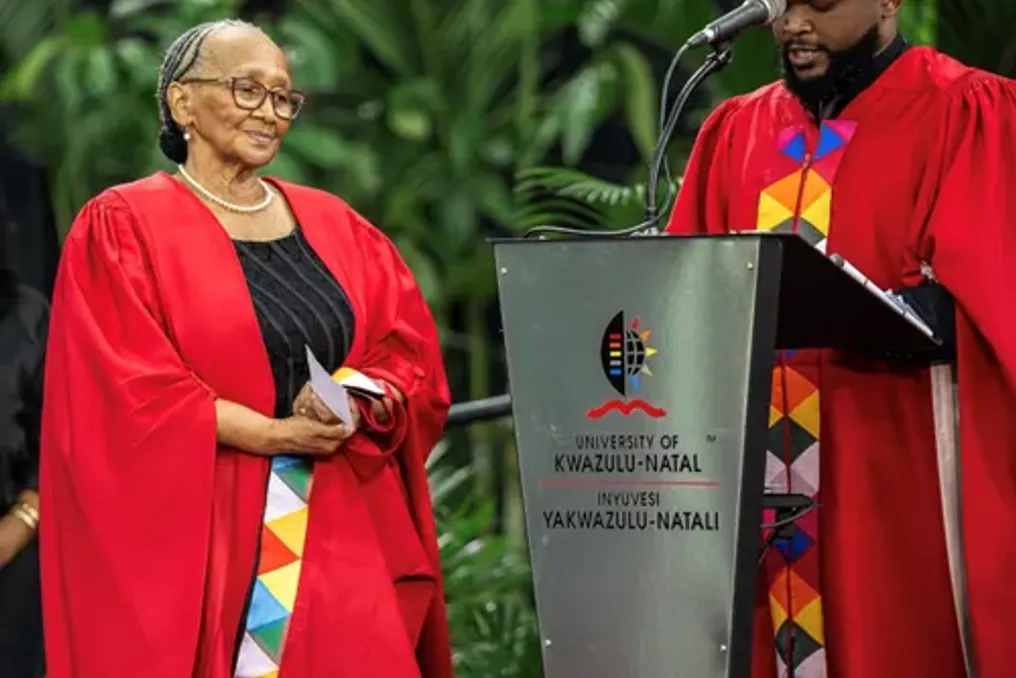
At the age of 82, Dr. Dolly Nontutuzelo Nyasulu successfully defended her dissertation and received a Doctor of Philosophy degree in public health from the University of KwaZulu-Natal (UKZN). This academic journey was the culmination of decades of her work in maternal and newborn health care.
Nyasulu's research focused on how families can participate more significantly in the care of mothers and newborns, specifically through a family-centered postnatal care approach in rural KwaZulu-Natal. She shared her joy, noting that achieving this goal after such a long journey feels very special.
The dissertation, titled 'Family-Centered Postnatal Care Approach (FCPC) in the Province of KwaZulu-Natal (KZN), South Africa,' analyzed the potential for involving families in postnatal care alongside healthcare workers, including midwives. The study was supervised by Professor Myra Taylor and Dr. Nelisive Huzwayo.
According to Nyasulu's findings, midwives and other key informants responded positively to the family-centered approach and suggested ways to enhance family involvement even before birth. Nyasulu is convinced that the successful implementation of such care can strengthen continuity of care for mothers and newborns and potentially contribute to saving lives.
Although the concept of family-centered care is not new internationally, she noted that it has not been fully implemented in the South African healthcare system.
A Career Shaped by Midwifery
Born in King William's Town in the Eastern Cape, Nyasulu is the eldest of nine children. Her professional career began with general nursing practice, after which she specialized in midwifery, psychiatric nursing, advanced midwifery, and neonatal nursing. She later obtained a Bachelor's degree in community health and nursing administration, followed by a clinical Master's degree in nursing specializing in maternal, child, and women's health.
Her interest in maternal care arose while studying at Livingstone Hospital in Port Elizabeth in 1964. Nyasulu recalled being fascinated by the stories told by midwives who visited women's homes for childbirth. These births often involved the participation of entire families, where relatives played various roles in supporting both the mother and the midwife. These early impressions left an impact and prompted her to specialize in midwifery.
In her career, she served as the coordinator for maternal, child, and women's health in the KwaZulu-Natal province and participated in initiatives aimed at improving the health of mothers and newborns. Furthermore, she contributed to education in midwifery, health policy, and the development of national and provincial guidelines for maternal and newborn care.
Personal Losses During Graduate Studies
Unfortunately, Nyasulu's path to obtaining her doctorate was overshadowed by personal losses. During her studies, she lost her daughter in 2019, followed by two brothers, and several years later, her husband, Guy, who was her biggest supporter. She also faced health issues and the need to adapt to the technological requirements of postgraduate study.
Despite all the difficulties, Nyasulu continued her journey with the support of her family and academic guidance. She emphasized that she did not go through this path alone, as there were people who supported her when she could no longer manage on her own. Her determination was also bolstered by her parents' belief in education and the encouragement of her late brother, Professor Leonard Wuyani Mabinyi, who motivated her to pursue studies beyond the master's level.
Now retired, Nyasulu remains open to new opportunities and maintains a passion for improving the health of mothers, newborns, and women. Her doctoral degree adds a new chapter to a career dedicated to mothers, infants, families, and healthcare workers, underscoring her belief that it is never too late to learn, persevere, and make a meaningful contribution to society.