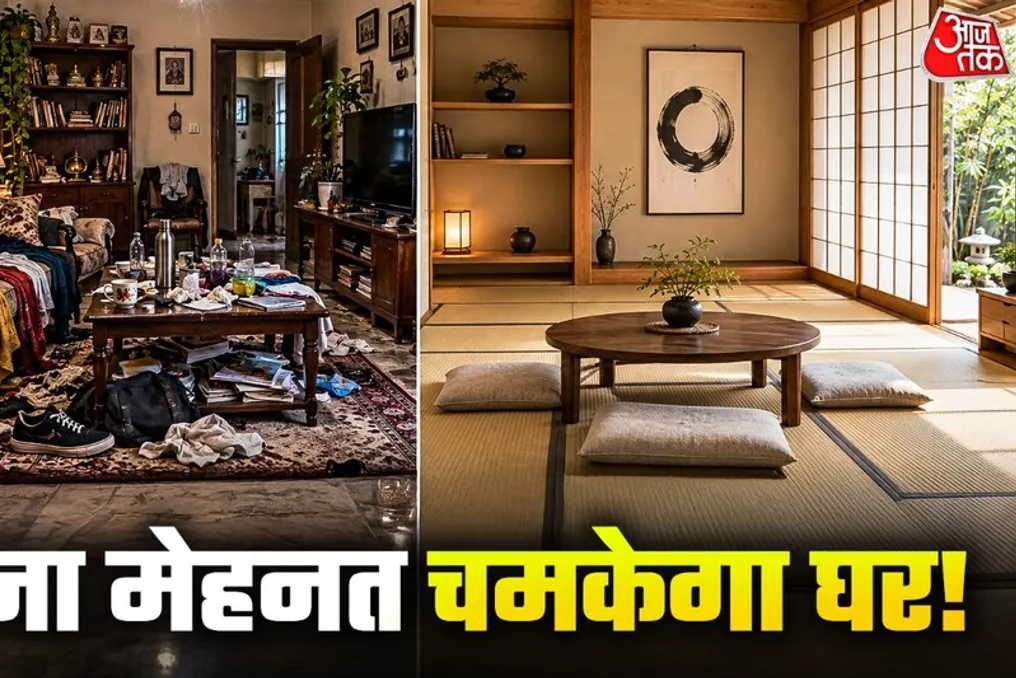
You don't need to spend hours cleaning to keep your home tidy; adopting eight simple habits characteristic of the Japanese lifestyle is enough for every corner of the house to shine.
Have you noticed that some homes look very clean, spacious, and organized, even if they are small, while in larger houses things are often scattered? These are the characteristics inherent in Japanese residences. Especially in cities, many Japanese homes are quite compact, yet it is rare to see piles of belongings, overflowing closets, or mess everywhere.
The secret lies not in expensive interior design or daily multi-hour cleaning. In fact, in Japan, certain small habits have been integrated into daily life to maintain household cleanliness, preventing dirt and clutter from accumulating. If your home remains cluttered even after thorough cleaning and constant tidying up, this information will be useful to you. You can also make your home clean by adopting these Japanese habits, and this does not require living in a Japanese house; they are easily adapted to Indian homes as well.
Principles of Space Organization
Keep only necessary items in the house: The Japanese approach dictates not to fill the house with things, but to keep only those items that are truly needed or that you value. Unnecessary clothing, kitchen utensils, and other items should be sorted and discarded periodically. This reduces the amount of stuff in the house and simplifies the cleaning process.
Assign a permanent place for every item: For small items such as keys, remote controls, scissors, or chargers, a fixed location must be determined. The habit of putting them back in place after use prevents piles of items from forming on tables, beds, or kitchen counters.
Do not enter the house in shoes: There is a tradition in Japanese homes of removing shoes at the entrance door. This minimizes the entry of dust and moisture from outside into the house. You can adopt this habit by designating a separate place for shoes near the entrance.
Do not wait for dirt to accumulate: After cooking in the kitchen, immediately wipe down the surface, put used items away, and clean visible dust right away. These small daily actions can save the effort required for long, deep cleaning in the future.
Discard old when new arrives: In Japan, the 'one in, one out' rule is practiced. If you buy new clothes, get rid of the old ones you don't use. Similarly, when buying new kitchenware, dispose of old unnecessary items. This prevents cabinets and drawers from becoming unnecessarily full.
Keep tables and surfaces clear: Instead of leaving keys, bills, or wallets on the table, they should be immediately put in their designated place. Clean and clear surfaces automatically give the home a more open and organized look.
Use smart storage in small spaces: Under-bed boxes, wall shelves, stackable containers, and multifunctional furniture help fit more things into limited space. This also prevents visual clutter in the home.
Cleaning responsibility lies with everyone: Every family member must clean up their own belongings and clear their own mess. In Japanese culture, maintaining cleanliness is not the duty of one person; it is everyone's responsibility. This habit helps reduce clutter in the house.
The Main Secret is Daily Small Habits
The most important lesson from the Japanese cleaning system is that you do not need to spend hours cleaning every day to keep your home clean. It is enough to have fewer things, assign a place for everything, and immediately put items away after use. It is these small habits that can keep the home clean, open, and peaceful for a long time.