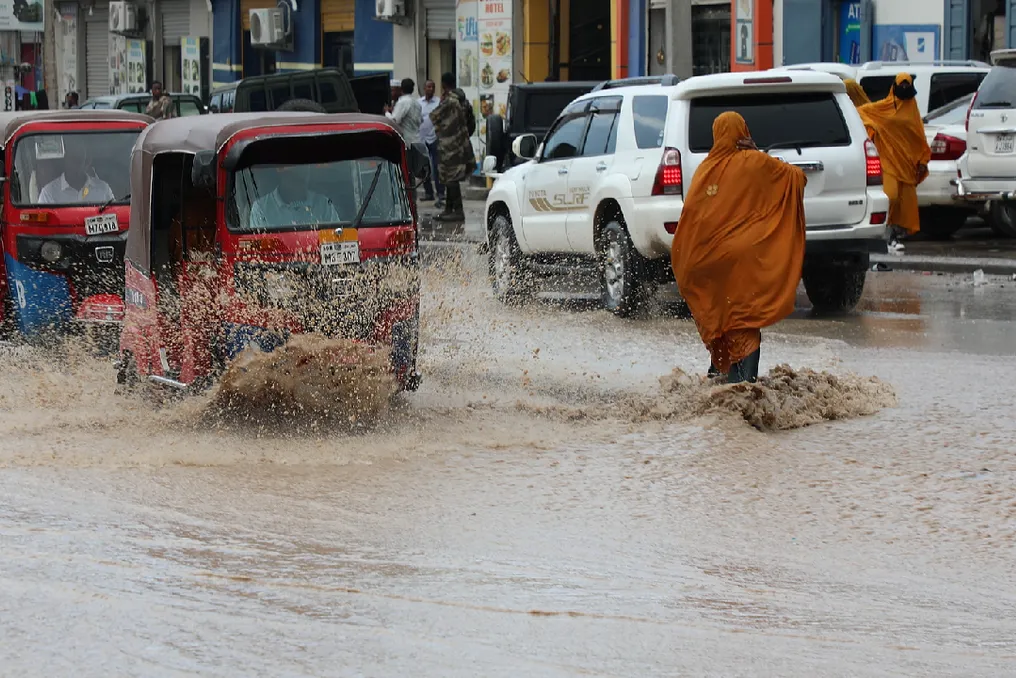
Somalia is intensifying emergency preparations before the start of the rainy season from October to December to mitigate potential flood consequences. Climate experts warn that the strengthening of the El Niño phenomenon could lead to abnormally heavy rainfall.
The Ministry of Environment and Climate Change of Somalia and the Somali Disaster Management Agency (SoDMA) held strategic meetings with local and international partners on Sunday and Monday. The goal of the meetings was to strengthen multi-agency flood prevention and emergency preparedness in anticipation of the upcoming rains.
Government institutions, climatologists, and international partners participated in the forum to enhance early warning systems and facilitate timely action against floods, droughts, and other severe weather events, including the possible impact of El Niño.
During the meeting, an assessment of the consequences of previous climate seasons, particularly the Gu rainy season in 2026, was conducted, and a climate forecast for the upcoming Deir season, covering the period from October to December, was presented.
Hadar Sheikh Mohamed, Director of SoDMA for Disaster Risk Management, emphasized the importance of early measures, strongly urging vulnerable communities to take necessary precautions as the Deir rains approach. These statements were made during a three-day strategic meeting organized by SoDMA together with the International Rescue Committee (IRC) in Mogadishu, which concluded on Sunday.
Mohamed stated on Sunday that rains are expected during the Deir season in October, November, and December, and recommended that residents of vulnerable areas take preemptive measures. Furthermore, the agency placed 29 districts across 14 regions on high alert for riverine and flash floods.
Heavy seasonal rains across Somalia and in the upper watersheds of Ethiopia are expected to raise the Jubba and Shabelle rivers to dangerous levels. Meanwhile, short but intense downpours threaten to trigger serious flash floods in both urban and rural areas.
SoDMA advised residents to monitor official alerts, identify evacuation routes, and prepare emergency kits containing food, water, medicine, and important documents. Residents living along the Jubba and Shabelle rivers must continuously monitor water levels.
The agency also insisted that local authorities are obliged to prepare evacuation centers, rescue boats, temporary shelters, and emergency response units. SoDMA called on community leaders, businesses, and the media to actively disseminate public safety announcements and flood warnings.
Agency officials stressed the crucial role of early and proactive actions in mitigating flood impacts before severe weather strikes. SoDMA Commissioner Mahamud Moallim recently stated that coordinated collective action is necessary to compensate for projected climate risks, calling for urgent inter-agency coordination to strengthen local preparedness and protect vulnerable communities.
The UN Office for Disaster Risk Reduction's El Niño climate forecast indicates a probable risk of severe flooding in the Jubba and Shabelle river corridors if El Niño strengthens amid a positive oscillation in the Indian Ocean. Although this scenario is not guaranteed, the report published on September 7 highlights the value of early action, given the available time and Somalia's limited capacity to absorb additional shocks.
The document identifies the Jubba and Shabelle river corridors as high-risk zones and outlines critical preparedness priorities, including completing a collective framework for proactive flood action, establishing trigger protocols, strengthening early warning and evacuation systems, improving Water, Sanitation, and Hygiene (WASH) readiness, and managing displacement. Furthermore, the forecast examines financing and recovery strategies, drawing lessons from the 2023 floods to ensure a smooth transition from preventive measures to long-term recovery.
According to UN data, El Niño could have devastating effects on Somalia, such as heavy rains and flooding along the Jubba and Shabelle rivers, flash floods in central Somalia and Puntland, and exacerbated drought in parts of Somaliland, putting over 600,000 people at risk. These consequences could be particularly severe for vulnerable communities already facing dire humanitarian conditions in Somalia. More than three million people require humanitarian assistance, of whom 1.1 million are internally displaced persons.
Previous El Niño events caused large-scale flooding in Somalia: approximately 900,000 people were affected in 1997–1998, and over 440,000 people in 2006–2007. According to UN estimates, the consequences of the current year could last several months into 2027.