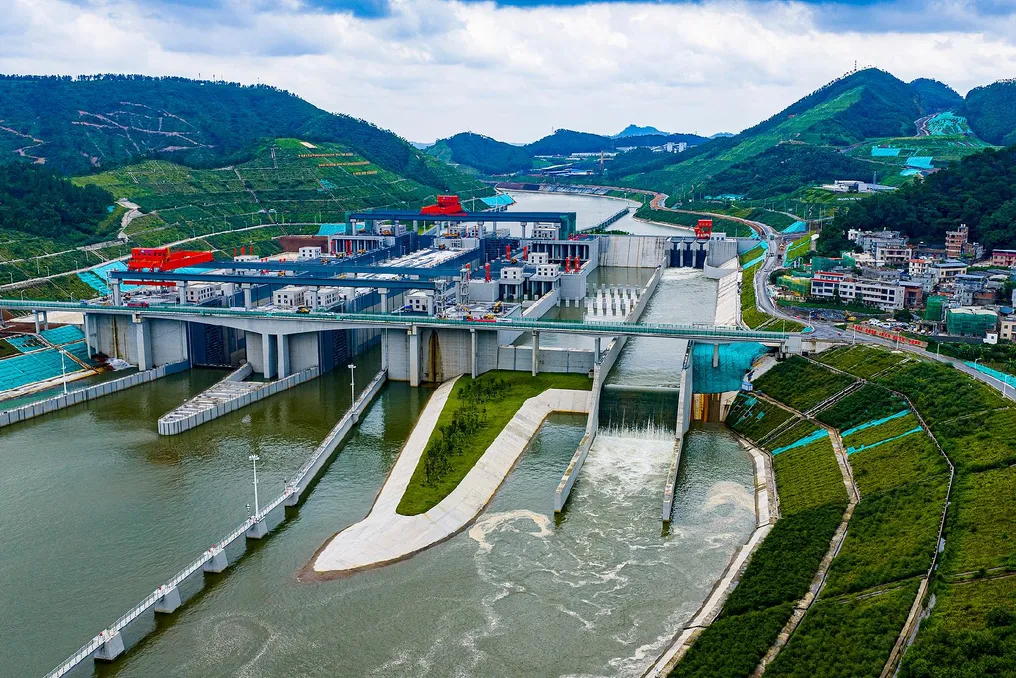
The opening of the 134.2-kilometer Pinlu Canal in the Guangxi Zhuang Autonomous Region in southern China is intended to strengthen logistical and trade ties between China's southwestern regions and Southeast Asia. The planned opening on September 16 allows the canal to connect the navigation network of the Yangtze River with Bibo Bay, accommodating vessels up to 5,000 tons. This canal is a key element of the New International Land-Sea Trade Corridor, offering a more direct route from inland China to the sea and subsequently to ASEAN markets.
A Shorter Route to the Sea
Previously, cargo destined for international markets from southwestern China traditionally went through ports on China's eastern and southern coasts. Thanks to the Pinlu Canal, the delivery distance between southwestern China and Southeast Asian markets will be reduced by more than 560 kilometers. According to China Media Group data, this will allow for a reduction in logistics costs by 18–30 percent, saving 5.2 billion yuan annually (approximately 775 million US dollars). This will have the greatest impact on raw materials such as coal, grain, ores, and building materials, where transportation costs constitute a significant portion of total expenses.
The canal will also enhance the role of Bibo Bay as a maritime gateway for China's inland provinces. Cargo from the southwest can now reach Southeast Asian markets via Bibo Bay, bypassing the need to travel east to the ports of Guangdong province.
Strengthening the Existing Trade Corridor
The Pinlu Canal is integrated into the New International Land-Sea Trade Corridor—a logistics network connecting western China with Southeast Asia via railways, roads, waterways, and ports. The addition of waterway connectivity through the canal links China's internal river system with the ports and shipping routes of Bibo Bay. As reported by the Singaporean newspaper Lianhe Zaobao, this corridor has already become an important route for trade between western China and ASEAN. By the end of last November, over 5 million twenty-foot equivalent units (TEUs) had been transported through the corridor. The Pinlu Canal is expected to strengthen the link between the corridor's inland sources and its maritime gateways in Guangxi.
Zhou Yan, Deputy General Manager of the Bibo Bay International Port Group, told The Straits Times that after its opening, the canal could increase capacity by approximately 3.5 million tons, potentially reaching 150 million tons annually in the long term. These changes occur against the backdrop of continued growth in trade between China and ASEAN. Both sides have been each other's largest trading partners for six consecutive years. In the first half of 2026, bilateral trade reached 4.34 trillion yuan, an 18.2 percent increase compared to the previous year, according to the General Administration of Customs. Bibo Bay Port is also actively expanding: its container traffic in 2025 was about 10 million TEUs, compared to 2.28 million TEUs in 2017. The combination of a growing port and a new inland waterway can further increase the volume of goods transported between western China and Southeast Asia.
Implications for Supply Chains
The canal is also capable of supporting closer ties between China's production base and the expanding manufacturing networks of Southeast Asia. Chinese companies are increasingly increasing production capacity in ASEAN countries, while ASEAN economies are becoming important destinations for Chinese investment and manufacturing. Priyanka Kishore, chief economist and director of Singapore-based Asia Decoded, noted to Nikkei Asia that this development could strengthen ASEAN's position in global supply chains, supporting the region's role as a cost-effective manufacturing hub. Her assessment points to another potential function of the canal: facilitating the movement of raw materials, components, and finished products between southwestern China and Southeast Asia. For exporters from ASEAN, the canal will also improve access to China's domestic markets. Agricultural products and minerals can move north via Bibo Bay, while Chinese industrial goods, including consumer goods and industrial equipment, can head south to Southeast Asian markets.
Shipping Companies Prepare
The potential increase in cargo flow has already attracted the attention of international logistics companies. A representative of PSA International, a global port operator and supply chain company headquartered in Singapore, told Lianhe Zaobao that the company, together with local partners, is preparing for increased cargo volumes after the canal opens. The company is also working to establish more seamless barge connections with the deep-water terminal in Qingzhou. According to the PSA representative, the canal could offer a more economical and sustainable transport option within the New International Land-Sea Trade Corridor.
Strengthening Ties Between China and ASEAN
The Pinlu Canal is completed during a period of rapid expansion of economic ties between China and ASEAN. For southwestern China, it provides a shorter sea route and access to Southeast Asian markets. For Guangxi, it strengthens the region's role as a gateway between China's inland provinces and ASEAN countries. For Southeast Asian economies, it offers an additional logistics route to China's large domestic market. As trade, investment, and supply chain links between China and ASEAN continue to grow, the Pinlu Canal is expected to play an increasingly important role in uniting these two parties.