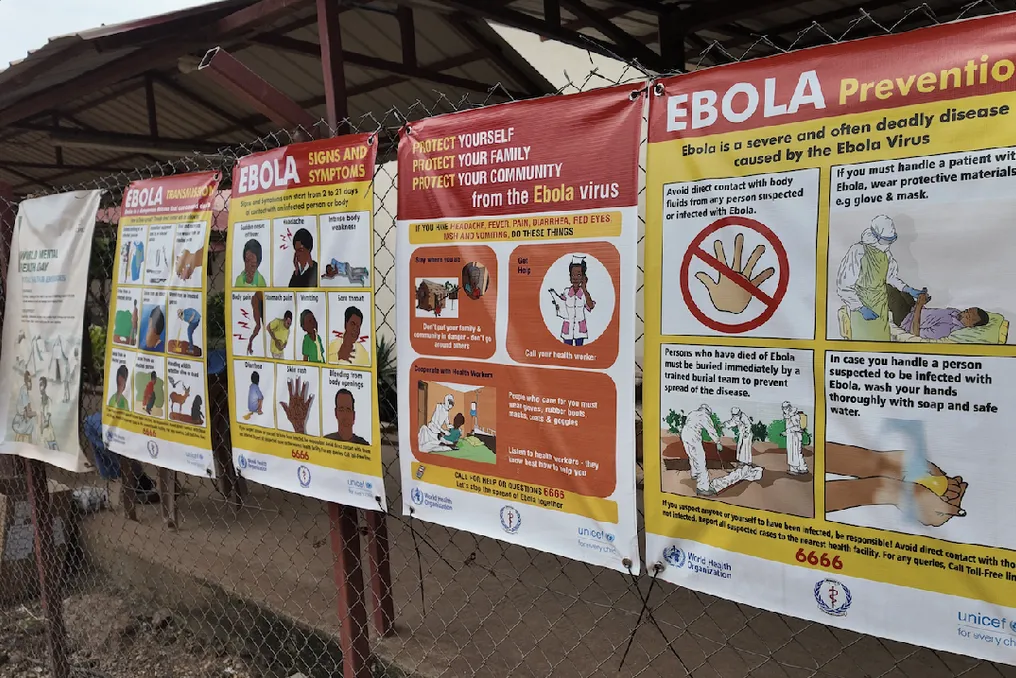
Despite no registered cases of Ebola in South Sudan, an outbreak in neighboring the Democratic Republic of Congo has prompted the International Committee of the Red Cross (ICRC) to intensify readiness measures. This is due to concerns that cross-border spread of the virus could disrupt care for wounded individuals resulting from armed conflicts.
Daniel Bannskog, head of the ICRC delegation in South Sudan, stressed the seriousness of the threat, noting that the Congolese border is in close proximity to areas where people move daily between families and friends. He stated that the risk of infection and importation of cases into South Sudan remains extremely high.
For the ICRC, the problem is not only the potential spread of the virus but also the consequences of such an outbreak for treating battle-wounded patients. The scale of current operations demonstrates that much is at stake. In the first half of this year, the ICRC evacuated 266 wounded patients from conflict-affected areas across South Sudan, exceeding the figure for the same period in 2025 by more than 50 percent. Since 2014, over 5,000 patients have been evacuated for emergency surgical care.
Bannskog added that Ebola represents a key risk if it spreads in the country, as it could impede access and make it impossible to treat some patients or transport them to a hospital.
Preparation of Juba Military Hospital
At Juba Military Hospital, where the ICRC provides support for surgical care of battle-wounded, screening procedures, sanitation unit installations, and staff training have been reinforced. An isolation tent has also been established for suspected cases. The hospital is already experiencing increased strain: in the first half of 2026, the number of operations at the facility increased by almost 30% compared to last year, causing the ICRC-supported surgical department to operate above 100% capacity.
Papi Lunduluka Nimbaata, ICRC project manager at the hospital, reported that 15 districts have been identified as high-risk zones due to their proximity to the DRC and porous borders. He noted that this requires improved planning at their level to reduce risks for both patients and staff.
The ICRC has developed a phased response plan that will be scaled according to the threat level. Nimbaata explained that the plan starts with a 'green phase,' when Ebola is absent in the country and present only in neighboring states. A suspected case in South Sudan will trigger a 'yellow phase,' while a confirmed case will lead to a transition to the 'orange phase.' Confirmation of a case at Juba Military Hospital initiates the 'red phase,' requiring the implementation of additional infection prevention and control measures.
Protection of Patients and Healthcare Workers
Patients evacuated from high-risk areas now undergo screening before being transported to the hospital. Nimbaata emphasized that one cannot rush to admit a patient without a preliminary examination. He warned that additional procedures could cause delays in transporting the wounded, and the consequences could be far more serious if the disease is confirmed inside the hospital.
He also stated that if the team cannot be protected, it means it is impossible to get the patient into the operating room. In such a case, the ICRC may be forced to consider options of 'reducing the number of patients, decreasing movement to affected areas, or temporarily suspending our activities.'
Bannskog added that risk management will be particularly complex in conflict-affected areas, where security issues and poor roads already complicate access. He specifically highlighted that the safety of medical personnel is paramount to ensuring their ability to access and respond. Access for Red Cross volunteers is also critical. The ICRC is utilizing its experience responding to Ebola in the DRC, where Red Cross and Red Crescent teams worked with communities on prevention, safe practices, and dignified burials. Bannskog concluded that many joint actions are currently underway to prepare for a potential Ebola outbreak in South Sudan, but more effort is needed.