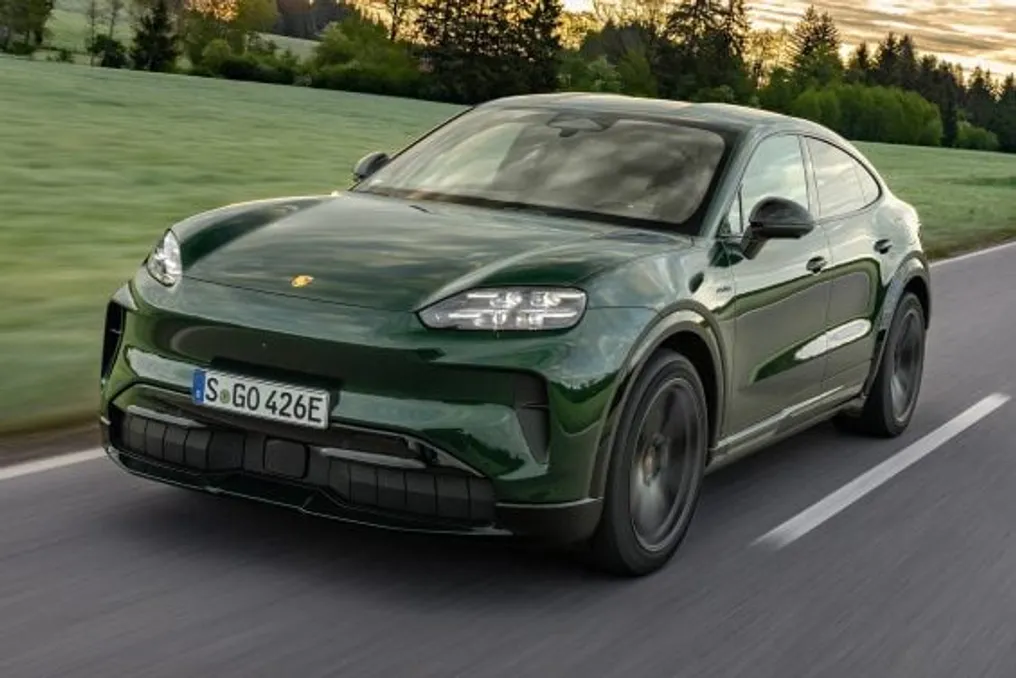
Porsche launches electric Cayenne in Brazil with powers up to 1,156 hp and prices starting from R$ 900 thousand
Read more
AutoPapo
autopapo.com.br

Porsche launches electric Cayenne in Brazil with powers up to 1,156 hp and prices starting from R$ 900 thousand

Porsche began sales of the Cayenne Electric model in Brazil this Monday, the 15th. The vehicle is available in six configurations, covering SUV and Coupe styles, with price ranges varying from R$ 900 thousand to R$ 1.46 million, and offers powers ranging from 442 hp to an impressive 1,156 hp, making it the most powerful series Porsche ever produced by the manufacturer. Pre-sales for this model had been opened in May.

The model line starts with the Cayenne Electric, priced at R$ 900 thousand, followed by the Coupe Electric (R$ 950 thousand), S Electric (R$ 1.08 million), S Coupe Electric (R$ 1.13 million), and Turbo Electric (R$ 1.41 million), culminating in the Turbo Coupe Electric, valued at R$ 1.46 million. All vehicles feature all-wheel drive.

The manufacturer clarified that the introduction of this electric line does not imply the end of combustion and plug-in hybrid versions, which are expected to coexist with the electric models after the year 2030.

The Cayenne Turbo Electric stands out by delivering 857 hp in continuous operation and reaching up to 1,156 hp and 153.1 kgfm when Launch Control is activated. Furthermore, it features Push-to-Pass functionality, which provides an extra boost of 176 hp for ten seconds.

In terms of acceleration, the SUV can go from 0 to 100 km/h in just 2.5 seconds, exceed 200 km/h in 7.4 seconds, and reach a top speed of 260 km/h. The entry-level Cayenne Electric, with 442 hp and 85.2 kgfm, completes this test in 4.8 seconds, while the S version, equipped with 666 hp and 110.2 kgfm, finishes in 3.8 seconds.

The rear electric motor of the Turbo uses a new direct oil cooling technology, developed by Porsche for Formula E cars. The regeneration capacity reaches up to 600 kW during braking, which, according to the brand itself, reduces the need for discs and pads by approximately 97% in daily braking.

With a 113 kWh battery, the range varies depending on the model: 493 km for the Cayenne Electric, 489 km for the S, and 481 km for the Turbo, according to Inmetro measurements. The 800-volt architecture supports charging up to 390 kW in DC current, allowing the charge to go from 10% to 80% in less than 16 minutes.

The vehicle can also be equipped with Porsche Wireless Charging, an optional induction charging system with a power of 11 kW.

Inside, the Cayenne Electric features the Porsche Driver Experience, which includes the Flow Display curved OLED panel, a 14.25-inch digital instrument cluster, and a 14.9-inch multimedia center. Options available include an additional screen for the front passenger and an augmented reality head-up display capable of projecting images equivalent to an 87-inch screen.

The system includes an AI-based voice assistant, and the Porsche Connect platform offers over 150 remote functionalities, ensuring free connectivity for ten years. Compared to the combustion Cayenne, the electric version is 5.5 cm longer and has an almost 13 cm longer wheelbase. Cargo space ranges from 781 to 1,588 liters in the SUV body and from 534 to 1,347 liters in the Coupe, plus a 90-liter front compartment.
Similar stories

Volkswagen presents Mission Efficiency, an electric prototype with aerodynamic records and 1,278 km range
Read more
autopapo.com.br

Volkswagen presents Mission Efficiency, an electric prototype with aerodynamic records and 1,278 km range

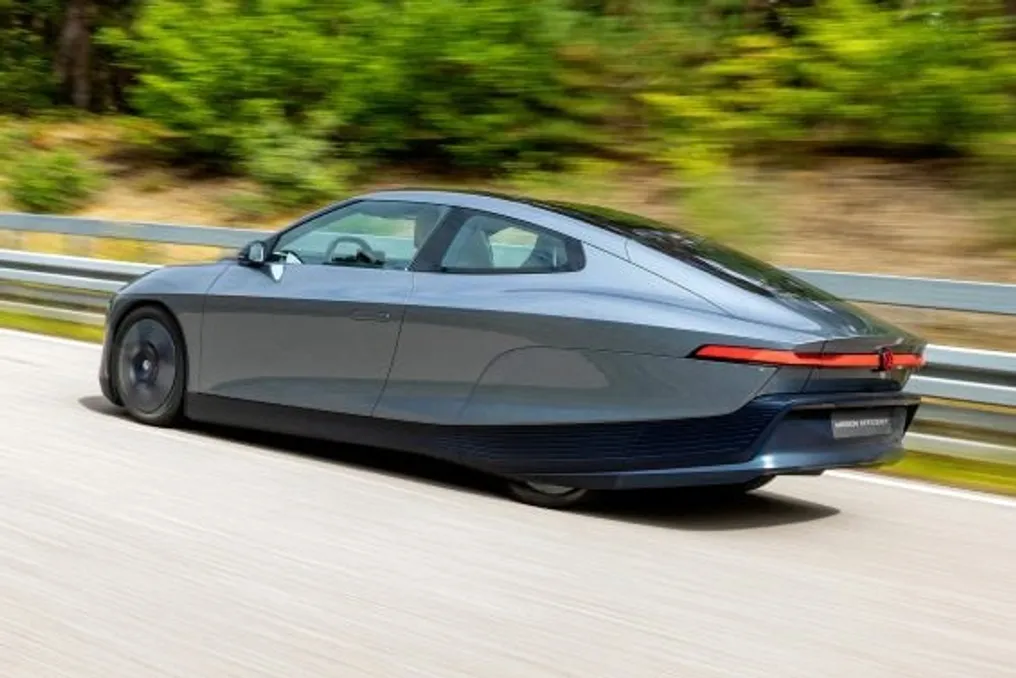
Volkswagen revealed the Mission Efficiency on Monday, the 14th, in Wolfsburg. This prototype is defined by the automaker as the most efficient near-production electric vehicle on the planet. The model achieved three world records, certified by the Record Institute Germany (RID), specifically in the category of four-seater electric vehicles close to series production.

One notable achievement is the aerodynamic record, reaching a drag coefficient of 0.158. This value is unprecedented among vehicles approved for public road use and was achieved with a frontal area of only 2.08 m². Another record was set in an ideal consumption test, conducted at a constant speed of 68 km/h, without inclines and with the air conditioning off, where the prototype registered a consumption of 6.48 kWh/100 km.

The third record relates to the average consumption under real driving conditions, which was 6.89 kWh/100 km. This data was obtained during a documented trip of 1,278.36 km, traveled between the brand's development center in Wolfsburg and Vienna, passing through Poznań, Poland, and Olomouc, Czech Republic. Considering recharging losses, the consumption increased to 7.51 kWh/100 km.

With a net battery capacity of 54.9 kWh, the vehicle was charged only once and completed the journey arriving at its destination with 164 km of remaining range. The teardrop body design optimizes aerodynamics, complemented by active cooling fins, covered rear wheels, and a fully enclosed floor. Furthermore, the windows are frameless and the door handles are integrated into the body.

The efficiency gains are noticeable at different speeds: above 80 km/h, consumption is more than 30% lower than that of the series ID. Polo. At a speed of 140 km/h, the prototype consumes energy practically equivalent to that used by the hatchback at 100 km/h.

Wheels contribute up to 30% to aerodynamic resistance, and Volkswagen implemented patented deflectors inside all rims to control turbulence. The tires, developed in partnership with Continental based on the EcoContact 7, have a rolling resistance of 4.9 kg per ton, which is about 25% below the maximum limit of the best European rating.

The glass roof and trunk lid incorporate 370 W photovoltaic cells, which supply energy to the internal electrical network and can add up to 30 km of daily range. On the rear axle, the prototype uses an electromechanical brake, developed with AUMOVIO, which helps reduce friction and improve energy regeneration.

Internally, the priority given to lightness resulted in the elimination of the multimedia system; the driver can use their own cell phone or tablet, and portable speakers via Bluetooth replace the original speakers. The coupe has dimensions of 4.78 m in length by 1.39 m in height, accommodates two occupants in the front and two in the back, and offers 481 liters of trunk space.

The electrical system is identical to that of the ID. Polo, featuring a 99 kW, or 135 hp, motor positioned on the front axle, on the MEB+ platform. According to Andreas Mindt, Volkswagen's design director, the silhouette resembles the XL1, a 2013 plug-in hybrid that was the most economical production vehicle in the world. Although the Mission Efficiency is certified for circulation in the European Union, it will not be put on sale.

Volkswagen launches electric concept Mission Efficiency with 1,278 km range
Read more
olhardigital.com.br

Volkswagen launches electric concept Mission Efficiency with 1,278 km range

Volkswagen presented the Mission Efficiency, a concept vehicle developed to illustrate the potential for efficiency in electric cars by minimizing dependence on large batteries. This prototype managed to travel a distance of 1,278 km between Wolfsburg, Germany, and Vienna, Austria, using only a single recharge during the journey.

The vehicle's design results from combining optimizations such as weight reduction, the adoption of extreme aerodynamics, and improved energy management. Built on the MEB+ platform and sharing elements with the ID. Polo, the prototype demonstrates how reducing losses can significantly increase the range of an electric car.

The lines of the Mission Efficiency recall the 2013 XL1 model, maintaining the teardrop shape with a very narrow rear section. With a drag coefficient of 0.158, Volkswagen stated that this has become the most aerodynamic automobile authorized for public road circulation ever manufactured.

Engineering details include three active cooling vents that operate in five distinct modes to manage airflow. The rear wheels are equipped with near-total covers, and specific wheel deflectors help mitigate turbulence. Furthermore, the floor was designed to be almost entirely closed, aiming to improve airflow under the vehicle.

Instead of implementing an entirely new propulsion system, the design utilizes existing components from the ID. Polo. The front electric motor generates 137 hp, and the NMC battery has a capacity of 54.9 kWh. In tests conducted at 68 km/h, maintaining a constant speed, without inclines, and with auxiliary systems like air conditioning turned off, the recorded consumption was 6.48 kWh/100 km. On the trip from Wolfsburg to Vienna, the Mission Efficiency consumed 7.51 kWh/100 km when accounting for recharge losses, and 6.89 kWh/100 km without these losses.

The relentless pursuit of efficiency is evident in various aspects of the car. Despite having a low roof, the interior offers a 2+2 configuration and a luggage volume of 481 liters. The rear seats accommodate passengers up to approximately 1.60 meters tall and can be folded down to create a load floor of up to 1.8 meters.

To contribute to weight and component reduction, Volkswagen opted to omit a traditional multimedia center. The driver has the option to mount a smartphone or tablet on a rail and connect it wirelessly to the car. The audio system follows a similar logic, using a portable Bluetooth speaker.

According to the manufacturer, the Mission Efficiency represents the ideal way to demonstrate Volkswagen's difference in the electric era: offering technology accessible to the general public, not just a restricted group.

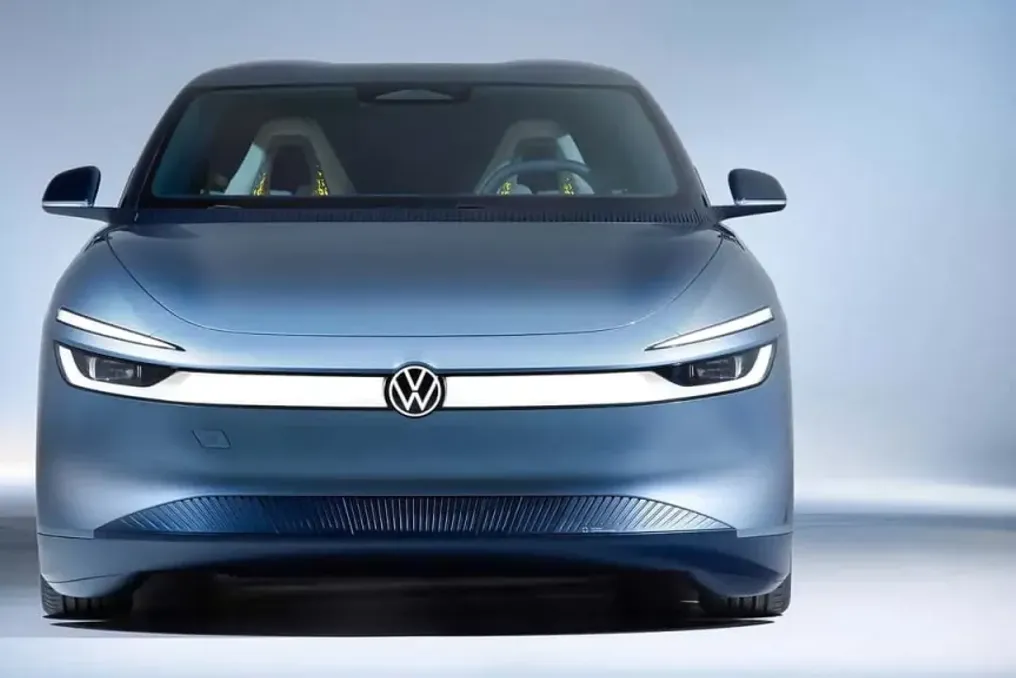
Thomas Schäfer, CEO of Volkswagen, commented in a note that the front of the concept aligns with the new line of electric vehicles, which also includes the ID. Polo and the ID. Cross. Andreas Mindt, Director of Design, corroborated this information.

Currently, the Mission Efficiency remains a concept. Volkswagen displays it as proof of what can be achieved in terms of efficiency, not as a model available for purchase.

Popular