
Expert points to January and February as good months for buying used cars
Read more
AutoPapo
autopapo.com.br

Expert points to January and February as good months for buying used cars

Although there is no ideal month to purchase a used car at a discount, January and February are often considered advantageous periods for those researching, comparing options, and willing to negotiate. This assessment was made by Fred Bittar, CEO of Comprecar, and is supported by automotive industry data.

According to Fenauto, the federation representing vehicle resellers, 1.34 million used and pre-owned cars were sold in January 2026. This number represents a 24.5% reduction compared to December.

The entity explains this decrease by attributing it to common start-of-year expenses, such as IPVA, IPTU, and school fees, in addition to the vacation period. Lower buyer traffic at dealerships practically offers greater opportunity for negotiation.

Comprecar, an advertising portal active since 2001 in the interior of São Paulo, reports that January generally records the highest volume of website access, indicating an increase in consumer interest during that period. However, the company clarifies that this data only reflects searching, not pricing.

Bittar emphasizes that regarding the arrival of listings, values, and sellers' willingness to negotiate, Comprecar does not have data that allows identifying a specific month. He stresses that the pre-owned market is influenced by supply, demand, credit availability, the behavior of the new vehicle market, and general economic conditions.

For the executive, the temporal factor has less weight compared to the operational set. The negotiation margin is directly affected by how long the vehicle remains in stock, its model, its version, the specific demand for that car, and the commercial conditions offered by each store. Thus, a vehicle parked for several months tends to generate a larger discount than a highly sought-after model that just arrived.

The end of the year also creates opportunities, mainly due to promotional campaigns, inventory renewal, and stores meeting targets. However, Bittar warns that there is no universally effective time for all types of vehicles and consumers.

Nevertheless, those who choose to wait for the beginning of the year should be aware that the calm is short-lived. Fenauto data shows that February 2026 already presented a 1.7% growth compared to January, and March saw a jump of 22.8% compared to the previous month, totaling 1.67 million units traded. This demonstrates that the bargaining window closes quickly as the market recovers its normal rhythm.

Similar stories

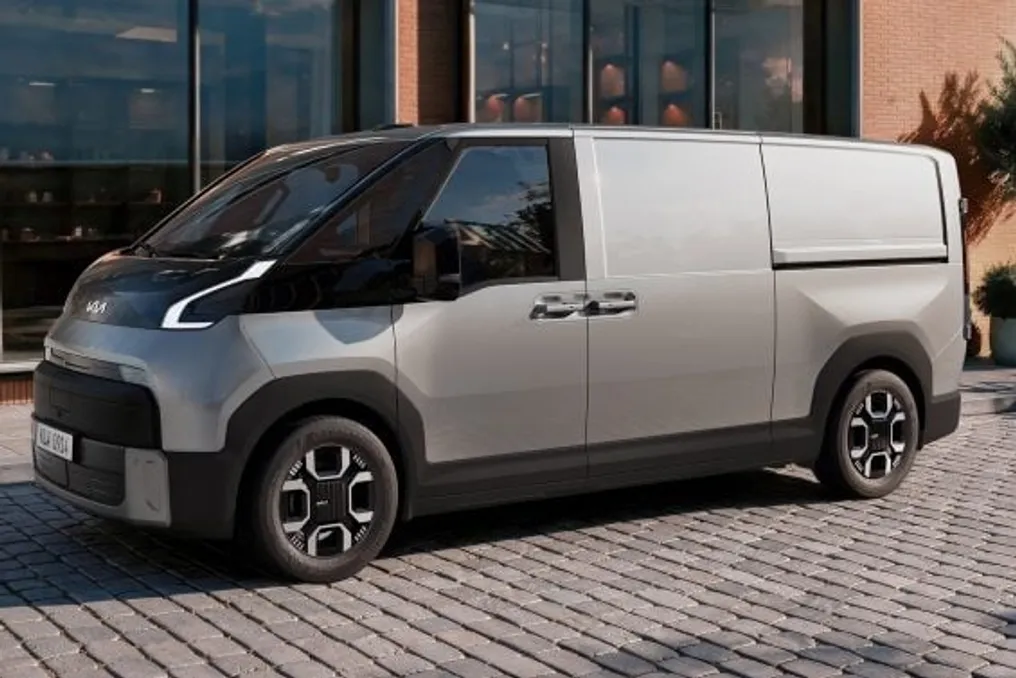
Kia presents electric van PV7 with 460 km range and potential launch in Brazil
Read more
autopapo.com.br

Kia presents electric van PV7 with 460 km range and potential launch in Brazil

Kia exhibited the new Kia PV7 during the IAA Transportation 2026 event, held in Hanover, Germany. This vehicle, which is part of the Platform Beyond Vehicle (PBV) electric line, is a utility vehicle superior to the PV5 and reinforces the South Korean manufacturer's strategy in the competitive light commercial vehicle sector.

The arrival of the PV7 in South Korea and Europe is scheduled for the second half of 2027. Built on the E-GMP.S platform, the PV7 is available in Cargo and Passenger configurations, both featuring a level floor and low access height.

The versions designated as Long have dimensions of 5.35 meters in length, 1.99 meters in width, and 1.99 meters in height, with a wheelbase of 3.50 meters. Kia intends to expand this family to 23 variants in the coming years, including chassis-cab options and customizations by partners.

In the cargo configuration, the vehicle accommodates two or three seats and offers a volume of 6.1 cubic meters, potentially reaching 8 cubic meters in the High Roof version. The maximum load capacity ranges between 1,165 kg in the Long version and 1,200 kg in the compact version. The floor, positioned 55 cm from the ground, supports up to three European pallets, and the rear door can be configured with two leaves or as a single folding piece.

Regarding the passenger version, it can carry up to nine people in the global market and up to 11 in South Korea. The seven-seater configuration uses adjustable tracks that allow seats to be relocated or removed, enabling the interior to be adapted to operational needs.

The system utilizes nickel-cobalt-manganese batteries with capacities of 71.5 kWh and 96.2 kWh. The electric motor located at the front generates up to 272 horsepower and 42.8 kgfm of torque, and the range of the Long Range Cargo version exceeds 460 km under the WLTP cycle. A future variant with all-wheel drive and dual motors is also planned after the initial launch.

The 800V electrical architecture allows for charging from 10% to 80% in approximately 25 minutes using a 350 kW charger. The PV7 is notable for being the first Kia model to feature two charging ports: a front one for AC and DC current, and an optional rear one exclusively for AC. Furthermore, the vehicle has V2L functionality to power external equipment.

Internally, the utility vehicle introduces the Pleos Connect center, which operates with Android Automotive OS and includes the Gleo artificial intelligence voice assistant, along with a set of driving assistants.

Currently, Kia has not disclosed specific plans for the PV7 in Brazil. However, the PV5, which was the first in the PBV line and received the title of International Van of the Year 2026, already has its arrival confirmed for the national market, with a projected launch in the cargo version in the second half of this year.

Attracting Private Investment to Professional Football Clubs
Read more
uza.uz

Attracting Private Investment to Professional Football Clubs

Issues regarding ensuring the financial stability of the capital's professional football clubs, attracting a wide range of private investments, and increasing the participation of business entities in the management of these clubs were considered.

Popular