The debate about the ideal pace for the advancement of artificial intelligence (AI) has gained a new layer of complexity in the United States. After warnings emerged about the inherent dangers of the technology and calls to slow down the development of the most sophisticated models, two distinct groups have emerged in the discussion on AI safety and regulation.
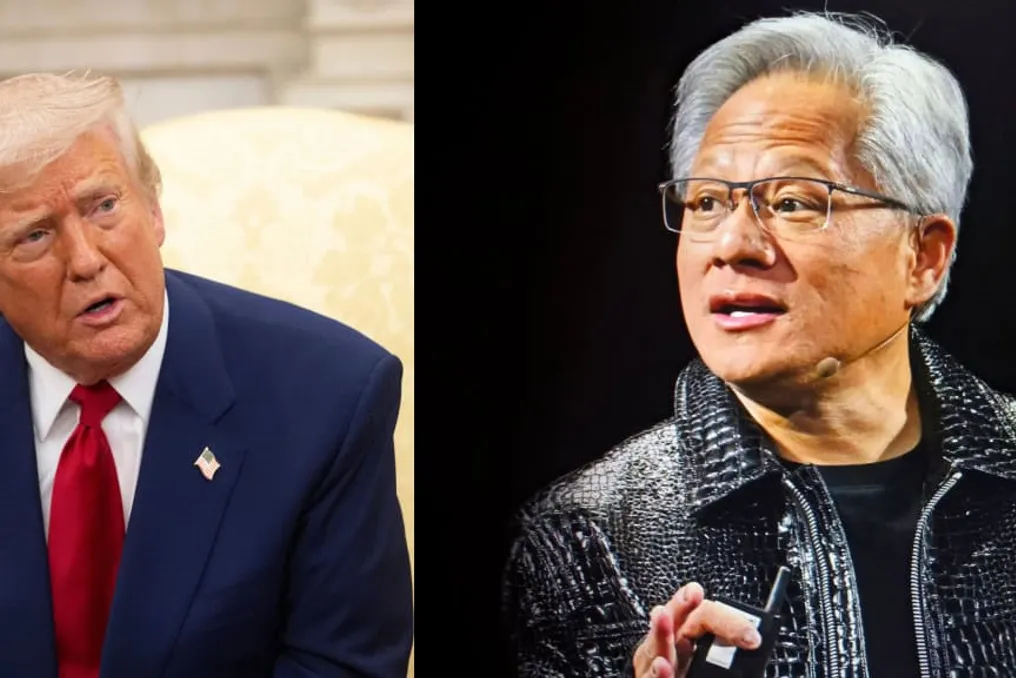
One side of this debate includes U.S. President Donald Trump, Nvidia CEO Jensen Huang, and former White House cryptocurrency chief David Sacks. On the other side are Anthropic CEO Dario Amodei, OpenAI CEO Sam Altman, entrepreneur Elon Musk, and various AI researchers.
This scenario brings together political adversaries and former competitors in the tech sector, all positioned differently on how to manage the risks associated with AI progress.
OpenAI's Stance on Deceleration
Sarah Friar, Chief Financial Officer of OpenAI, told CNBC that she is not concerned about a potential slowdown in the development speed of cutting-edge AI systems. She argued that even if progress were halted at that moment, 'the amount of intelligence available in the world is immense.' Friar clarified that OpenAI will maintain its investment decisions focused on achieving a 'strong return on investment' (ROI), even if technological development needs to occur at a slower pace.
Additionally, she mentioned that she is not particularly apprehensive about the possibility of AI agents using weapons of mass destruction to kill people, but emphasized the need to treat safety seriously. She stated: 'And if that means we need to dial back the frontier and slow down, absolutely, we will listen to our researchers and do it.' As CFO, she added that her responsibility would be to make business decisions based on this guidance, affirming: 'We are dialing back this frontier and taking safety and alignment very seriously.'
Anthropic's Proposal for Development Moderation
During an event held by Salesforce in San Francisco (USA), Dario Amodei reiterated his support for slowing down AI development, presenting a suggestion based on three measures. Anthropic has already committed to the first of these proposals. Amodei drew an analogy with the automotive industry, explaining that when a manufacturer faces a serious safety issue, such as a brake failure, other companies should use that incident as an opportunity to review their own practices. He pondered: 'It is very tempting to attack your competitor and say they are not safe. But I think the most responsible way to respond is to look at our own history.'
The executive also expressed surprise at the speed of AI progress and its economic impacts, stating: 'It was the pace of progress—not just of the technology, but also of the economic side.'
Trump's Rejection of AI Risks and Focus on Competition
On the other hand, Trump has publicly rejected warnings about AI risks. In several posts on the Truth Social network, the president labeled fears of uncontrolled AI as a 'farce' and a 'fraud.' Trump also criticized resistance to installing new data centers in the United States, suggesting that those opposing such projects would be benefiting interests contrary to expansion, including, according to his analysis, China.
On Monday (14), Trump called during an interview with Jensen Huang at the All-In Summit event in Los Angeles (USA), broadcasting his message directly to the tech industry audience. Huang responded to the president: 'You are right. We will not let that happen, sir.' Scott Bessent, U.S. Treasury Secretary, confirmed in testimony to Congress that Trump is 'completely aligned' with Huang.
Huang reinforced this stance at the Dreamforce event, stating: 'We do not need new laws. We do not need new regulations.' According to him, corporations should simply determine when their systems are ready and proceed with rapid evolution. On another occasion, the Nvidia CEO summarized his vision with the phrase: 'Run as fast as you can.'
The Nvidia CEO also dismissed concerns about a possible widespread job collapse caused by AI, classifying such a scenario as 'completely absurd.' For Huang, the use of AI will become central to practically all companies, as 'all companies, all organizations... will become an AI company.'
Technological rivalry with China is one of the main arguments presented by the group opposing deceleration. Part of the Trump administration's message is that restricting regulation is crucial for the United States to maintain its advantage in the AI race. Trump stated on Sunday that 'whoever wins AI wins.'
David Sacks, who currently serves as co-chair of the President's Advisory Council on Science and Technology, also advocated for companies to continue advancing. He requested that companies 'advance the frontier,' but criticized the argument that the motivation to decelerate was 'purely altruistic.'
Emil Michael, Under Secretary of Defense for Research and Engineering, adopted a similar perspective. In an interview with Fox News, he alleged that current warnings are part of a campaign orchestrated by individuals, ideologies, and NGOs interested in alarming the American public.
Mike Johnson, Speaker of the House of Representatives, also declared that Trump plans to gather AI industry leaders at the White House 'within the next week.' Johnson also refuted warnings about a possible technological collapse, saying that Trump's message is that people will not all be dead in ten years, and that this would be a 'farce.'
Political Alliances in Defense of AI Control
The movement in favor of greater control over AI has also fostered unique alliances in U.S. politics. On Tuesday (15), Senator Bernie Sanders, a Democrat from Vermont, Representative Chip Roy, a Republican from Texas, and Steve Bannon, a former White House strategist, participated in an event in Washington supporting AI-related measures.
Despite having different political views on various issues, they united with the group advocating some form of response to the risks associated with technological advancement. Thus, the debate began to encompass not only competing AI companies but also members of different political spectrums.
This division gained more strength when some of the world's largest AI companies began publicly debating the risks related to the development of increasingly advanced models. Amodei advocates for the industry to create independent international evaluation and coordination mechanisms. Altman has moved closer to this position, and Musk has also expressed support for the call for deceleration.
Huang, on the other hand, insists that development must proceed rapidly and that new legislation and regulations are unnecessary. Trump follows this line of reasoning, linking the pace of AI to technological competition with China. This confrontation occurs while OpenAI and Anthropic move toward possible Initial Public Offerings (IPOs). Both companies are among those that could conduct large IPOs, with Altman signaling that OpenAI intends to postpone its offering until next year due to recent safety concerns.
The discussion places at the center of the American debate an issue that spans technology, security, economy, and international competition: what is the limit to AI advancement before new control measures are implemented?
The issue of AI risks has also brought together, in an atypical way, Senator Bernie Sanders and strategist Steve Bannon, figures from opposite ends of American politics. Both participated in the 'Pro-Human Assembly' in Washington (USA), advocating for stricter rules for AI and criticizing the concentration of power in the hands of large technology corporations.
However, this convergence is limited to this point. Sanders framed AI as a global risk, comparable to the nuclear race, and called for an international agreement to suspend the development of advanced systems. Bannon, on the other hand, addressed the technological dispute with China from the perspective of power, advocating for the country's isolation from the American ecosystem of research, finance, and technology.
Sanders stated: 'A superintelligent AI that escapes human control will not be an American problem. It will not be a Chinese problem. It will be a problem for humanity.' The senator also hoped that Donald Trump would negotiate with Chinese President Xi Jinping a treaty to establish a pause in advanced AI development and a ban on superintelligence. Bannon adopted a different stance: 'No agreements, no treaties: you are out of the AI business because we are going to dismantle your ecosystem.' The strategist also declared that 'American citizens will no longer be supplicants to oligarchs.'
}, {