Ramkatha of Dhirendra Shastri to take place in Kunda at Raja Bhaiya's estate; gathering of two hundred thousand pilgrims expected
Read more
Aaj Tak
www.aajtak.in

Ramkatha of Dhirendra Shastri to take place in Kunda at Raja Bhaiya's estate; gathering of two hundred thousand pilgrims expected

Kunda, located in Pratapgarh district of Uttar Pradesh state, has once again become a subject of discussion due to a major religious event. The Shri Ramkatha is planned to be conducted by Pandit Dhirendra Krishna Shastri, the spiritual leader of Bageshwar Dham, at the estate of Bahubali Member of Parliament Raguraj Pratap Singh, known as Raja Bhaiya.

It is reported that Raja Bhaiya intends to organize this grand religious event at his estate in Kunda. Although there is no official announcement regarding the date of the event yet, internal sources indicate that preparations have already begun. According to sources, Raja Bhaiya's associates have contacted the government of Bageshwar Dham to organize this Ramkatha, and discussions on the dates are currently underway.

Rumor has it that the event may take place in November of this year, specifically on the 17th, 18th, and 19th, which would mean a three-day religious event. Preparations for this event have generated activity in Kunda, although these dates have not yet been officially confirmed, and a formal announcement from Jansatta Dal is still pending.

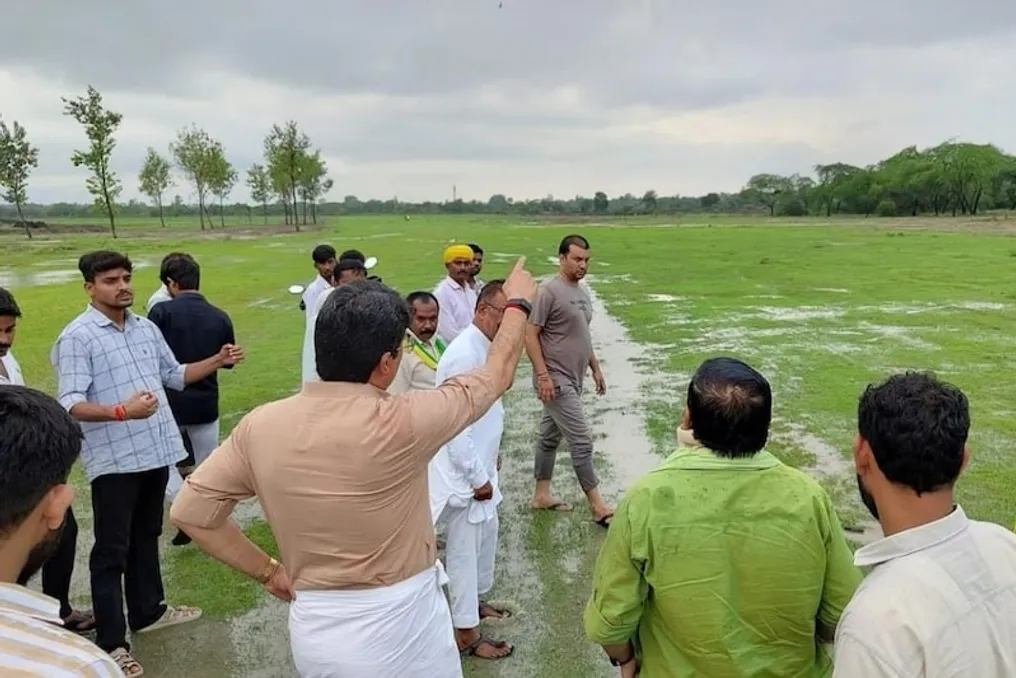
The Ramkatha is expected to take place in the Rajmahal in Beti or another large venue in Kunda. According to available information, Raja Bhaiya himself has already inspected potential venues along with his supporters. Photographs from the inspection, posted on the Jansatta Dal website, suggest that preparations for the proposed Ramkatha go beyond mere discussions, and work on the venue and other aspects is already in progress.

Interest in Dhirendra Krishna Shastri's Ramkatha is being shown by residents of Kunda and surrounding areas. It is estimated that around two hundred thousand people may gather for this event. It is expected that a large number of pilgrims will arrive not only from Pratapgarh but also from Priyaganj and Kaushambi. The probability of such a large congregation of devotees has made this event a topic of discussion in the region. Raja Bhaiya's supporters are also expressing enthusiasm for the planned Ramkatha, and such a large religious event in Kunda is considered to hold special significance.

Raja Bhaiya has previously organized large religious events. His father, Raja Uday Pratap Singh, is also considered a person of religious views. In this regard, this event in the Kunda estate, dedicated to Shri Ramkatha of Dhirendra Shastri, is considered important from a religious perspective. Pilgrims visit the Ramkathas conducted by the spiritual leader of Bageshwar Dham in large numbers, which draws public attention to the upcoming event.

Beyond the religious aspect, this event is also being viewed from a political perspective. Political experts believe that through this Ramkatha, Raja Bhaiya may attempt to strengthen his electorate and his Hindu identity. Since a large crowd is expected at Dhirendra Shastri's Ramkatha, the proposed event in Kunda is considered a major regional religious event. Experts also believe that if about two hundred thousand people gather, the impact of the event may be felt not only in Kunda but also in neighboring areas.

At present, the most crucial question concerns the official date and venue of the event. According to sources, the possibility of holding the Ramkatha on November 17th, 18th, and 19th exists, but Jansatta Dal has not yet made an official statement on this. What is clear so far is that Raja Bhaiya's associates have contacted the government of Bageshwar Dham, and discussions on the Ramkatha dates are ongoing. A site inspection has also been conducted. If the planned event takes place, Shri Ramkatha of Dhirendra Krishna Shastri in Kunda in November could become a major religious event. Currently, pilgrims and Raja Bhaiya's supporters are awaiting an official announcement.
Similar stories

Ganesh Chaturthi 2026 Date and Time: Information on Auspicious Installation Time and Devotional Rituals
Read more
www.aajtak.in

Ganesh Chaturthi 2026 Date and Time: Information on Auspicious Installation Time and Devotional Rituals

Every year, the Ganesh Chaturthi festival begins on the fourth day of the lunar month Bhadrapada and concludes on Anant Chaturdashi. Typically, this festival lasts for about ten days, but due to date changes, there may sometimes be a difference of one or two days.

During the celebration, followers worship Lord Ganesha, praying for peace, prosperity, affluence, and deliverance from life's difficulties. People install a statue of Ganesha at home for a period ranging from three to five, seven, or a full ten days, according to their faith and convenience, after which they perform the immersion ritual (Visarjan) of the statue according to established rules.

If you plan to install Ganesha in your home this year, Pandit Pravin Mishra has provided information regarding what the statue should look like, what time is auspicious for installation, what materials are needed for worship, and what to pay attention to during the installation.

When will Ganesh Utsav begin?

This time, Ganesh Utsav will start on September 14, 2026, and conclude on September 25, 2026, on the day of Anant Chaturdashi, when the statues of Ganesha will be immersed.

Auspicious Time for Installing Ganesha

The time for installing Ganesha is considered very important. The auspicious moment for installing the Ganesha statue on September 14, 2026, falls between 11:03 AM and 1:31 PM. During this time, the installation and worship of Lord Ganesha can be performed according to all rituals.

What to note if bringing Ganesha home for the first time

If you are bringing Ganesha into your home for the first time, you must first thoroughly clean the premises. Special attention should be paid to the place where the Ganesha statue will be installed. After that, the house can be decorated with flowers, leaves, and torans to welcome Ganesha. It is also considered auspicious to draw a Swastika symbol at the main entrance of the house.

For the installation of Ganesha, a clean platform should be prepared and covered with a new red or yellow cloth. This is the platform upon which the Ganesha statue is placed.

What should the Ganesha statue look like?

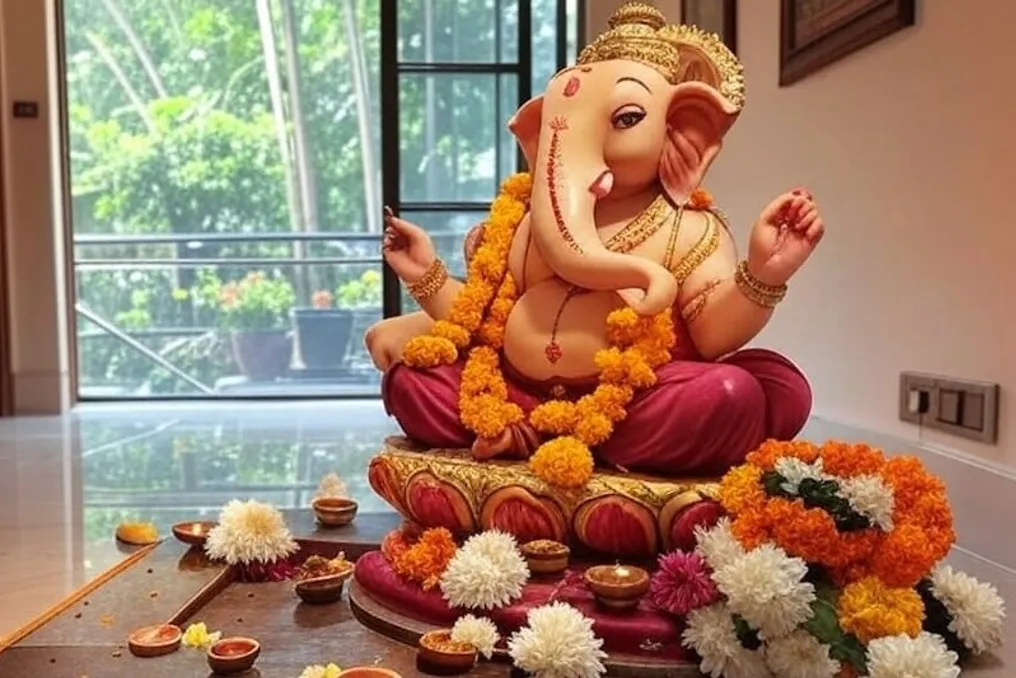
When purchasing a Ganesha statue, several points should be considered. According to religious beliefs, statues made of clay are considered auspicious, so it is recommended to choose a clay statue. Furthermore, it is considered auspicious to have a seated Ganesha statue. It is also important that the trunk of the statue is turned to the left. Such a statue can be installed at home and worshipped according to rituals.

The northeast direction, known as Ishan Kona, is considered auspicious for installing the statue in the home. Therefore, if possible, the installation of Ganesha should be done in this direction.

Necessary materials for worshipping Ganesha

Before installing Ganesha, all materials for worship must be prepared. This requires a platform, a red or yellow cloth, a Kalash, mango leaves, twigs, Akshat, flowers, fruits, coconut, Modak or Laddu, incense, sandalwood, and a ghee lamp. Durva grass must be used during worship, as it is especially loved by Ganesha. A garland of Durva can also be offered to Ganesha.

After this, various fruits and sweets can be offered to Ganesha. The offering of Modak is particularly significant. Additionally, Laddu made from chickpea flour can also be offered.

How to perform the installation and worship of Ganesha

First, a platform is placed in the spot where the Ganesha statue will be installed and covered with a red or yellow cloth. Then, the Ganesha statue is placed on the platform. After this, the statue is purified with a Ghajal. Next, Tilak is applied to Ganesha, and flowers and Akshat are offered. Incense and the lamp are lit, performing Aarti to Ganesha. Following this, fruits, Modaks, or Laddus are presented. During worship, one should offer their wishes at Ganesha's feet and pray for peace and freedom from life's problems.

Chanting the Ganesha Mantra

It is also considered auspicious during worship to repeat the Ganesha mantra. You can repeat any Ganesha mantra according to your belief. The simplest mantra sounds like: 'Om Gam Ganapataye Namah'. This mantra should be repeated with sincere faith, praying to Ganesha for the resolution of life's problems and the fulfillment of desires. After worship, the Prasad should be distributed to as many people as possible. There is a religious belief that by worshipping Ganesha with faith and devotion during Ganesh Utsav, one can receive his grace, leading to happiness and prosperity in life.

How many days to keep Ganesha?

The duration for keeping Ganesha at home depends on your faith and convenience. You can install Ganesha for 3, 5, 7, or 10 days. The number of days Ganesha stays at home should be the number of days you worship him with faith and devotion. After this, the immersion ritual of the Ganesha statue should be performed at an auspicious time according to all rules, and he should be asked to return next year.

Popular