The universe of Japanese video games covers a vast timeline, portraying the country in different historical phases. Some titles are set during centuries-old civil war periods, while others feature modern or post-war Japan.
Five games—Onimusha, Silent Hill f, Yakuza, Persona 5 Royal, and Forza Horizon 6—have been selected to illustrate rich Japanese history.
The Era: Sengoku Period
The Sengoku period, known as the "Warring States," occurred in Japan approximately between 1467 and 1615. During that time, there was no centralized power; numerous feudal lords, called daimyō, competed for territories, and the Ashikaga shogunate held only nominal existence for decades.
A crucial event in this scenario was the Battle of Okehazama in 1560. Oda Nobunaga managed to surprise Imagawa Yoshimoto's army, which counted around 25,000 soldiers and was heading towards Kyoto, using only 2 to 3 thousand men. This happened during a storm, taking advantage of the fact that part of the enemy troop was unarmored due to the heat. Yoshimoto died in combat, the Imagawa clan was nearly annihilated, and Nobunaga became an unforgettable figure, later allied by Tokugawa Ieyasu. This episode marked the beginning of a rise to power that would culminate in the unification of Japan decades later.
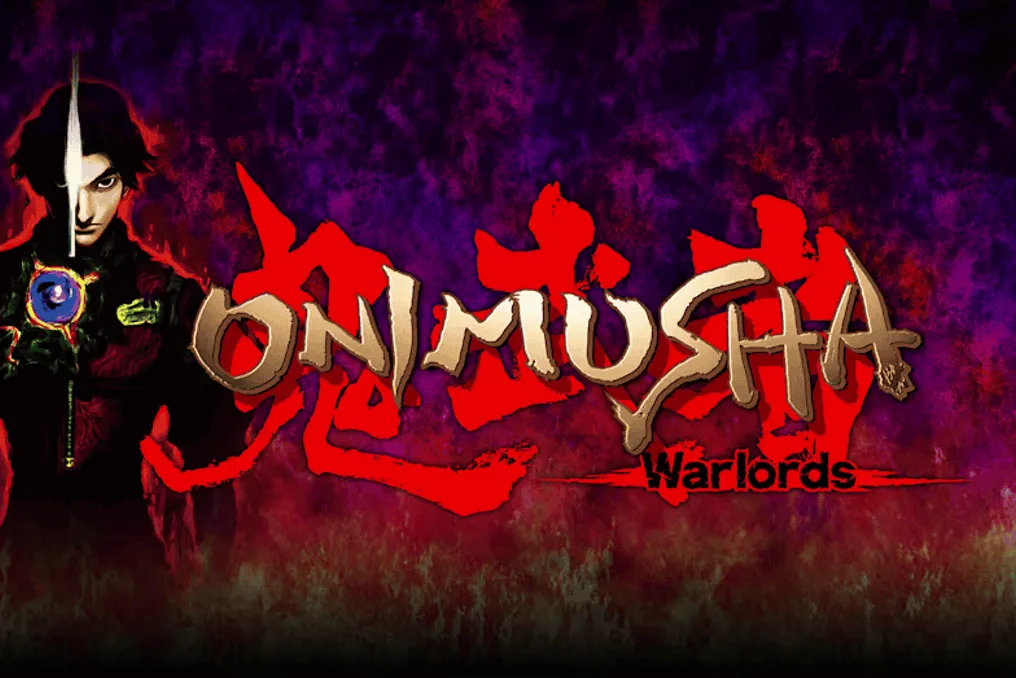
Onimusha: Warlords
The first game in the franchise, Onimusha: Warlords (Capcom, 2001), begins in this historical context. The main character, Samanosuke Akechi, witnesses Nobunaga's victory at Okehazama. A year later, he receives a plea from his cousin, Princess Yuki, and sets out to rescue her from Genma demons who kidnapped her servants. However, he discovers that Nobunaga was resurrected by the demons to become the narrative's antagonist. Thus, the game uses Okehazama as a historical basis, building dark fantasy upon it. While the civil war and political instability are faithful to the period, elements like the cursed gauntlet and demon Nobunaga are fictional.
It is worth mentioning that the franchise has another work related to feudal Japan: Onimusha: Way of the Sword, scheduled for September 4, 2026. This title is set in a reimagined world close to the beginning of the Edo period and focuses on the samurai Miyamoto Musashi, one of the most famous warriors, who lived between 1584 and 1645. Musashi won 62 undefeated duels (the most famous against Sasaki Kojirō, on Ganryū Island, in 1612) and wrote the classic "Book of Five Rings" shortly before his death.
The Era: Post-War
Post-war Japan presented a great contrast: major metropolises were rapidly rebuilding and modernizing, while the rural interior maintained much older customs, such as the worship of local deities, shrine rituals, ghost and youkai legends, and ancestor veneration, which still dictated daily life.
This period was also marked by recent war traumas and strong conservative social pressure, especially on young women, who were expected to preserve family honor and fulfill pre-established roles, avoiding scandal at all costs.
Silent Hill f
Silent Hill f (Konami, 2025) marks the franchise's debut outside the typical American city, taking place entirely in Japan, in the fictional Ebisugaoka. This inland town is heavily inspired by Kanayama, Gero district, in Gifu Prefecture, a location the development team visited to gather architectural and environmental references.
The protagonist, Hinako, confronts supernatural terror originating from the tension of the era: the weight of tradition, the silence imposed by shame and family expectations. In this case, the historical validation lies more in the social atmosphere, although it is well-founded in the decade in which the plot unfolds.
The Era: Asset Bubble
Between 1986 and the early 1990s, Japan experienced the so-called asset price bubble, where the value of real estate and stocks rose to unrealistic levels, driven by speculation and abundant credit. It reached the point where it was claimed that the land of the Imperial Palace in Tokyo was theoretically worth more than the entire state of California.
When this bubble burst in the early 1990s, the country plunged into the so-called "lost decade." It is in this scenario that Japanese organized crime, the yakuza, historically operates in nightlife areas, such as Kabukicho in Tokyo.
Yakuza
Yakuza (Sega, 2005), whose current name is Like a Dragon, is predominantly set in 2005 (with a prologue in 1995) in the fictional neighborhood of Kamurocho, which is almost a replica of Kabukicho. The protagonist, Kazuma Kiryu, a recently released yakuza member after taking responsibility for a crime he did not commit, finds himself involved in the search for 10 billion yen missing from his own clan's vault. Kamurocho reproduces with remarkable detail the real daily life of a Japanese nightlife district, including convenience stores and arcades, despite the plot being fictional.
Other Titles in the Series
Since the Yakuza series has more than a dozen games, each set in a distinct era, a brief summary is warranted: the sequence progresses chronologically with Kazuma Kiryu up to Yakuza 6: The Song of Life (2016), when leadership passes to Ichiban Kasuga in Yakuza: Like a Dragon (2020, set around 2019) and Like a Dragon: Infinite Wealth (2024, approaching contemporary Japan). The franchise has also explored 19th-century Japan in a spin-off set at the end of the shogunate.
The Most Popular Title in the Franchise
Although the first game serves as a historical starting point, the most popular and recommended title for beginners is Yakuza 0 (2015). This game is set in 1988, at the height of the economic bubble mentioned earlier. Its plot centers on a dispute over a small empty plot of land in Tokyo, reflecting the type of real estate speculation that characterized that era. It is considered the best-selling and highest-rated title in the series, with over 2 million copies sold, and is often suggested to those who have never played Yakuza.
The Era: Contemporary
In this case, it is not a specific historical event, but rather contemporary Japan. Specifically, it addresses the urban environment of Tokyo and Japanese school routine, including social pressure on adolescents and widespread distrust of corrupt authorities, a topic quite current in Japanese society.
Persona 5 Royal
Persona 5 Royal (Atlus) officially sets the plot year as a vague "20XX," but its internal calendar—an academic year from April to March—exactly corresponds to 2016, the release year of the original Persona 5. The protagonist moves to Tokyo and attends the fictional Shujin Academy while leading the Phantom Thieves, a group that uses supernatural powers to expose the corruption of adults around them. Neighborhoods like Shibuya and Akihabara are recreated with high fidelity, representing Japan at the time of the game's release, without historical distance between fiction and reality.
The Current Era
This refers to today's Japan, literally. The game Forza Horizon 6, released in 2026, was announced as the first time the franchise will be set in the country. According to the development team, the intention is to capture contemporary Japan exactly as it is now: a place where traditional shrines coexist with mechanical workshops, and where neon-lit arcades demonstrate the coexistence of tradition and modernity on the same block.
Forza Horizon 6
Forza Horizon 6 (Playground Games/Xbox Game Studios) is an open-world racing game, which simplifies the "historical validation" compared to the other listed titles, given that the setting is the present. However, it concludes the list with a clear function: to demonstrate that after centuries of civil conflict, decades of post-war reconstruction, and the cycle of euphoria and recession of the economic bubble, contemporary Japan is a nation that harmonizes age-old tradition with cutting-edge technology.
Over the decades, Japan has demonstrated great capability in the gaming scene, even facing crises. Various Japanese franchises have conquered the world for generations. Increasingly, including in Brazil, people are interested in Japanese culture not only through games but also through anime, manga, and cultural events, showing that Japanese tradition persists alongside modernity.