Evvy raises $40 million to expand AI-based women's health diagnostics
Read more
Ventureburn
ventureburn.com

Evvy raises $40 million to expand AI-based women's health diagnostics

Evvy has successfully raised $40 million in a Series B funding round to scale its precision medicine platform focused on women's health. The newly signed round was led by Catalio Capital Management. Other investors participating in the financing included Rethink Impact, Muse Capital, Alumni Ventures, Labcorp Venture Fund, General Catalyst, Left Lane Capital, BBG Ventures, and others.

With this new capital, Evvy's total funding has reached nearly $60 million. The company was founded in New York in 2021. Evvy's co-founders are Priyanka Jain, who serves as CEO, along with Line Bruezek and Pita Navarro. Initially, the company focused on testing vaginal microbiome.

The Evvy platform uses metagenomic sequencing to analyze over 700 microbes from a single sample. Users collect samples at home and then send them to the Evvy laboratory. Clinicians then analyze the results through the company's platform, providing patients with clinical conclusions and personalized treatment plans. The system also supports tracking long-term biomarkers.

According to Evvy, its platform currently serves over 100,000 patients across the United States and collaborates with more than 3,000 practicing physicians. The company has accumulated an extensive dataset that has allowed it to publish peer-reviewed studies and identify previously uncatalogued vaginal microbiome genomes, as well as new subtypes of bacterial vaginosis. This data can help doctors develop more personalized treatment methods.

Evvy's broader goals extend beyond just vaginal health; the company aims to link microbiome biology with symptoms, treatments, and health outcomes. The company believes that high-quality data on women's health remains limited, creating obstacles for the development of artificial intelligence and precision medicine. Evvy intends to bridge this gap by collecting large volumes of biological data, which could potentially help researchers uncover links between molecular signals and health status.

In May, the company launched EvvyAI—an AI-powered assistant that translates microbiome data into personalized recommendations for users. This system combines automated insights with clinician oversight, allowing patients to be referred to doctors when professional medical judgment is necessary.

The new funding will be directed towards expanding Evvy's work in fertility. The company is investigating the relationship between the vaginal microbiome and reproductive outcomes, including infertility, IVF success rates, and recurrent pregnancy loss. Furthermore, research is underway on potential links to preterm birth and gynecological cancer. Last year, Evvy launched a prospective study in collaboration with IVF clinics, using vaginal microbiome testing to gather additional clinical data.

Evvy plans to use the new capital to validate AI-based diagnostic and treatment models. Fertility will be the first major area of expansion outside of vaginal health. The company will also increase service reach through partner and physician channels, deepening its collaboration with US Fertility. In the long term, the Evvy platform could cover a wider range of women's health conditions, offering an alternative to traditional screening methods through regular at-home testing. Potential areas include inflammation, infections, endometriosis, and fertility.

Catalio Capital Management noted that Evvy's data and AI infrastructure is a key factor in their investment, while also highlighting the company's growth and the quality of its leadership team. Evvy enters the women's health market, which is attracting growing investor attention, and the new funding provides the company with additional resources to expand diagnostic coverage, combining clinical testing, proprietary biological data, and artificial intelligence.

Similar stories

Factory raises $200 million at $5 billion valuation to scale AI software development
Read more
ventureburn.com

Factory raises $200 million at $5 billion valuation to scale AI software development

Factory has successfully raised $200 million in a new funding round, achieving a valuation of $5 billion. Investors in this round include Blackstone, Khosla Ventures, and Sequoia Capital. Insight Partners, Evantic Capital, and Sound Ventures also participated.

Factory was founded in 2023 by Matan Greenberg and Eno Reyes. Other investors included NEA, Mantis VC, and Clearlake. The round also attracted angel investors, including Nico Rosberg, Brad Gerstner, and Mark Benioff.

The new funding increases the company's total capital raised to over $400 million. This represents significant growth compared to the $1.5 billion valuation set in April. Thus, in five months, Factory's valuation has more than tripled; previously, the company had raised $150 million at that same valuation.

The latest capital raise reflects growing enterprise demand for autonomous software development tools. The San Francisco-based company aims to increase the degree of autonomy in software development. Its platform enables large enterprises to create, test, and maintain software using artificial intelligence agents throughout the entire development lifecycle.

Factory differs from platforms focused on individual coding agents because it provides enterprises with a unified system for managing software development. The platform allows companies to control the training process of their 'software factory,' as well as manage models and system deployment. Factory can operate through its managed cloud infrastructure, or clients can deploy it on-premises or in fully isolated environments, giving enterprises greater control over AI-driven development.

The company reports that its platform is used by hundreds of thousands of developers. Factory's clients include Nvidia, Blackstone, Royal Bank of Canada, Palo Alto Networks, and Adobe. This growing client portfolio underscores the increased interest from the corporate sector in AI-powered software development.

Enterprises are increasingly using AI to boost engineering productivity. Factory believes that companies are moving from using individual coding assistants to building broader software factories around autonomous systems. Matan Greenberg noted: 'Major enterprises worldwide are transitioning from individual coding agents to software factories,' adding that clients confirm the potential for rearchitecting software development systems, although the company is still in the early stages of this transition.

Factory's strategy is focused on creating autonomous software factories that operate continuously under human supervision. Enterprises can regulate measurable outcomes while AI performs development tasks. The company competes in the rapidly growing AI coding market. Factory plans to use the new capital to support further growth, focusing particularly on platform expansion and adoption within the corporate sector.

Positron AI raises $875 million to scale AI inference hardware
Read more
ventureburn.com

Positron AI raises $875 million to scale AI inference hardware

Positron AI has successfully raised $875 million in a Series C funding round, valuing the company at $5 billion. The company's core business involves developing hardware that makes the artificial intelligence inference process more energy-efficient and cost-effective.

The funding was secured in two stages: first, a Series C round of $375 million was closed, followed by a Series C-1 round of up to $500 million. The main round was led by NEA, Atreides Management, and Valor Equity Partners, with co-leads from Andra Capital and SemiAnalysis Capital participating. The second tranche was led by Jim Clark, founder of Silicon Graphics and Netscape, with participation from several institutional and strategic investors.

The capital raised will allow Positron to significantly expand its growing business in inference and add several experienced technology investors to its board of directors. Forest Basket from NEA and Gavin Baker from Atreides Management will join the board. Thomas Germoluk and Dylan Patel will also become directors.

As AI workloads increasingly shift towards inference, infrastructure is necessary for the continuous operation of models by every AI assistant, agent, and helper. Positron focuses on solving memory and power issues arising from this growth. The company's systems are designed with an emphasis on bandwidth and memory capacity, rather than raw computational power.

The company's next-generation systems utilize standard LPDDR5X memory, which reduces dependence on constrained high-performance memory supply chains. Positron claims its systems can achieve over 90% of available memory bandwidth.

Furthermore, the company focuses on high performance in tokens per dollar and tokens per watt metrics. Positron's architecture supports both air-cooled and liquid-cooled data centers, giving customers flexibility in deploying systems across various rack densities.

Positron already has clients using the first version of the Atlas system. Over 50 Atlas racks have been deployed in Oracle Cloud Infrastructure, where Parasail uses this power for its own inference services. Jump Trading and i3d.net are also production clients of Atlas.

The new funding will be directed towards developing the next generation of silicon chips. The Asimov chip is scheduled for fabrication using TSMC's N3P process by the end of 2026; TSMC describes N3P as an improved 3nm process. Production of Asimov is slated for the second half of 2027. Each Asimov chip will support between 288 GB and 2304 GB of memory, meeting the demands of increasingly complex AI inference workloads.

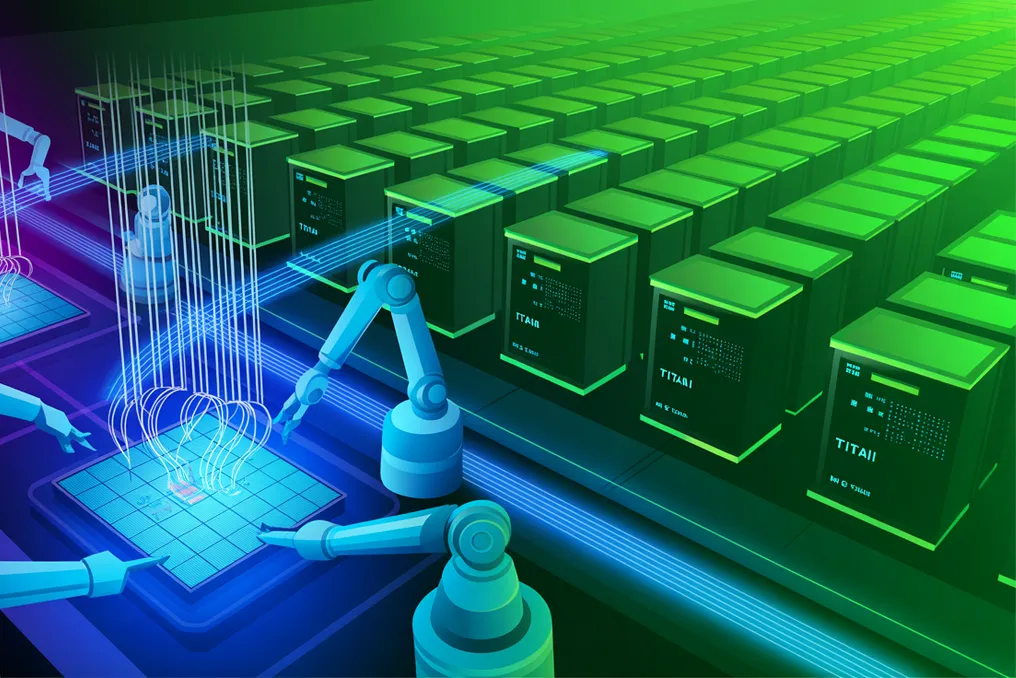
The Titan system will integrate four to eight Asimov chips into a single system and is designed to support models exceeding 16 trillion parameters. Titan will also target context windows exceeding 10 million tokens and can scale to thousands of nodes for larger deployments. Positron also plans to build a data center engineering facility with a capacity of over 2 MW and an emulation platform to support development, testing, and manufacturing readiness.

Positron intends to use the funds to secure LPDDR5X supply commitments, as well as to increase manufacturing capacity and system integration. Go-to-market operations will expand in parallel with production, helping the company meet the growing demand for inference infrastructure.

CEO Mitesh Agrawal noted that the Atlas deployments provided valuable customer insights that influenced the design of Asimov and Titan. The company is currently in a demanding execution phase, requiring it to complete silicon development while simultaneously scaling production and customer adoption.

Positron's strategy is focused on the economic efficiency of AI model operation. Its memory-centric architecture aims to reduce both energy consumption and infrastructure costs. The $5 billion valuation reflects investor confidence in the inference market.

UniPat raises $300 million with Alibaba support to expand AI testing and benchmarking
Read more
ventureburn.com

UniPat raises $300 million with Alibaba support to expand AI testing and benchmarking

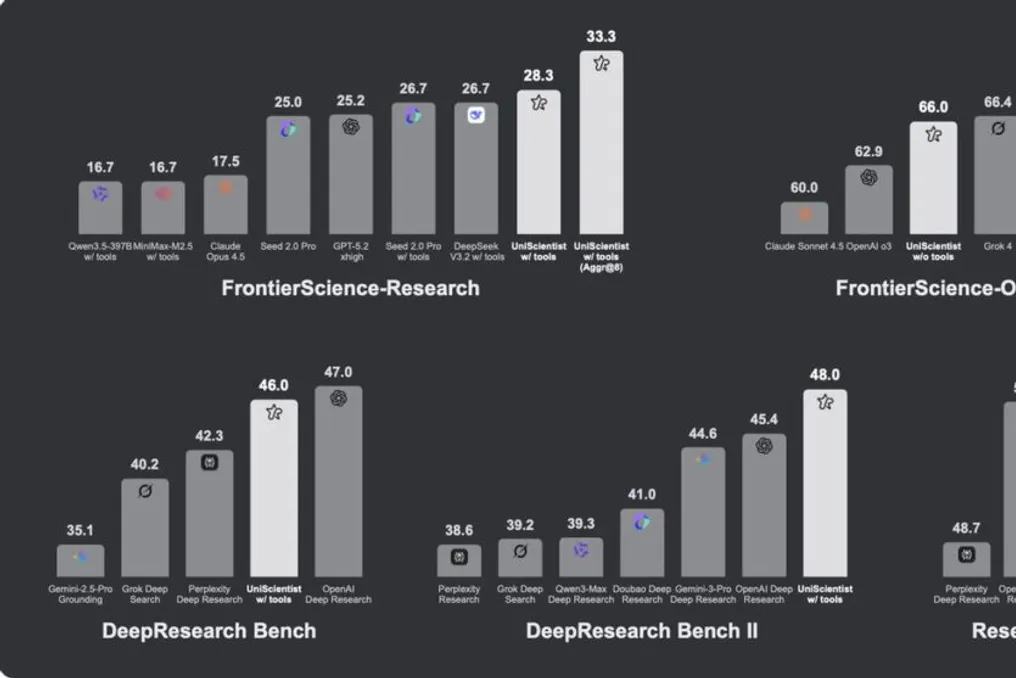
As artificial intelligence develops, the problem of testing has emerged. While many focus on creating impressive large language models to attract investors, there are only a small number of verified platforms to check the functionality of these complex systems after training is complete.

AI models are prone to hallucinations and can drift from the norm over time. To solve this significant operational problem, which constantly deters large corporate users, UniPat has raised $300 million. UniPat actively conducts stress tests on these complex systems to ensure a full level of trust.

UniPat differs from other AI companies; they do not just create new algorithms to demonstrate at expensive tech conferences. Instead, the startup specifically tests models based on real-world scenarios, rather than sterile laboratory conditions.

This can be compared to a rigorous training camp for artificial intelligence. Before a model gains access to real consumer data or begins performing automated financial operations, UniPat subjects it to intensive trials. This allows for the generation of high-quality system performance data that developers need to eliminate critical flaws, as what hasn't been thoroughly broken first cannot be fixed.

The tech giant Alibaba led this major funding round, causing a stir in the industry. The financial details of this round are quite impressive: the new influx of capital boosted the startup's valuation to an impressive $2.5 billion post-investment. It is also interesting that this specialized center is headed by a former company employee.

It is clear that Alibaba is interested in retaining its top talent. Significant funds continue to flow despite the caution of the broader venture capital market. Moreover, this specific deal ranks among the top three percent of all registered late-stage venture capital rounds.

The high cost of the testing platform is due to basic corporate economics and the need for competitive survival. Early investors included representatives from Sequoia China. This demonstrates that leading financial players are looking for infrastructure-related enterprises amid the current AI race. We have moved past the phase of simply admiring smart chatbots.

Now, large international corporations demand flawless analytics. They need solid proof that implementing multi-million dollar AI will not lead to public embarrassment. UniPat provides this necessary insurance policy. This is not just another routine technology investment. It is a calculated move. As global powers fiercely compete for dominance in artificial intelligence, the basic infrastructure for evaluating these tools becomes infinitely valuable.

Alibaba's massive bet signals a clear shift in market priorities. The future belongs not only to those who can build the largest model but also to those who can prove their model is the safest, fastest, and most reliable in real-world conditions.

Popular