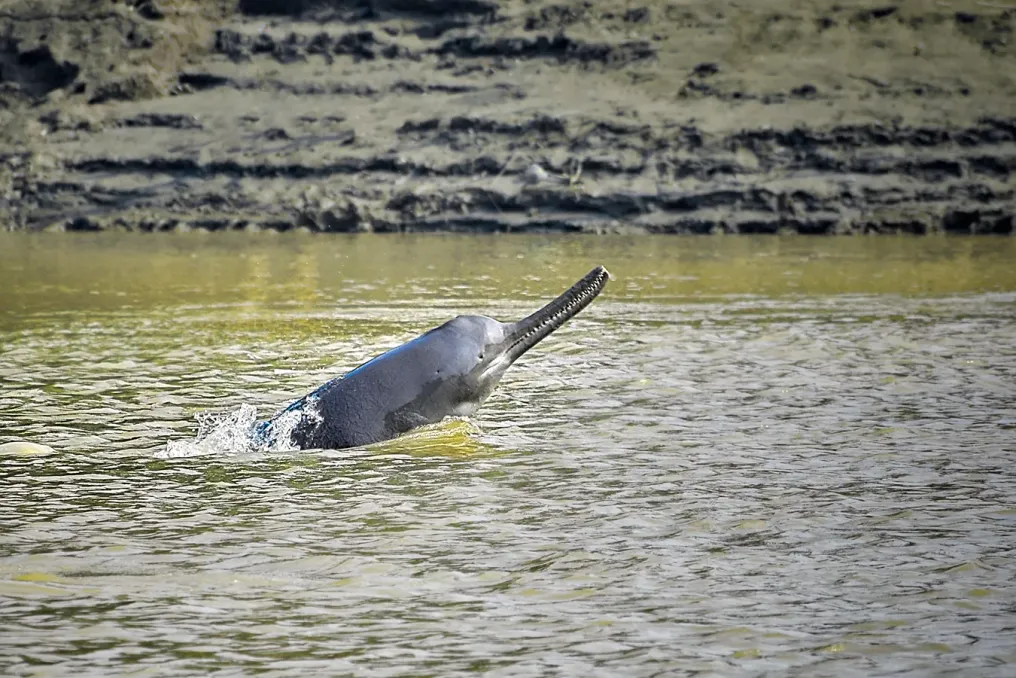
Despite adverse conditions, a small population of Ganges dolphins continues to inhabit one of Bangladesh's most polluted waterways.
The Buriganga River flows near Dhaka, the capital of Bangladesh, which is characterized by high population density. This river suffers greatly from industrial waste, sewage, and solid pollution, making much of it unsuitable for many fish species.
However, a recent study showed that about 20 Ganges dolphins (Platanista gangetica) still inhabit the river. These findings were published in the Journal of Asia-Pacific Biodiversity and are based on 12 months of observations conducted from September 2023 to August 2024. Researchers examined a 27-kilometer stretch of the Buriganga on the southern outskirts of Dhaka.
According to Mongabay, dolphins were recorded in 10 out of the 12 months of the survey, with the highest numbers recorded in December and during the winter months. This discovery surprised scientists given the extreme environmental conditions of the river.
Researcher Md. Aminur Rahman told Mongabay that 'the Buriganga is not a typical place for dolphins, where local fish have largely disappeared.'
During the study, groups averaging more than four dolphins were observed, and calves accounted for nearly 16% of all sightings. The presence of young individuals indicates that the dolphins continue to reproduce in this river despite the pollution.
The Buriganga is under severe pressure from the city and surrounding industries. Untreated sewage from tanneries, textile and dyeing factories, battery plants, metalworking enterprises, pharmaceutical companies, and other production facilities enters the river. This is compounded by sewage, garbage, and surface runoff from the urban environment.
River studies revealed heavy metals, including chromium, lead, cadmium, arsenic, mercury, nickel, copper, and zinc, both in the water and in the bottom sediments. During the dry season, oxygen levels in some parts of the river can drop to extremely low levels, creating conditions where many aquatic species struggle to survive. This has resulted in a sharp decline in biodiversity, with local fish populations being particularly affected.
Nevertheless, some pollution-tolerant species have managed to persist.
Scientists believe that a less likely food source helping the dolphins survive may be large quantities of suckermouth cichlids, an invasive species known for its ability to tolerate poor water conditions. Some of these cichlids are also capable of gulping air from the surface, allowing them to cope with low-oxygen environments in the water.
Mohammad Abdul Aziz, a professor of zoology at Jahangirnagar University, told Mongabay that dolphins may prey on this fish.
However, the presence of a food source does not mean the river is a safe habitat. Researchers emphasize that pollution remains the most serious threat to the dolphins. Another threat is intense boat traffic, as vessels can interfere with the animals' movement and behavior.
Aziz warned Mongabay: 'If we want to save the dolphins in the Buriganga, stopping pollution must be the priority.'
The Buriganga population is part of a much larger Ganges dolphin population found in the river systems of Bangladesh. According to a study by the Bangladesh Forest Department and WCS Bangladesh, 2307 Ganges dolphins were recorded between 2024 and 2025 across surveys covering approximately 4900 km of 45 rivers. This study identified 25 dolphin habitats nationwide.
However, the species continues to face significant threats, including pollution, habitat degradation, and harmful fishing practices. Illegal gillnets can catch and kill dolphins, and increased human activity in the rivers puts additional pressure on their habitat.
Researchers have also noted changes in dolphin habitats. Dolphins previously observed in rivers such as the Turag are no longer regularly found there. The Buriganga dolphins, meanwhile, are moving between the river and downstream tributaries, including the Dhaleshwari and Meghna rivers. Many remain concentrated in the Bosila area.
The survival of dolphins in such a heavily polluted river is an extraordinary phenomenon, but scientists caution that their presence should not be seen as proof of the Buriganga's health. Instead, it demonstrates the resilience of a species living under extreme pressure.
Bangladesh has already taken steps to protect freshwater dolphins. In 2012, the government declared three wildlife sanctuaries in the Sundarbans to protect the Ganges and Irrawaddy dolphins. However, researchers believe broader action is needed for the Buriganga dolphins. Reducing pollution, restricting harmful fishing methods, and managing vessel traffic can help the remaining dolphins have a better chance of survival. Currently, the small population continues to live in a river where many other species have disappeared, making its survival one of the most unexpected wildlife stories of the Buriganga.