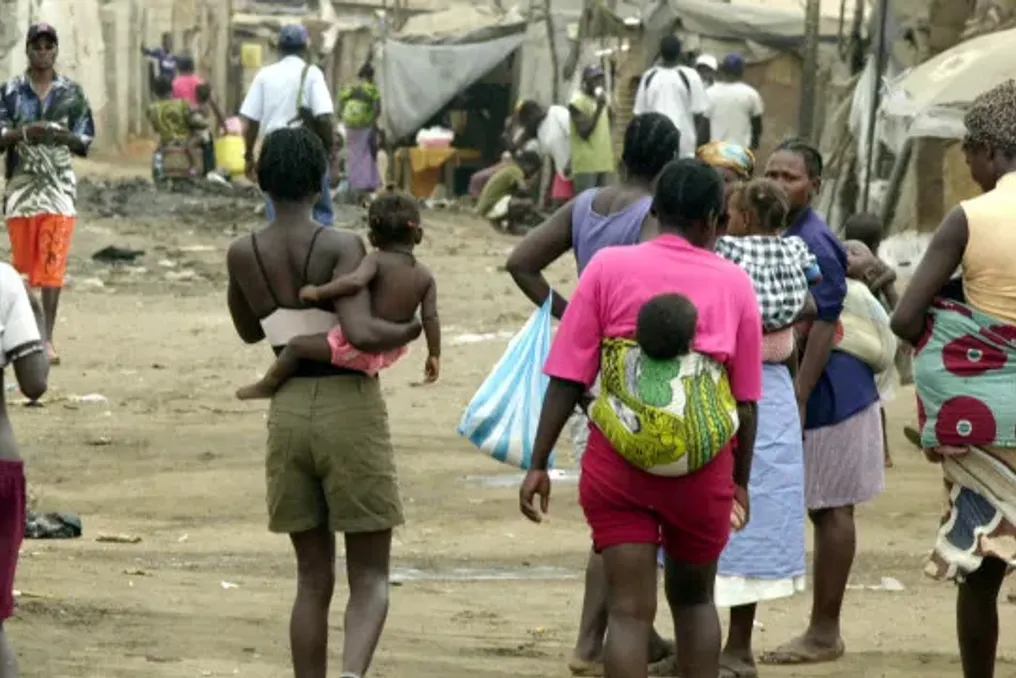
Data released in the Thematic Report on Adolescent Fertility in Angola indicate a reduction in the prevalence of youth pregnancy in the country. The report, made public in Luanda by the National Institute of Statistics (INE), points out that the incidence is higher in rural areas and among young people without education.
According to the survey, the prevalence of pregnancy among girls aged 15 to 19 in Angola has decreased by 21.5%. This figure went from 34.5% in the Multiple Indicators and Health Survey (IIMS) conducted between 2015 and 2016, to 27.1% in the IIMS of 2023 to 2024.
The INE emphasizes that despite the drop, Angola remains above the Sub-Saharan African average, which is estimated at 18%. The numbers are lower than those observed in Mozambique (36%) and Zambia (28%), but higher than those in Tanzania (23.4%), Cameroon (23%), and Gabon (22.9%).
Analyzing by province, the results show notable reductions in Malanje (a drop of 24.4 percentage points), Lunda Sul (a drop of 23.2 percentage points), Huíla (a drop of 19.7 percentage points), and Cunene (a drop of 14.6 percentage points).
The province of Luanda recorded the lowest prevalence, with 21.2% in IIMS 2015-2016 and only 13.9% in IIMS 2023-2024, which may be attributed to greater access to health and education services.
In contrast, provinces such as Cuanza Sul (51.4%), Cuanza Norte (41.3%), and Cuando-Cubango (44.0%) maintained high rates in IIMS 2023-2024. Additionally, in the province of Bengo, an increase of 2.7 percentage points was observed.
The general analysis concludes that Angola has achieved 'relevant progress'; however, the maintenance of high figures in certain regions and provincial disparities require the implementation of focused and differentiated strategies to accelerate the reduction of adolescent pregnancy.
Regarding the fertility rate, it showed a reduction of 25.2%, falling from 163 per 1,000 adolescents in IIMS 2015-2016 to 122 per 1,000 in IIMS 2023-2024.
This decrease was considerably larger in urban areas (33.3%) compared to rural areas (18.4%), where the indices remain high, reaching 195 per 1,000 adolescents in 2023-2024. Of the adolescents counted in the two surveys (3,444 and 3,874, respectively), seven out of ten lived in urban settings.
For the INE, these findings confirm important advances in reducing adolescent pregnancy in Angola over the last decade, possibly linked to increased female schooling, postponement of marriage, and better access to information on sexual and reproductive health.
The conclusions advocate for the adoption of integrated approaches aimed at keeping young people in school, preventing early marriages, expanding adequate sexual and reproductive health services for adolescents, and combating harmful social norms, with the goal of 'accelerating' the reduction and decreasing inequalities.
The research, presented in the Angolan capital, was supported by the United Nations Development Programme and the United Nations Population Fund.
>