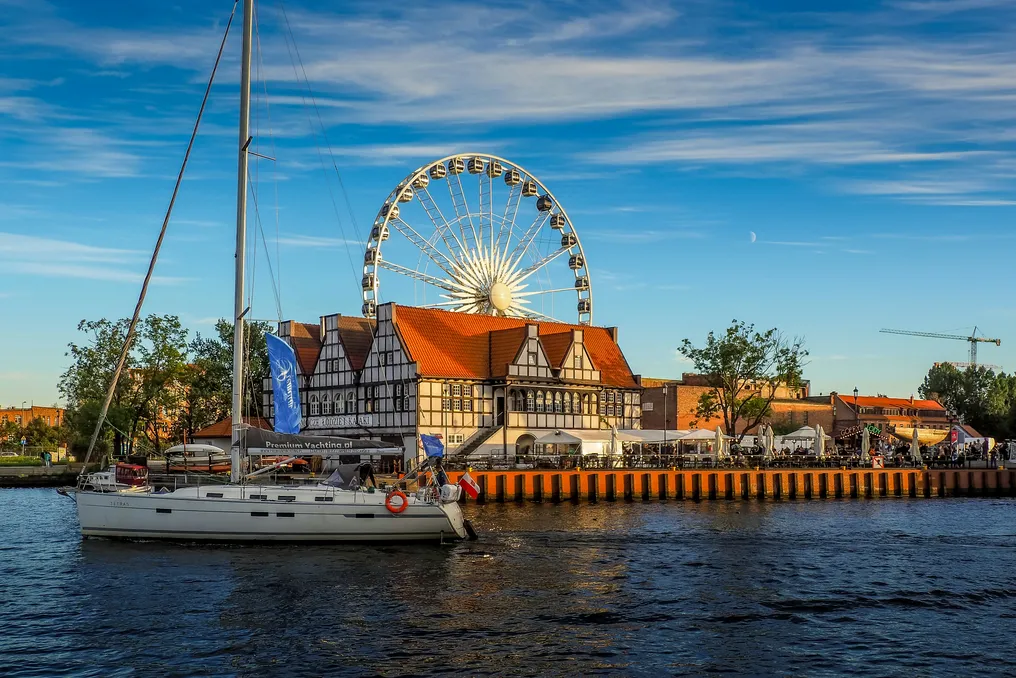
Located in northern Poland, in the Pomeranian region, Gdansk is a historic port city that has earned the unusual title of European Amber Capital. This is due to fossilized resin, which has become one of the main tourist and economic symbols of the region.
Amber, which is fossilized plant resin, formed over millions of years. It gained widespread fame through its appearance in the film 'Jurassic Park,' where the resin features as a key element in explaining the preservation of dinosaur genetic material within fossilized mosquitoes.
Gdansk is located approximately 340 kilometers northwest of Warsaw, the Polish capital, and only 50 kilometers east of the German border. The city, with nearly half a million residents, retains traces of invasions that occurred on its territory during World War II, making it a rare gem of Central Europe for history enthusiasts.
In the center of the historic area of Gdansk are both Długi Targ Market and Ulica Długa Street. This area is surrounded by richly decorated buildings with golden ornamentation and gargoyles. The place is ideal for leisurely strolls, allowing visitors to admire architectural details and visit magnificent historical structures such as the Golden House and the Artus Court, which once served as a meeting place for merchants and local elites. The famous Neptune Fountain is also located here—a bronze statue of the Roman god of the seas, created in the 17th century and having become one of the municipality's calling cards.
As expected, amber is present everywhere on Długi Targ. Shops, jewelry stores, and artisan stalls sell fossilized resin in various forms: from small souvenirs to intricate jewelry.
St. Mary's Church
St. Mary's Church, maintaining the Gothic aesthetic characteristic of most of the historic center, is a monumental structure dominating the cityscape of Gdansk. It is known as one of the largest brick churches in the world, impressing both with its enormous size and its capacity to accommodate thousands of parishioners.
A brief tour of the church's interior already demonstrates its impressive construction: the church is supported by slender columns and covered with majestic vaults, and it houses dozens of side chapels and preserves items of great religious value. Among the main attractions are the impressive 15th-century astronomical clocks, a relic of medieval mechanical engineering. Visitors willing to exert extra effort can climb 405 steps to the top of the cathedral tower, from where a wide panoramic view of Gdansk stretches out to the horizon.
The architecture of the amber capital is unique: since the city was rebuilt on a large scale after World War II, the historic center presents an unusual combination of Polish, German, and even Flemish architectural influences. Mariacka Street is one of the most popular among travelers for observing this blend.
Mariacka Street
This picturesque street, about 200 meters long, connects Mariacka Gate with St. Mary's Church, preserving an atmosphere reminiscent of Medieval Gdansk. Among its distinctive features are the so-called 'perrons,' stone platforms in front of buildings, many of which are adorned with gargoyles shaped like lion heads or mythical creatures.
Many buildings on the street house workshops, studios, and shops specializing in amber. Visitors can observe artisans working with the resin and purchase items produced in the region. The culmination comes in the evening when the historic lanterns are lit, creating the feeling of walking down an untouched medieval lane.