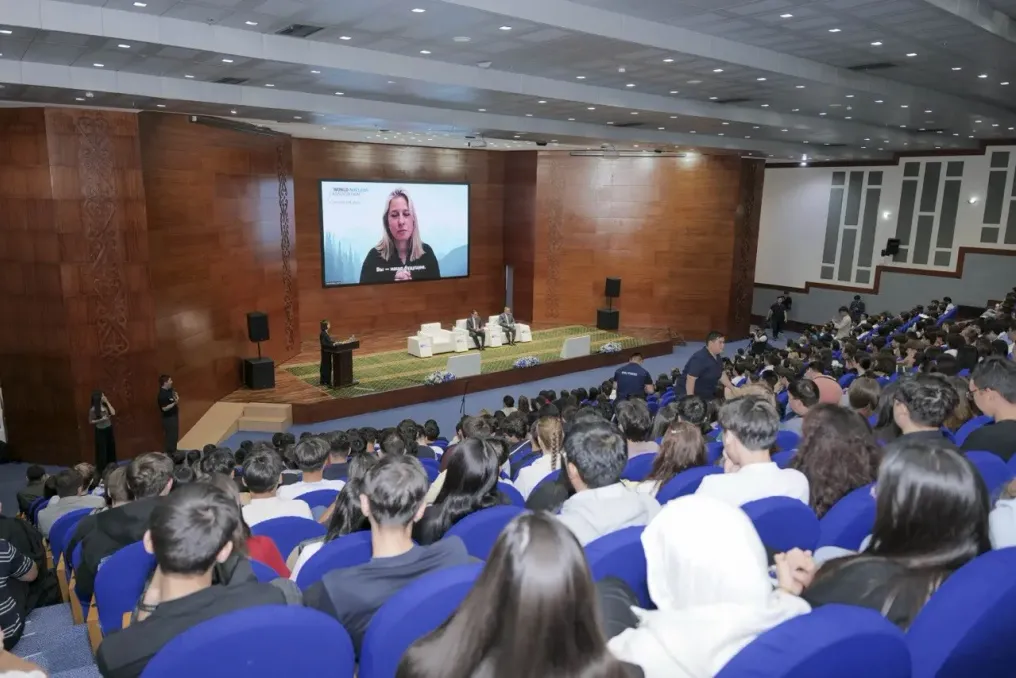
National youth nuclear dialogues are being held in fifteen countries from September 1 to October 30, 2026. The organizers are members of the second cohort and mentors of the International Advisory Council on Youth Affairs Impact Team 2050.
The program covers states such as Argentina, Armenia, Bangladesh, Brazil, Hungary, Egypt, Indonesia, Kazakhstan, Kyrgyzstan, Rwanda, Serbia, Tanzania, Uzbekistan, Ethiopia, and South Africa. Participants discuss opportunities for professional and educational growth in the nuclear industry, as well as barriers affecting youth interest in careers in nuclear energy and engineering. It is expected that the outcomes of these meetings will lead to the development of recommendations aimed at increasing the attractiveness of this field for young specialists.
The main goal of the program is to involve youth in scientific activities, advanced technologies, and industry projects, as well as to identify human resources and informational or societal obstacles related to nuclear energy. The dialogues are open not only to students and young professionals specializing in nuclear physics but also to representatives of related fields. This format allows participants to discuss issues of nuclear education, career prospects, international cooperation, and public participation.
Based on the conducted dialogues, a roadmap is planned to be created, which will describe the main difficulties preventing young people from choosing a career in the nuclear industry and will propose recommendations to increase its attractiveness. This document can be used when planning human resource training for the nuclear industry in the countries represented in the Impact Team 2050 Council.
This roadmap is planned to be presented at a meeting with the CEO of Rosatom State Corporation during the UN Climate Change Conference COP31, which will take place from November 9 to 20, 2026, in Antalya, Turkey.
The first youth dialogues took place in Kazakhstan: on September 1 in Almaty and on September 10 in Astana. The events attracted over 500 students from L. N. Gumilyov Eurasian National University, the Almaty branch of the MEPhI National Research Nuclear University, as well as young professionals and representatives of the nuclear, scientific, and energy communities.
Bilbao and Leon, CEO of the World Atomic Energy Association, addressed the participants in a video message. She emphasized the significance of the younger generation in the future of nuclear energy and the opportunities for international professional development.
In Astana, participants met with Almasadam Satkaliyev, Chairman of the Agency of the Republic of Kazakhstan for Atomic Energy, and Sayasat Nurbek, Minister of Science and Higher Education of Kazakhstan. They discussed the prospects of the nuclear industry, the training of a new generation of specialists, and the opportunities to realize their scientific and professional potential.
Within the framework of the program, dialogues are scheduled in Bangladesh for September 20, Indonesia for September 22, Egypt for September 24 and October 15, Tanzania for September 24, Brazil for September 30 and October 16, Kyrgyzstan and Uzbekistan for October 8, Ethiopia and South Africa for October 14, Armenia for October 15 and 16, Hungary and Serbia for October 19, and Rwanda for October 30.
Impact Team 2050 is an International Advisory Council to the CEO of Rosatom State Corporation. The first cohort of the Council worked from 2022 to 2026, while the second cohort includes 13 young representatives from 13 countries selected through a multi-stage process. National youth nuclear dialogues are conducted by members of the second cohort and mentors of the Council.