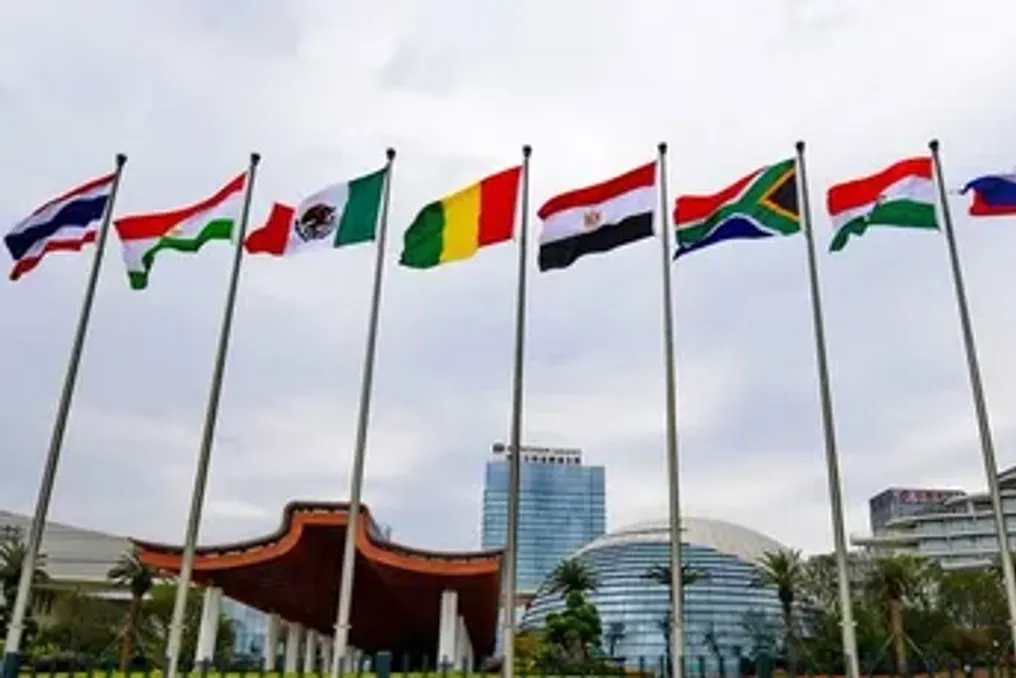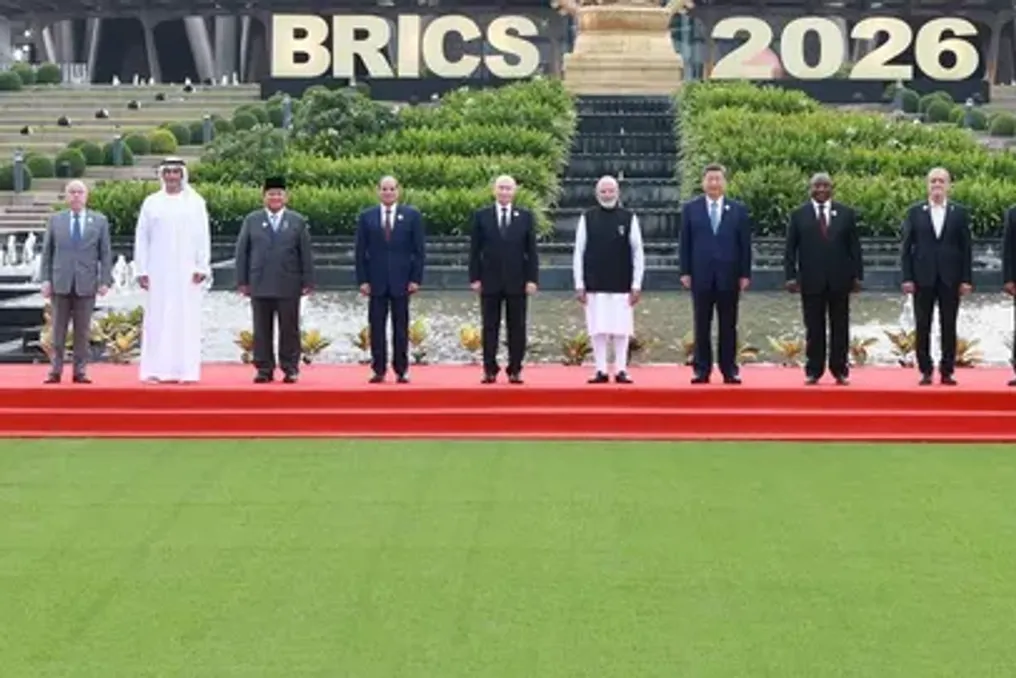
During the 18th BRICS Summit in New Delhi, the trend toward a changing world economy was confirmed, according to which Global South countries refuse to remain passive participants in decisions made in other regions.
The meeting, held on September 12 and 13 in New Delhi, led to the adoption of the New Delhi Declaration. This document covers a wide range of topics, including trade, investment, finance, technology, artificial intelligence, development, food security, and the reform of global institutions. The summit demonstrated growing efforts to create practical mechanisms for cooperation among developing economies.
For India, which chaired BRICS in 2026, the key message was the demand for developing countries to move from accepting rules to shaping them. Prime Minister Narendra Modi compared this task to transforming a 'pyramid of privileges' into a 'platform for partnership,' reflecting the overall direction of BRICS: representation must transform into real economic influence.
Trade and Finance Move Closer to the Center
One of the most important aspects of the summit was financial cooperation. Despite years of speculation about creating a common currency, BRICS did not announce one. Instead, member countries continued to implement a more pragmatic approach: increasing the use of national currencies in trade, improving cross-border payment systems, and exploring possibilities for greater compatibility of digital payment infrastructure.
The New Delhi Declaration also supports financing in local currencies through the New Development Bank and further work on the BRICS investment platform. India proposed creating the BRICS Risk Laboratory in the Gujarat International Financial Technology Centre, and the other members supported efforts to improve the investment climate among BRICS countries.
This is significant because reducing dependence on a single financial system does not require the immediate creation of a new world currency; the process can begin with more practical steps, such as simplifying trade, investment, and settlements for businesses in emerging markets using their own currencies. For companies operating in Africa, Asia, the Middle East, and Latin America, this could potentially reduce transaction costs and open up new avenues for trade and investment.
A More Integrated Economy of the Global South
Industrial growth and technology were also cemented on the BRICS agenda at the summit. Chinese President Xi Jinping called for deepening economic interaction and put forward initiatives in artificial intelligence, trade, and industrial development. China also proposed creating a BRICS AI Open Source Zone, emphasizing the growing importance of technological cooperation among developing countries.
The significance extends beyond just AI. Developing countries face a typical problem: they possess natural resources, growing consumer markets, and young demographics, but remain low in global value chains. Cooperation in technology, manufacturing, digital infrastructure, and production capacity can help BRICS economies shift from raw material exports to higher value-added production. This is particularly relevant for Africa.
For South Africa and the entire continent, BRICS cooperation is increasingly linked to the question of whether African economies can leverage their ties with major emerging markets to accelerate industrialization, infrastructure development, and value addition. President Cyril Ramaphosa consistently places these issues at the center of South Africa's participation in BRICS, including strengthening intra-bloc trade and investment, industrialization, infrastructure, and economic opportunities related to the African Continental Free Trade Area.
The opportunities are vast: Africa possesses critical minerals, agricultural potential, renewable energy resources, and one of the world's fastest-growing consumer populations. The strategic question is how to link these advantages with capital, technology, infrastructure, and markets. BRICS could become one of the platforms for building these connections.
Reforming the Global Economic System
The political aspect of the summit was no less important. BRICS leaders once again called for the reform of global governance institutions, including the UN Security Council and the international financial architecture, to ensure greater representation for developing countries. Russian President Vladimir Putin insisted on strengthening the representation of Asia, Africa, and Latin America in global decision-making, while Xi Jinping advocated for a fairer international order.
This is not just a matter of gaining seats in existing structures; it reflects a broader assertion that the distribution of economic power has changed faster than the structures governing the international system. BRICS countries are increasingly striving for their economic weight to be reflected in the rules governing trade, finance, development, and international decision-making.
A Broader Political Voice
The New Delhi Declaration also addressed major international conflicts, including the situation in the Middle East and Palestine, calling for diplomacy, sovereignty, and peaceful resolution of disputes. BRICS members opposed the forced displacement of Palestinians and called for the activation of diplomatic efforts to prevent conflict.
The importance of this lies in the fact that BRICS is increasingly providing a platform through which Global South countries can voice their positions on international affairs outside traditional Western political blocs. Its members do not share identical foreign policies, and they do not have to. The strength of BRICS partly lies in the fact that countries with different political systems, economic structures, and strategic interests can still find areas of common interest—especially in development, sovereignty, trade, investment, and a more representative international system.
What Comes Next
Thus, the New Delhi summit marks another stage in the evolution of BRICS. The bloc started as a platform connecting major developing economies, and its expansion has turned it into a much broader group of the Global South, uniting major economies from Africa, Asia, the Middle East, and Latin America.
The next stage will focus on implementation. The true measure of BRICS will increasingly be determined by concluded agreements, financed infrastructure, utilized payment systems, cross-border investments, transferred technologies, and built industries. This is especially significant for Africa. BRICS can provide access to markets, capital, technology, and strategic partnerships, but African countries will need to negotiate from a position of economic strategy, utilizing the African Continental Free Trade Area, regional economic communities, and national industrial policy to ensure that greater South-South trade leads to local production, employment, and increased value addition.
The New Delhi summit shifted the BRICS discussion from the question of whether the group challenges the existing world order. A more important question arises: can BRICS help build a world economy where developing countries have a greater ability to determine what they produce, where they trade, how they finance development, and how they participate in the industries of the future? The direction chosen in New Delhi indicates that this is becoming an increasingly ambitious goal. For the Global South, this transition from representation to economic agency may ultimately be BRICS's most important contribution.