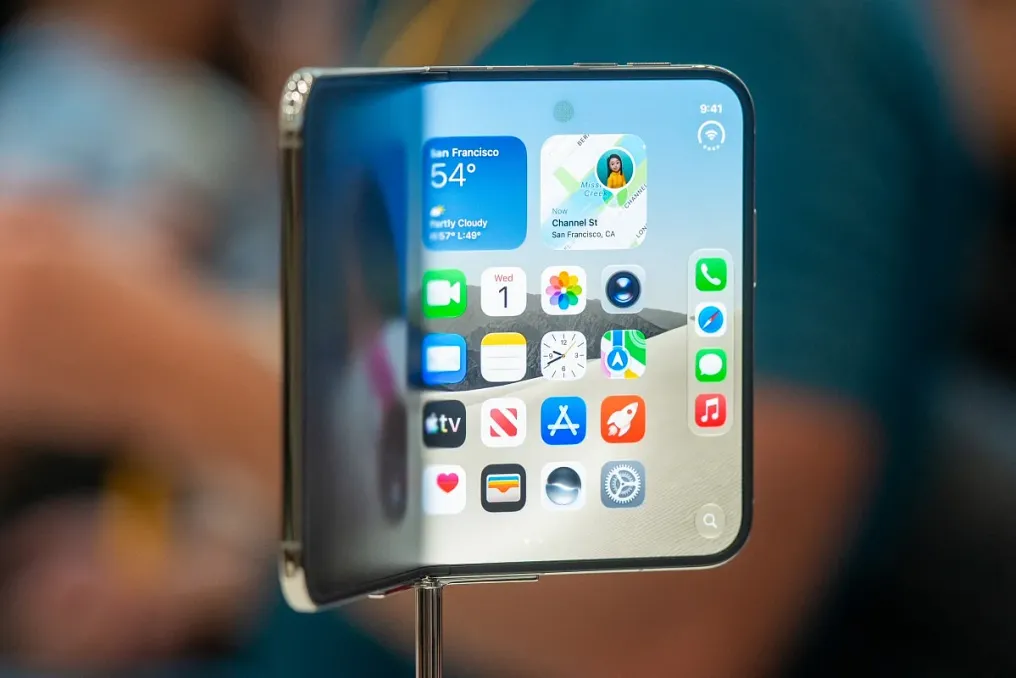
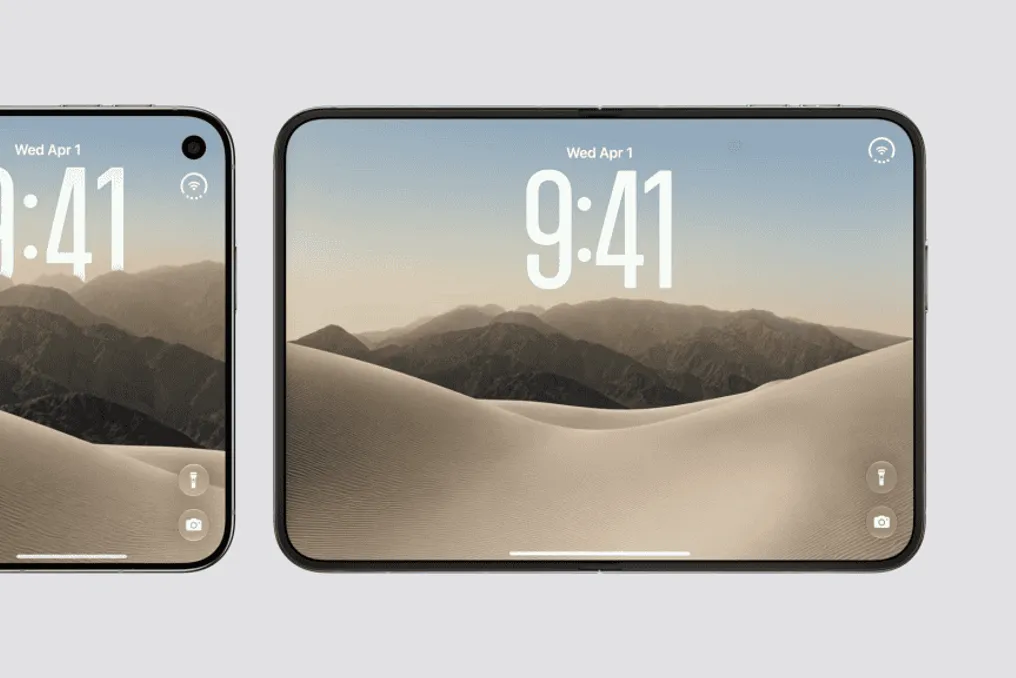
Apple's first foldable iPhone, which will be available in the UAE starting from 8,499 dirhams, is intended to test how willing buyers are to sacrifice their budget for the company's most premium smartphone, while investors assess the potential of the new device for significant growth.
The iPhone Duo, presented as part of Apple's largest ten-year design update for the iPhone, will go on sale in the UAE on October 23, with pre-orders beginning on October 16. The UAE will be one of the first markets to receive this gadget.
Prices start from 8,499 dirhams and reach 13,599 dirhams for the most expensive configuration, positioning the foldable phone in the very top segment of the smartphone market. Josh Gilbert, a lead analyst for Asia-Pacific and the Middle East at the investment platform eToro, noted that Apple's main task will be to convert interest in the new form factor into mass sales.
He commented that 'the task for Ternus is to convince consumers to spend such money on a new device in large volumes.' Gilbert emphasized that for Duo to make a substantial contribution, it must be released in large quantities, as mere presence in the product line will not suffice.
This launch also marked the first major product presentation by Ternus as CEO of Apple following his succession to Tim Cook. Apple's shares fluctuated during the event, ultimately remaining generally stable. Gilbert considered the market reaction relatively positive, given that Apple's shares have already risen by approximately 40 percent over the past 12 months.
He added that 'investors have already accepted the concept of foldable devices, so a practically flat finish is a quite respectable result given recent history.' In his opinion, 'Ternus has passed its first big test, and the initial market reaction shows that investors are receptive to what Apple's long-time hardware leader has provided.'
Globally, the iPhone Duo launches at a price of $1,999 USD and reaches $3,199 USD for the highest configuration. Gilbert suggested that financing and monthly rental options could lower initial costs for consumers, but the decisive test will be Apple's ability to move beyond its most loyal customers.
The launch comes amid Apple's drive to maintain growth in its hardware business while facing rising component costs. Gilbert pointed to pressure on gross profit in the company's last quarter, as well as the increase in memory prices, as factors that investors will closely monitor.
'Duo's engineering is expensive. Two displays and extensive miniaturization increase costs, while memory prices remain a headache,' he stated. According to the analysis, Apple raised prices on Pro and Pro Max models by $100, and prices for existing iPhone 16, 17e, 17, and Air models also increased by $100.
Gilbert noted that 'the increases implemented by Apple look modest against these pressures. This is what raises concerns about future margins.'
Although foldable hardware was central to the launch, Apple also faced questions about the pace of AI development. The presentation primarily focused on Apple Intelligence and Siri developments previously demonstrated in June, with Ternus presenting the iPhone as an intelligent personal hub. Apple also introduced Siri Recaps on the Apple Watch.
However, for Gilbert, the event did not bring major new AI developments. He expressed disappointment at the lack of a major fresh AI announcement. In Gilbert's view, Apple's approach is increasingly focused on using devices that consumers already own as gateways to its AI services. He added that a more important question is how effectively third-party apps will integrate with Siri, which will determine the usefulness of Apple's AI offering in daily use.
The foldable launch may provide an early glimpse into priorities under Ternus, who dedicated most of his career to developing Apple's hardware. Gilbert concluded: 'If Cook's decade was dedicated to services, then Ternus's decade appears to be dedicated to devices and placing more Apple products in more locations.' He added that 'investors are still waiting for a clearer step forward in AI. Apple has put a builder in charge; now the test is whether this hardware expertise can deliver the growth the market expects while competitors accelerate their AI efforts.'