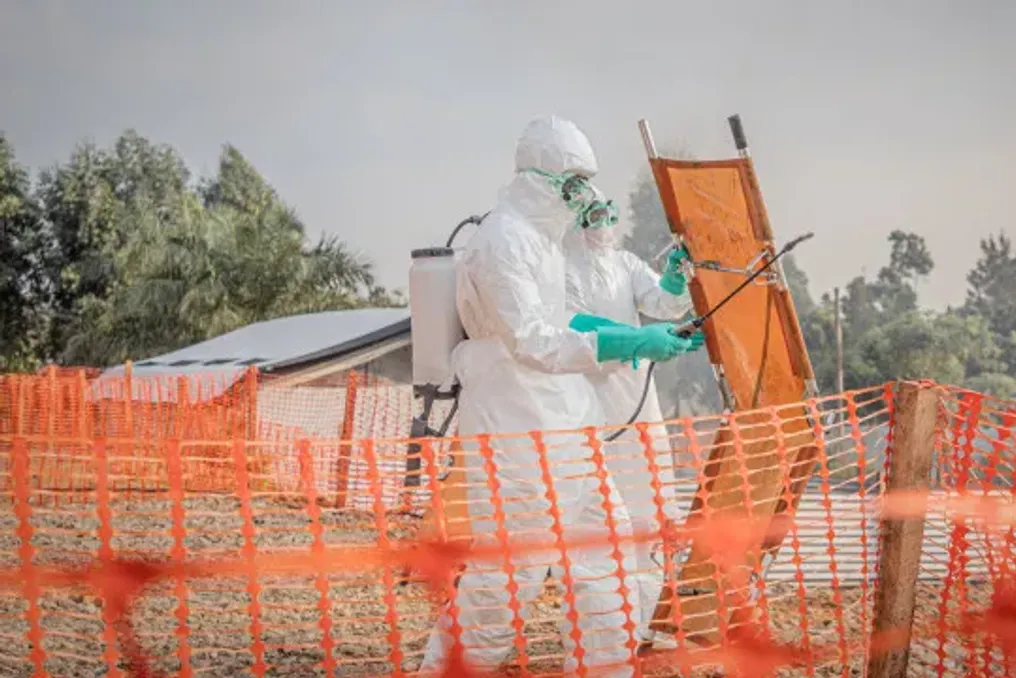
The government of the Democratic Republic of Congo (DRCongo) announced on Saturday that the peak of the Ebola epidemic had been reached in mid-August, indicating a reduction in the number of cases nationally for the disease, which has already caused over 15,000 deaths in Africa over the last fifty years.
However, the World Health Organization (WHO) signaled that the epidemiological situation remains uneven. In Geneva, Olivier le Polain, head of the WHO's Epidemiology and Analysis Unit for Interventions, informed the press that national trends do not mirror provincial or local occurrences.
Le Polain specifically highlighted the North Kivu region, where the number of weekly deaths almost doubled in the last two weeks, jumping from approximately 100 new cases per week to over 200. He noted that this province accounted for about 45% of the total cases reported the previous week.
The expert added that, generally, the spread of the virus remains intense and covers a vast geographical area. However, he also observed some initial signs of decreasing transmission in certain areas of Ituri province, which is the epicenter of the epidemic, where the proportion of cases is decreasing over time.
Additionally, it was reported that no confirmed cases have been detected in South Kivu since the end of May. There have been recent records in South Ubangi and three cases in Lower Uele. Tshopo reports sporadic cases, mostly imported, while Upper Uele shows more consolidated local transmission, with about 30 to 40 new cases weekly.
Le Polain warned that this data does not yet show the expected improvement, mentioning that the recently detected case in South Ubangi highlights the risk of geographic expansion of the epidemic, especially due to high population mobility.
DRCongo communicated its 17th Ebola epidemic in mid-May, albeit with several weeks' delay. The outbreak began in Ituri province, located in the northeast, and currently affects remote and unstable regions of eastern and northern DRCongo, hindering sanitary containment.
In recent days, the epidemic has expanded to a seventh province, South Ubangi, which shares borders with the Central African Republic and Congo-Brazzaville.
According to data released on Saturday by Congolese authorities, 7,022 cases have been recorded, resulting in 3,398 deaths and 1,671 recoveries since the beginning of the epidemic. In a previous balance, authorities had counted 3,310 deaths and 6,843 confirmed cases.
Patrick Muyaya, spokesperson for the Congolese Government, stated on social media on Saturday that the peak was reached in the beginning of the third week of August, and that all indicators suggest a decline in cases. He also reported that ten of the sixty-one affected health zones have not registered new cases for at least twenty-one days.
Entities responsible for the crisis response consider that the available financial resources are insufficient to ensure adequate monitoring and isolation of patients in DRCongo. Currently, various treatments and vaccines against the Bundibugyo virus strain, responsible for the outbreak, are being tested, for which there is still no approved vaccine or treatment.