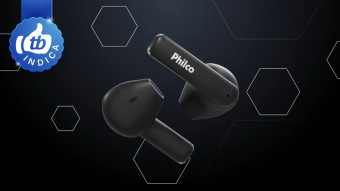
Analysis of 5 Philco Headphone Models Recommended for 2026
Read more
Tecnoblog
tecnoblog.net

Analysis of 5 Philco Headphone Models Recommended for 2026

Philco headphones are designed to meet less demanding uses, as the brand prioritizes models that offer a good cost-benefit ratio. Although the company's more sophisticated peripherals incorporate active noise cancellation (ANC) to block external sounds, Philco also offers more basic options, characterized by comfortable design and long battery life.

To aid in the purchasing decision, Tecnoblog compiled a list of five Philco headphones, detailing the pros and cons of each item.

The Philco Wave (PFO09G) is presented as an extremely lightweight over-ear headphone, weighing only 240 grams, and stands out for incorporating advanced features at an affordable price. It is recommended for those seeking daily practicality and sound isolation. This model features ANC to reduce external noise, as well as an ambient mode that allows hearing the surroundings without removing the headset. It provides an audio power of 20 mW per channel, uses Bluetooth 5.4 with multipoint support, and can be used wired via a P2 connector. Its battery offers autonomy of up to 50 hours when ANC is disabled and the volume is at 50%.

The Philco Extreme (PFO05BTSG) is an over-ear headphone focused on durability and effective isolation for daily use. With a more robust structure (315 g), it features reinforced finishing, metal hinges, and 90-degree rotating earcups, ensuring a comfortable fit and ease of transport. This device has 40 mm drivers, with a frequency response ranging from 20 Hz to 20,000 Hz, covering bass to treble. It operates both wired (P2) and wireless (Bluetooth 5.0). The battery of this model lasts up to 30 hours and includes dedicated buttons to manage volume, music, and phone calls.

The Philco Air Beats (PFI200P) adopts a semi-in-ear format, making it ideal for those who require prolonged comfort. Since it does not seal the ear nor have ANC, it allows for natural perception of the environment, which increases safety during activities such as running or walking outdoors. These TWS headphones feature 13 mm drivers and the same frequency response range (20 Hz to 20,000 Hz) found in the Philco Extreme Bluetooth. Touch control support allows starting, skipping, or pausing tracks when paired with Bluetooth 5.3. An important feature is the IPX4 protection, which guarantees resistance to sweat and water splashes. The autonomy is up to 7 hours, which can be extended to 28 hours using the case charges.

In contrast, the Philco Extreme (PFO02P) is a wired headphone intended for basic uses and limited budgets. Its earcups have an on-ear shape, not fully covering the ear, resulting in less efficient isolation, and it does not have ANC. The 30 mm drivers tend to produce less powerful bass, although its frequency response is from 20 Hz to 20,000 Hz. This peripheral comes equipped with an integrated microphone on the cable to enable voice calls.

The Philco Extreme Bluetooth (PFO03BTA) represents a more economical and lighter alternative (240 g) to the PFO05BTSG model. This over-ear headphone also features padded earcups and arms with 90-degree rotation, but lacks active noise cancellation. It is equipped with 40 mm drivers and multi-function buttons for controlling music and calls. It works wired or wirelessly, but does not support multipoint connections in Bluetooth 5.0 pairing, and its battery offers up to 22 hours of use.

When selecting the best Philco headphone, it is crucial to weigh the product specifications against individual usage needs. The Philco Wave (PFO09G) is considered the best value Bluetooth headphone on the list, as it offers ANC, multipoint connection, and wired or wireless functionality (via Bluetooth 5.4), in addition to a battery that reaches up to 50 hours of autonomy.

Additionally, the Philco Wave (PFO09G) is the most affordable option with ANC among the presented models. It uses a more recent version of Bluetooth (5.4) than the PFO05BTSG and supports multipoint connection for simultaneous pairings.

Philco has been operating in the headphone market since the 1930s and has had a presence in Brazil for over 90 years. Its headphones are considered good, even though they are aimed at simpler uses to keep prices competitive.

There is no definitive consensus. Philco has a long history in the market and focuses on simpler headphones with good cost-benefit, while Philips offers a more diversified portfolio, including advanced models. The determining factor is that the best Philips headphone may not meet your demands, and vice versa; therefore, the best brand will be the one whose products align with your usage profile.

Britânia Eletrodomésticos S.A holds the rights to the Philco brand in Brazilian territory, meaning that the catalog of Philco products sold in the country is part of Britânia's portfolio.

Similar stories

Analysis of the 10 best JBL headphones to buy in 2026
Read more
tecnoblog.net

Analysis of the 10 best JBL headphones to buy in 2026

JBL offers a variety of headphones that meet distinct needs, ranging from small TWS models to noise-canceling headphones and options designed for physical exercise.

In 2026, the product line incorporates advanced technologies such as adaptive ANC, multipoint connectivity, high-bitrate codecs, and various levels of water resistance. Tecnoblog details the ten best models from the brand below, presenting their strengths and weaknesses.

JBL Tour One M3 Smart Tx

The JBL Tour One M3 is an over-ear headphone equipped with 40mm drivers and compatible with SBC, AAC, and LDAC codecs. The LDAC codec allows audio transmission up to 24-bit/192 kHz, provided the receiving device is compatible. A highlight of this model is the included transmitter, which enables receiving audio from external sources and retransmitting it via Auracast, expanding its use with TVs, computers, and other compatible devices.

This headphone features adaptive noise cancellation, using ten microphones to capture and process external sounds. Its battery life is 70 hours without active cancellation and 40 hours with ANC on. Weighing 278g, it offers USB-C or P2 connection options, serving as an alternative to Bluetooth for suitable equipment. Supported codecs include SBC, AAC, LDAC, and LC3.

JBL Tour Pro 3

The JBL Tour Pro 3 is an in-ear headphone that uses two types of drivers on each side: a 10.2mm dynamic driver for mid and low frequencies, and another dedicated to higher frequencies. This configuration allows different frequency ranges to be treated independently, instead of relying on a single component for the entire signal.

Another notable feature is the charging case, which functions as an audio transmitter when connected to an external source, sending the signal to the headphones. The model supports advanced codecs such as Hi-Res, LDAC, and LC3, provided the device is compatible. Battery life reaches 11 hours on the headphones without ANC, totaling 44 hours with the case; with cancellation active, the duration on the headphones is up to 8 hours. It operates with Bluetooth 5.3 and offers spatial audio with head tracking. Supported codecs are SBC, AAC, LDAC, and LC3.

The Live Pro 2 TWS is an in-ear model that features adaptive noise cancellation, multipoint function, and wireless charging. Its 11mm dynamic drivers cover the entire frequency range, while six microphones assist in call system and ambient sound control. Connectivity is less modern than that of JBL's newer Tour models, using Bluetooth 5.2 with SBC and AAC codecs, sufficient for standard Bluetooth transmission but without LDAC support.

A positive aspect of the Live Pro 2 TWS is its battery life of up to 40 hours, including case recharges. The headphones can be used for up to 10 hours without ANC, and with cancellation on, the individual autonomy drops to approximately eight hours, according to JBL. Supported codecs are SBC and AAC.

For users who prioritize stability during physical activities, the Endurance Peak 4 differs from traditional fully in-ear headphones by having a support that fixes to the ear area. This model combines 10mm dynamic drivers with adaptive noise cancellation, allowing the user to switch between reducing external sounds or maintaining environmental awareness. It uses Bluetooth 5.4 with basic codec support. Resistance is a crucial point, as the headphones have an IP68 certification against dust and water, surpassing other models on this list. Autonomy reaches 12 hours without ANC and 8 hours with ANC on, reaching 48 hours with case recharges, according to the brand. Supported codecs are SBC and AAC.

The Live 780NC is an over-ear headphone featuring 40mm dynamic drivers, Bluetooth 6.0 connectivity, and support for Hi-Res and advanced codecs like LDAC and LC3. The inclusion of LDAC is advantageous for those with a compatible device, as it allows for a higher data rate transmission compared to basic codecs. Battery life is a major differentiator for this model in the JBL line: it offers up to 80 hours of playback without ANC and 50 hours with active cancellation. According to JBL, five minutes of charging adds up to four hours of playback. Supported codecs are SBC, AAC, LDAC, and LC3.

The Endurance Race 2 adopts a different approach from the Peak 4. Instead of an external hook, it uses tips and a fixing expander to help maintain positioning during movement. The set integrates 6.8mm dynamic drivers, ANC, Ambient Aware, and TalkThru, allowing the user to choose between reducing external noise or hearing the environment. With Bluetooth 5.3, the model operates with SBC and AAC, codecs intended for conventional transmission, without support for higher bitrate formats like LDAC. Autonomy reaches 12 hours on the headphones without ANC and 10 hours with cancellation on, reaching 48 and 40 hours, respectively, with the case. The Endurance Race 2 has an IP68 certification for complete protection against dust and freshwater immersion. Supported codecs are SBC and AAC.

The Vibe Beam 2 represents a simpler option in the JBL earbud line, offering 8mm dynamic drivers and noise cancellation, but without support for advanced codecs like LDAC. The Bluetooth 5.3 connection uses SBC and AAC codecs. According to JBL, each earbud weighs 4.3g and provides up to 10 hours of playback without ANC or eight hours with the feature activated. Including the case, the autonomy reaches 40 hours without ANC and 32 hours with cancellation. The model has four microphones for calls and features an IP54 certification, protecting against dust and splashes. Supported codecs are SBC and AAC.

The Soundgear Clips uses an open-ear clip design, keeping the auditory canal free. The technology employs air conduction to direct audio to the ears, while the speaker placement aims to minimize sound leakage. Thus, this JBL headphone is ideal for those who need to be aware of their surroundings during travel, work, or other activities where acoustic isolation is not the priority. The model uses an 11mm dynamic driver, Bluetooth 5.4, and SBC and AAC codecs. It offers up to eight hours of playback on the headphones and 32 hours considering case charges. The set also includes multipoint, four microphones for calls, and IP54 certification against dust and splashes. Supported codecs are SBC and AAC.

The Wave Buds 2 concentrates noise cancellation features in a compact and accessible format. Its 8mm dynamic drivers operate with ANC and Ambient Aware, and the JBL app allows adjustments to audio settings. The Bluetooth 5.3 connection uses common standards in mobile devices, but there is no support for LDAC or another higher bitrate codec. For calls, the model integrates microphones and features such as TalkThru and Voice Aware. Autonomy is up to 10 hours on the headphones without ANC and eight hours with the feature active. With the case, the times reach 40 and 32 hours, respectively. Each earbud weighs about 4.5g and has basic IP54 certification against water and dust. Supported codecs are SBC and AAC.

Comparison of 6 Xiaomi headphone models recommended for purchase in 2026
Read more
tecnoblog.net

Comparison of 6 Xiaomi headphone models recommended for purchase in 2026

The selection of the best Xiaomi headphone fundamentally depends on the available budget and specific usage needs. More sophisticated models incorporate Active Noise Cancellation (ANC) and high-resolution audio support, providing a superior sound experience, although they come with a higher cost. In contrast, simpler options are suitable for users with lower demands, offering basic functionalities at more accessible prices.

Tecnoblog compiled a list with six suggestions of the best Xiaomi headphones available for purchase in 2026, detailing the advantages and limitations of each device.

Redmi Buds 8 Pro

This model is a lightweight in-ear headphone, weighing 5.3 grams on each side, and features adaptive ANC with up to 55 dB capability. To optimize calls, it uses a triple microphone system assisted by artificial intelligence, which also offers noise reduction and wind resistance of up to 12 m/s.

Technically, the peripheral has a three-driver coaxial system capable of capturing bass frequencies below 100 Hz. Its acoustic architecture ensures richer sound details, and support for Dolby Audio and high-resolution audio results in clearer and crisper music. The battery offers autonomy of up to 8.5 hours without ANC enabled, dropping to 4.5 hours when ANC is active. Additionally, it has an IP54 certification against splashes and sweat. Supported codecs include AAC, SBC, and LDAC.

Redmi Buds 8

With a semi in-ear design and a weight of 5 grams per unit, this model represents a more modest alternative to the Buds 8 Pro. Even so, it delivers 50 dB ANC, a triple microphone system with ENC, and an adjustable transparency mode to manage ambient sound. Unlike the Buds 8 Pro, the Buds 8 does not support spatial audio or Dolby Audio, but incorporates an 11 mm dynamic driver with wireless high-resolution audio and is compatible with the LHDC codec, promoting a more realistic and immersive experience.

Its battery life is notably longer: 10 hours without ANC and an impressive 42 hours using the case recharges. Supported codecs are AAC, SBC, and LHDC.

Redmi Headphones Neo

This headphone features 42 dB ANC and an adaptive mode that allows the devices to automatically adjust to environmental variations. To ensure clarity in conversations, it has three AI-assisted microphones that minimize wind noise. A technical highlight is the 40 mm dynamic driver, responsible for delivering more robust bass and well-defined treble. Although it is compatible with Hi-Res Audio, this feature is only available via wired connection.

Battery autonomy is a strong point, reaching up to 72 hours on a single charge. However, its over-ear format prevents effective water protection. Supported codecs are AAC and SBC.

Redmi Buds 6 Lite

The Redmi Buds 6 Lite is presented as an economical in-ear option that includes ANC. This device has hybrid active noise cancellation of up to 40 dB, and its dual microphones use AI to reduce noise during calls, resulting in clearer audio. Equipped with a 12.4 mm titanium dynamic driver, it maintains a very low weight of only 4.2 grams per unit. It operates with Bluetooth 5.3 but does not offer multipoint support. The battery promises 7 hours of use with ANC disabled, potentially reaching 38 hours with case recharges. Furthermore, it has IP54 protection against sweat and light rain. The only supported codec is AAC.

Redmi Buds 8 Active

This semi in-ear model is aimed at less demanding uses and does not have active noise cancellation. However, its dual microphones help reduce surrounding noise, improving voice clarity during calls. The peripheral uses Bluetooth 5.4 and supports simultaneous connections to up to two devices. Although it does not offer high-resolution audio, the 14.2 mm dynamic driver contributes to greater precision in mid and high tones. Specifications are complemented by IP54 certification and up to 7 hours of autonomy, or 37 hours with case charging. Supported codecs are AAC and SBC.

Redmi Buds 6 Play

The Redmi Buds 6 Play is a more basic in-ear model than the Buds 6 Lite, as it lacks ANC and relies solely on microphone noise reduction to optimize call quality. Its touch controls are a differentiator, presenting a soft tactile feel and three distinct commands. The headphone operates with Bluetooth 5.4 and features a 10 mm dynamic driver, which tends to produce more subtle bass. Battery life is up to 7.5 hours of continuous playback, potentially reaching 36 hours with case recharges. IPX4 certification protects the device against sweat and splashes. The codec used is SBC.

When deciding which Xiaomi headphone to choose, it is crucial to weigh the technical specifications against your personal needs. It is important to consider several factors, such as:

The Xiaomi Redmi Airdots, launched in 2019, have an obsolete Bluetooth standard (version 5.0). Despite offering satisfactory performance in reviews, they lack ANC and have lower battery life compared to newer models.

Currently, the Redmi Buds 6 Lite is recommended for offering ANC and longer battery life. Alternatively, for those who do not require noise cancellation, there are more economical options like the Redmi Buds 8 Active and the Redmi Buds 6 Play.

The Redmi Buds 8 Pro is the latest Xiaomi model, released in February 2026. This in-ear model is equipped with up to 55 dB ANC and is compatible with high-resolution sound, in addition to having the IP54 seal for protection against sweat and water splashes.

The Redmi Buds 6 Lite establishes itself as the best low-cost noise-canceling headphone alternative on the list. It provides up to 40 dB hybrid ANC, along with microphone noise reduction, and its autonomy can reach 38 hours with the use of the charging case.

To verify the authenticity of a Xiaomi headphone, the best practice is to validate the security code. This is done by scraping the authentication label on the product packaging and entering the 20-digit code on the specific page.

It must be recognized that the choice is subjective. While JBL excels by presenting prominent bass and being an established brand in the market, Xiaomi focuses on offering an excellent cost-benefit ratio, providing good specifications at more accessible prices. The best JBL headphone may not be ideal for you, and vice versa; therefore, it is essential to understand your own needs to select the model most suitable for your usage profile.

Popular