The Secretary of the Supreme Council of Free and Special Economic Zones emphasized the potential of these zones to strengthen the country's economy. He stated that expanding the powers of free zones and more actively utilizing the experience and opportunities of the private sector would form the basis for attracting investment, developing economic activity, and more effectively utilizing the potential of these zones.
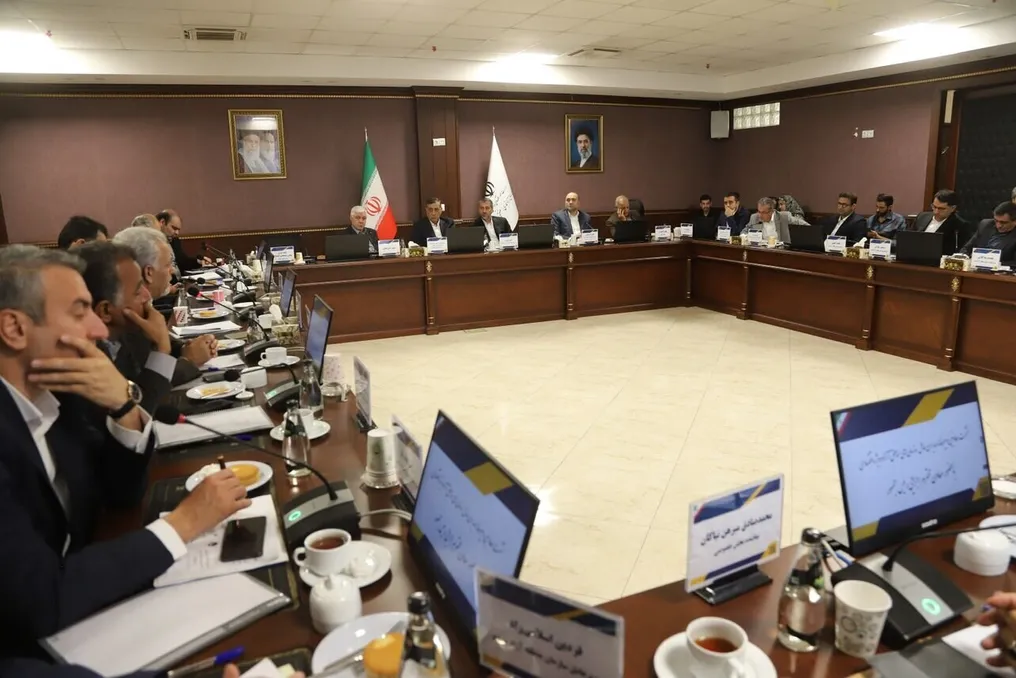
According to IRNA, citing the Secretariat of the Supreme Council of Free and Special Economic Zones, Hossein Forouzan noted during a meeting with deputies of the Secretariat and general directors of free and special economic zone organizations, which was attended by Mohammad Jafar Ghaempanah, Executive Deputy President, that enemies had counted on Iran's capitulation under pressure, but courage, planning, and measures taken prevented this goal.
Forouzan added that in the current conditions, economic warfare is a key problem, and therefore, free zones need to be trusted more. He appealed to the government to provide free zones with sufficient time and authority, assuring that the leaders of these zones would strive to achieve the set goals and would not disappoint the government.
He continued that they would exert all efforts to develop the free zones and the country's economy, believing that granting greater powers to the zones would allow them to utilize existing opportunities to overcome difficult economic conditions.
The Secretary of the Supreme Council of Free and Special Economic Zones proposed increasing the share of the private sector in the decision-making structure concerning free zones. Forouzan suggested that in the five-member decision-making body, there should be at least two representatives from the private sector, as private sector participants can significantly help in attracting investment and solving economic problems.
He stressed that instead of government managers trying to attract investors, the potential of private sector actors possessing the necessary experience, connections, and motivation to attract investment and participate more effectively in this process should be utilized.
Highlighting the importance of special economic zones, the Secretary of the Supreme Council of Free and Special Economic Zones noted that these zones represent an important opportunity for the country that must be utilized in the current economic circumstances.
Criticizing some limitations placed on the operation of special economic zones, Forouzan pointed out that new problems arise daily in various fields, including land and banking issues, which hinders the work process of these zones. He also noted that the Central Bank, in some cases, instead of assisting special economic zones in utilizing their potential, imposed restrictions and even raised the issue of cutting resources for these zones.
In conclusion, the Secretary of the Supreme Council of Free and Special Economic Zones called on the government to provide more opportunities for the functioning of free and special economic zones, asking for time to demonstrate the role these zones can play in the country's economy.
Forouzan concluded his speeches by expressing his expectation of trust from the government towards the free zones, and in return for the granted powers, he expects an evaluation of their work. He assured that he would use this trust to develop the country and try not to let down the government and the memory of the fallen.
During the continuation of the meeting, Mortez Safdarizadeh, General Director of the Birjand and Sarv Urmia Special Economic Zone, spoke about the activities in these zones. He reported that the private sector's activities in these zones have provided employment for about 7,500 people in various industries, indicating significant opportunities for investment and employment in special economic zones.
Safdarizadeh thanked the government and officials for the measures taken in recent difficult conditions. He expressed hope that after overcoming the current crisis, the position of Islamic Iran on the international stage will strengthen.
Referring to the incomplete implementation of Article 119 of the Development Plan Law, he noted that this law emphasizes enhancing the status of the Secretariat of the Supreme Council of Free and Special Economic Zones, but the necessary mechanism for implementing this point has not been fully introduced.
The General Director of the Birjand and Sarv Urmia Special Economic Zone commented on the changes in the status of the Secretariat of the Supreme Council of Free Zones: previously the Secretary held the position of deputy and advisor to the President, but later this body was subordinated to the Ministry of Economic Affairs and Finance.
Safdarizadeh insisted on the need for expert analysis of the position of the Secretariat of the Supreme Council of Free and Special Economic Zones, demanding a thorough review of the consequences of any changes to its status regarding their alignment with the country's interests.
Speaking about the potential of free and special economic zones, he argued that they could be the best way to solve some of the country's modern problems, and their potential should be used to develop trade, investment, and relations with neighboring countries.
The General Director of the Birjand and Sarv Urmia Special Economic Zone mentioned the work of the South Khorasan Special Economic Zone on the Iran-Afghanistan border. According to statistics, over 55 percent of goods exported by Iran to Afghanistan or transiting through the country to Afghanistan pass through this route.
Safdarizadeh added that the necessary infrastructure and facilities have been created in this zone, and thanks to management by the private sector, the attention of Iranian and Afghan traders has been drawn to this border. He compared this border to older borders of the country, noting that this border crossing managed to establish itself as one of the important trade routes with Afghanistan in a short time.
The General Director of the Birjand and Sarv Urmia Special Economic Zone noted that due to the activation at this border, the government has also begun completing road infrastructure and taking necessary measures. At the same time, the Afghan side has also provided appropriate cooperation, and Afghan authorities have supported the development of trade and border interactions.
Emphasizing the need to transfer economic affairs to the private sector, Safdarizadeh stated that with the creation of a suitable foundation, the private sector is capable of solving many issues faster and more productively. Experience has shown that wherever the private sector has participated, it has benefited not only itself but the country as a whole. He added that such a model is applicable in many sectors of the country's economy, and Iran has export relations with approximately 40 countries, indicating numerous economic and trade opportunities.