
Emirates confirms no staff reductions and continues hiring despite regional instability
Read more
Khaleej Times
www.khaleejtimes.com

Emirates confirms no staff reductions and continues hiring despite regional instability

A senior official stated on Tuesday that the airline Emirates has not conducted any job cuts and has continued to recruit personnel amid recent regional turbulence.

Adnan Kazim, Deputy President and Chief Commercial Officer, responding to questions about any restructuring, said: 'We have never stopped or frozen recruitment. We continue to hire because Emirates continues to grow.'

When directly asked about job losses during the crisis, he replied: 'No. We continued to operate as usual, and this philosophy and policy will continue in the future.'

The aviation sector suffered after the start of the war between the US, Israel, and Iran on February 28, when flights and airports were temporarily suspended. However, the UAE aviation sector has shown resilience and recovered strongly in recent months.

Paul Griffiths, CEO of Dubai Airports, also confirmed in a recent interview that there were no layoffs due to the regional conflict.

In an interview with Khaleej Times at the Arabian Travel Market 2026, Kazim noted that Emirates is achieving a load factor of about 96 percent, carrying 8.6 million passengers in July and August combined, with a seat occupancy rate of 75 percent.

He characterized this period as strong, noting that bookings exceeded last year's levels by seven percent. He added that the booking momentum has shifted into the winter season, which begins in October, with receipts over the last three weeks matching the same period last year.

'Demand is coming from Europe, Asia, America, Africa, and the Middle East,' he stated. Kazim also mentioned that Dubai's dense winter calendar of exhibitions and concerts, along with measures such as waiving date change penalties, minimizing refund commissions, and implementing comprehensive travel insurance to boost traveler confidence, should support this trend.

Emirates is also increasing capacity for winter, including increasing frequency on 11 existing routes, adding extra A380 aircraft on some markets, and launching a new destination—Finland.

Kazim reported that the deployment of SpaceX's Wi-Fi Starlink has expanded to 53 aircraft, with another 12–14 units being installed monthly.

Separately, Kazim confirmed that the modernization program for Dubai's flagship carrier, supported by $5 billion in investments, is continuing parallel to the Starlink rollout.

He stated that Emirates remains on track to equip 232 aircraft by next year, adding that some customers have specifically switched to flights to access this service, describing the demand for connectivity as 'very positive.'

Kazim acknowledged that high fuel prices, currently around $110 per barrel, remain a persistent challenge, although the airline partially hedges risks and manages costs through a combination of pricing, fuel surcharges, and hedging. He expressed hope that prices will gradually decrease, noting that persistently high fuel costs could trigger global recessions.

Oil prices slightly decreased on Tuesday after reaching the $108 per barrel mark, and Brent traded at $105 per barrel on Tuesday evening.

Fuel and personnel costs were the two largest expenses for the airline in 2025–26, followed by the cost of ownership (depreciation and impairment). Fuel accounted for 29 percent of operating expenses in 2025–26 compared to 31 percent in 2024–25. The airline's fuel bill slightly decreased to 31.2 billion dirhams in 2025–26 compared to 32.6 billion dirhams the previous year.

Regarding a potential move of Emirates to Al Maktoum International Airport (DWC), Kazim stated that work on the project is proceeding according to plan, and Dubai South continues to invest with the goal of completion by 2032. He declined to name a specific amount of Emirates' own investment in Al Maktoum International Airport, stating that it would be a long-term commitment executed in phases.

Responding to the financial impact of the regional crisis, Kazim said that full details would be disclosed in the airline's report expected in November, but pointed to rapid operational recovery and strengthening of trust in the Emirates brand, thanking the close collaboration between Dubai's aviation, tourism, and government entities.

Similar stories

UAE Employers Urged to Rethink Talent Assessment Methods, Focusing on Skills Over Job Titles
Read more
www.khaleejtimes.com

UAE Employers Urged to Rethink Talent Assessment Methods, Focusing on Skills Over Job Titles

Job titles have long served as one of the most obvious indicators of a person's standing within a company. However, in an era where artificial intelligence, automation, and changing work models are transforming workplaces, employers in the United Arab Emirates (UAE) are receiving urgent calls to look beyond job titles and pay more attention to the actual skills employees can bring to the table.

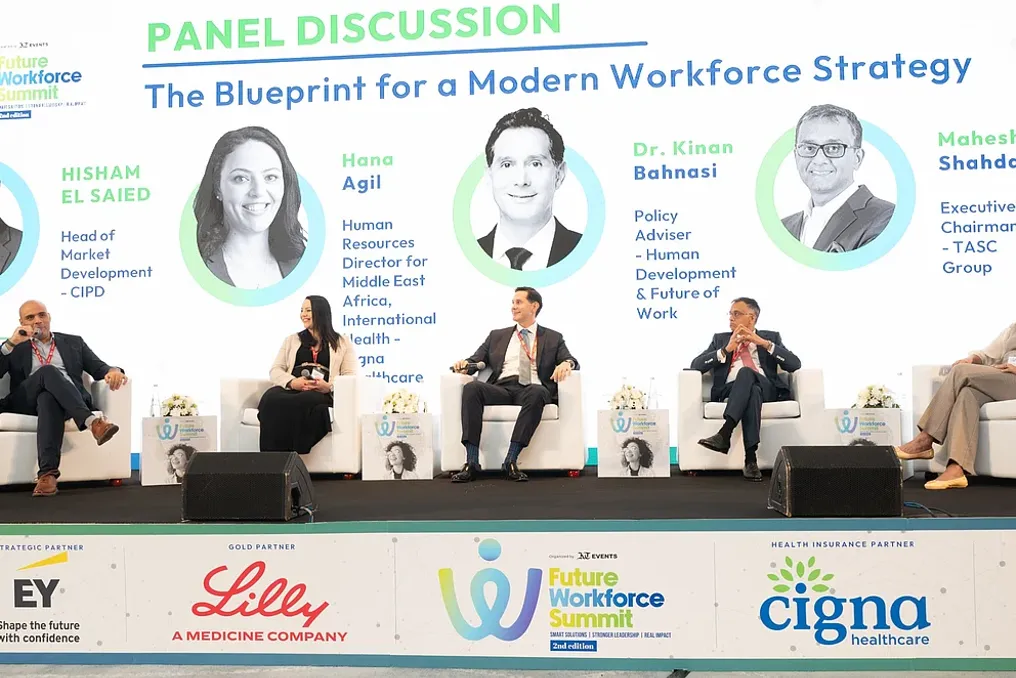
Human Resources leaders and workforce experts speaking at the 'Future of Work' summit during a panel discussion titled 'The Modern Workforce Strategy Plan' stated that organizations need to rethink their approaches to identifying, developing, and utilizing talent, placing greater emphasis on recognizing employee competencies outside the confines of their official roles.

Hana Agil, Director of HR for Middle East and Africa, International Health and Strategy at Cigna Healthcare, noted that progress in personnel development has been made, but there is still a long way to go. She emphasized: 'I believe many companies are investing in this new development, but we need a challenge. I think we need to start viewing skills as an organization's currency, not just job titles.'

As an example, Agil cited the case of a customer support employee who develops skills in data analysis or artificial intelligence. Instead of evaluating this person solely through the lens of their current position, a progressive company could recognize their new abilities and provide them with opportunities to take on different responsibilities.

Agil added that 'a progressive organization would see potential in this person for more than their current role. They would be offered tasks of increased complexity, new projects, and possibly even a transition to a completely new career path.'

Nevertheless, the problem is not only about defining necessary skills. Dr. Kinan Banasi, advisor on policy—human development and the future of work, pointed out that organizations often lack a clear understanding of the capabilities already present in their staff. He noted that companies are much better at describing job roles, functions, and organizational structures than they are at understanding the skills needed to execute their strategy.

Banasi stated: 'We are very good at drafting job descriptions, functions, and expanding the organizational hierarchy and the entire flow within a DAO (Decentralized Autonomous Organization).' He continued: 'But when it comes to actually solving how a skills system shapes this organization and how it will actually align with its strategy... that is where we feel we are lagging.'

He also suggested that this gap may contribute to the frequently raised issue among employers of graduates being insufficiently prepared for work conditions. Banasi stressed that a mismatch in skills does not always mean people lack the necessary abilities; often, their competencies have simply not been identified or officially recognized.

'In most cases, it is not that people never have skills. It is that the skills are not even documented; they are not even recognized,' he said. 'We cannot manage or measure what we cannot, you know, document.'

Maymi Kurian, Chief Director of Enhanced Human Capital and Culture at G42, cautioned against too literal adherence to a skills-based approach. She argued that people cannot be reduced to a list of competencies, just as job titles should not be viewed as a set of tasks that can be matched to individual skills.

Kurian stated: 'I like to challenge the premise of a skills-based organization. A person is not a catalog of skills. A job title is not a catalog of skills.'

In her view, organizations should instead consider a combination of skills, knowledge, and behavior while providing employees with meaningful roles in which they can grow. She added that the rise of short-term, project-based work has made skill libraries increasingly useful, especially when hiring someone for a specific task or limited period. However, she said, 'for an organization, we must hire for a meaningful role,' because modern young people want 'to see a meaningful role that leads them somewhere, that has a purpose, that is part of a larger story.' She concluded that 'a person's story becomes very closely linked to the organization's story.'

Official UAE Platform Publishes List of 19 Occupations Classified as Domestic Workers
Read more
www.khaleejtimes.com

Official UAE Platform Publishes List of 19 Occupations Classified as Domestic Workers

The official government platform of the United Arab Emirates (UAE) has published a list of 19 occupations classified as domestic worker roles. In the Emirates, authorities continuously urge the public to hire domestic workers exclusively through agencies licensed by the Ministry of Human Resources and Emiratisation.

The country's legislation also details the responsibilities of agencies, employers, and the rights of the employees themselves; failure to comply with these regulations incurs significant fines. Furthermore, if a dispute arises between an employer and a domestic worker, either party has the right to file a labor complaint with the ministry.

The Ministry attempts to resolve this complaint, and if an agreement cannot be reached, the matter is referred to the relevant court. According to the UAE government platform, the latest list of domestic workers includes 19 categories, among which are:

  • Housekeeper
  • Seaman
  • Security Guard
  • Herder
  • Jockey
  • Animal Trainer
  • Falconer
  • Worker
  • Housewife
  • Cook
  • Nanny/Childcare Provider
  • Farmer/Gardener
  • Personal Trainer/Coach
  • Private Tutor
  • Home Nurse
  • Personal Assistant
  • Private Agricultural Engineer
  • Personal/Family Driver
  • Gardener

In accordance with Federal Decree-Law No. (9) of 2022 on Domestic Workers, they are entitled to the following:

  • Weekly paid day off: If the worker is asked to work on a weekend, they must be provided with an alternative day off or paid the equivalent of a daily wage.
  • Daily rest of no less than 12 hours per day, of which eight hours must be continuous.
  • Annual paid leave of 30 days per year, which must be paid before it is taken. For service periods from six months to one year, the worker must receive two days of leave for each month worked.
  • Round-trip ticket to the country of origin once every two years, or a one-way ticket if both parties agree to terminate the employment contract after the annual leave.
  • Payment of wages according to the standard contract within 10 days from the due date.
  • Decent housing and subsistence.
  • No more than 30 days of sick leave per year: the first fifteen days are paid, and the next fifteen days are paid at half rate.
  • Retention of personal identification documents, such as passports and IDs.

Before sending a domestic worker out of their country, agencies must inform the employee about the type of work, salary amount, and obtain confirmation of the worker's physical, medical, psychological, and professional fitness. Necessary medical examinations must be conducted on the worker within a period not exceeding 30 days before entering the UAE. Agencies must also familiarize the worker with UAE customs and traditions, raise awareness of the authorities to whom they can file a complaint, and ensure respectful treatment and protection of the worker from violence. It is also required to guarantee that the worker receives wages according to the mechanisms and channels established by the Ministry, cover the costs of the worker's return to their country, and provide a replacement or reimburse amounts paid to the employer. Recruitment agencies cannot demand or accept any commission from the worker for securing employment or charge them any expenses.

Additionally, employers must provide suitable housing, food, and appropriate clothing, bear the costs of the worker's medical care or provide health insurance, and treat the worker kindly, without requiring them to work for other people. Compensation must be paid for occupational injuries and diseases, and heirs of a worker who dies during service must be paid, including salary for the month of death and any other due payments. It is forbidden to receive any sums or prices from the worker, directly or indirectly. The worker is obliged to comply with the terms of the Employment Contract, perform work as instructed by the employer, exercise due care, and not cease work without valid reason, preserve the employer's property, tools, and everything in their possession, respect workplace confidentiality, and not disclose secrets known to them during work, even after its completion. They must also not use work tools outside the workplace without the employer's permission, and must provide necessary assistance in case of natural disasters or dangers threatening the workplace or the safety of people there. Work must only be carried out under a work visa issued by the Ministry and in accordance with the conditions of that visa.

Fines

Violation of the domestic worker law entails heavy fines, reaching 10 million dirhams. Some of these include:

  • Application to those who provide false information or documents for the purpose of hiring a worker into the state.
  • Obstructing or hindering an official appointed to ensure compliance with the provisions of this Decree-Law and its Executive Regulations and decisions, whether by force, violence, or threat of using them.
  • Disclosure of trade secrets learned while performing official duties as a government official responsible for ensuring compliance with the provisions of this Decree-Law and its Executive Regulations and decisions, even after termination.

Penalties are also provided for those who:

  • Hire a worker without a work permit.
  • Hire or recruit a worker and then leave them unemployed.
  • Use workers' work visas for unauthorized purposes.
  • Close or cease the activities of a recruitment agency without completing the procedures for settling workers' rights.
  • Hire a worker under 18 years of age in violation of the provisions.
  • Facilitate a worker's departure from work, provide them with shelter for exploitation, or provide them with unauthorized employment.

Finally, fines apply to any person who:

  • Engages in intermediary activities or temporary employment of workers without a license.
  • Exploits or improperly uses electronic powers granted to them to access Ministry systems, or allows others to do so, resulting in violations of procedures, working relationships, or Ministry systems.

Fines ranging from 5,000 to 1 million dirhams may be imposed on anyone who violates any provision of the Decree-Law or its Executive Regulations or implementing decisions. This fine is multiplied by the number of workers affected by the violation, up to a maximum limit of 10 million dirhams. A recruitment agency that fails to comply with any provision of this Decree-Law or its Executive Regulations or implementing decisions will be penalized with a fine of 50,000 to 200,000 dirhams. If the violation is repeated within a year from the date of the decision, the penalty for the violator is doubled.

Popular