When it comes to the name Rama, music filled with devotion does not need time. This is exactly what happened with the melody created by Ravindra Jain, which remains easily memorable upon hearing it—'Ram Sia Ram, Sia Ram Jai Jai Ram.'
This religious hymn, which was created for the film 'Hit Ghata Chal' about 51 years ago, in 1975, remains as popular among people. Recently, this hymn and its history have once again become a subject of discussion following the appearance of new songs related to 'Ramayana,' which reflect the spirit of old spiritual music.
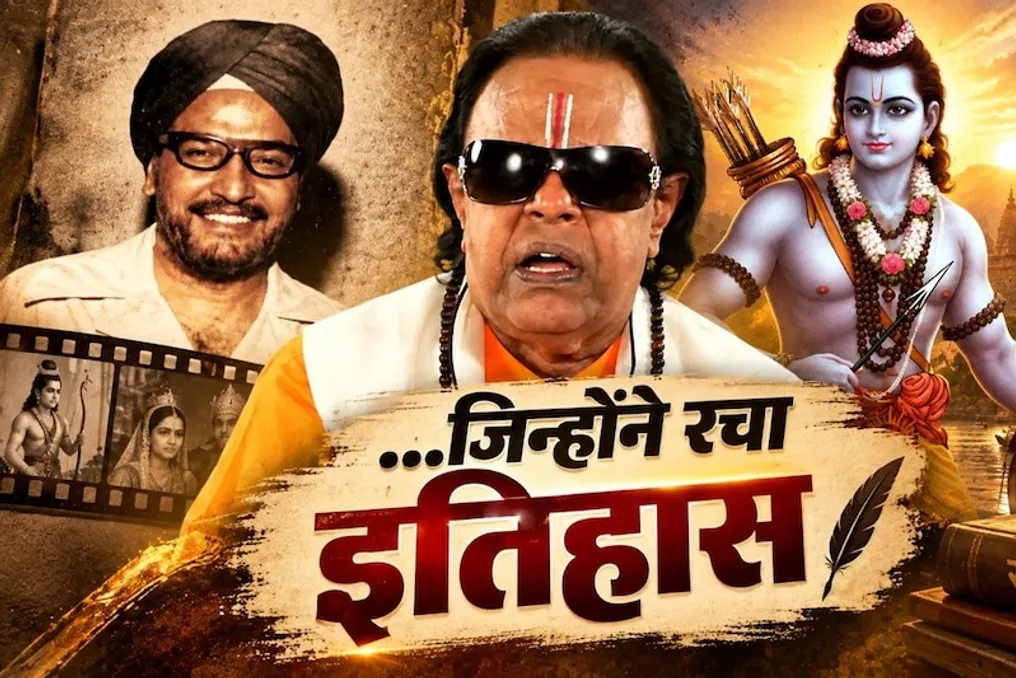
However, to fully understand this legendary melody, it is necessary to know two key figures: composer Ravindra Jain and singer Jaspal Singh.
Ravindra Jain is among the composers of Indian cinema who never allowed their physical difficulties to hinder their creativity. Despite being blind from birth, he reached such a level in the world of music that his melodies are still alive in people's memories.
Ravindra Jain's connection with music was deep from childhood. His journey began with bhajans and religious music, gradually transitioning into cinema. His main characteristic was that he imbued even simple melodies with such sweetness that the songs directly reached the hearts of listeners.
Although he created many memorable songs for films, his connection with spiritual music was special. Therefore, when he was entrusted with the music for Ramanand Sagar's 'Ramayana,' he did not just compose songs for the television show; he gave Ramakatha a musical language that penetrated every home.
The film 'Hit Ghata Chal,' starring Sachin Pilgaonkar and Sarika Starr, was released in 1975. In this film, Ravindra Jain wove the famous four-line stanza of the Ramayana, 'Mangal Bhavan Amangal Hari,' into his melody. Lines like 'Ram Sia Ram, Sia Ram Jai Jai Ram' infused the song with such a shade of devotion that it went beyond the film and became part of people's personal lives. The voice that performed this song belonged to the singer Jaspal Singh.
Jaspal Singh was one of the singers in the Hindi film music industry whose singing was distinguished by a special simplicity and sweetness. He is particularly remembered for the songs of the 1970s and 1980s.
'Mangal Bhavan Amangal Hari' also entered his iconic works along with the title track 'Hit Ghata Chal' and other songs from the film. His voice gave Ravindra Jain's melody a naturalness that played a huge role in conveying the spiritual hymn to the heart of the general public.
There was no artificial heaviness in Jaspal Singh's singing; his voice was direct, pure, and expressive. This is why the combination of his voice with Ravindra Jain's simple and gentle melody seemed extremely organic.
However, the true popularity of this hymn reached a new peak in 1987. When Ramanand Sagar's 'Ramayana' was broadcast, Ravindra Jain joined its music. The spiritual music of the show had a huge impact across the country, and the songs of 'Ramayana' became part of people's daily lives alongside the series itself.
It was then that this melody found new life. The composition, which first reached people through the film in 1975, became the voice of devotion in millions of homes after 1987. Whether it was a morning prayer, a temple, or a cassette playing at home, Ravindra Jain's Rambhakti melody was heard everywhere.
Ravindra Jain also lent his voice to a number of spiritual songs for 'Ramayana.' His musical self-improvement did not allow the story of Rama to remain limited to dialogues and acting, but connected it to emotions through music.
The story of this hymn does not end here. In 'Adipurush,' released in 2023, 'Mangal Bhavan Amangal Hari' was used in a new format. Now, the first track 'Jai Jai Ram' in 'Ramayana' featuring Ranbir Kapoor and Sai Palvi, directed by Nitish Tiwari, has once again evoked nostalgia for old spiritual music.
The new song was composed by A.R. Rahman and sung by Arijit Singh and Shreya Ghoshal. The spiritual melody born from Ravindra Jain's imagination in 1975, created a story through television in 1987, returned in a new guise in 2023, and is once again being discussed thanks to Ranbir Kapoor's 'Ramayana' in 2026.
Perhaps the reason lies not only in the music itself but also in the emotions contained within it. Ravindra Jain did not hide the name Rama behind elaborate music; he kept it extremely simple. Jaspal Singh's natural voice deepened this simplicity. This is why this melody belongs not just to one generation, even after more than five decades.
What Jaspal Singh sang in 1975 and what Ravindra Jain embodied in the melody, and what 'Ramayana' conveyed to every home in 1987, is now sounding in new harmonies among the new generation.
If any melody attracts a new generation after 51 years, it means that Ravindra Jain's music has become not just a song, but a legacy of Indian music and Rambhakti that time could not age.