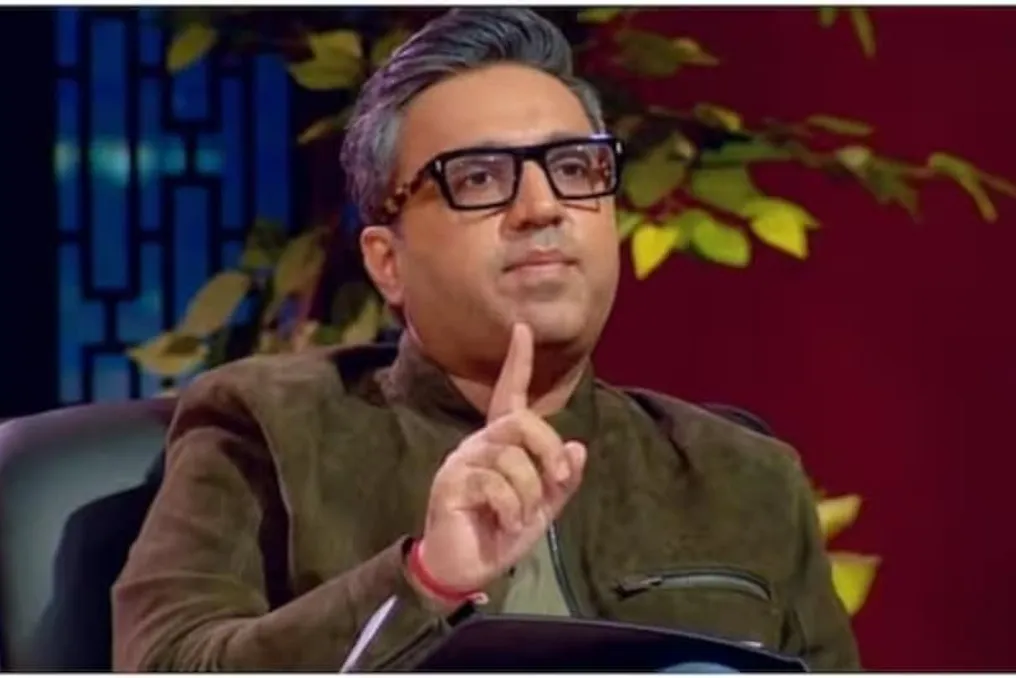
Ashnir Grover, co-founder of BharatPe and former judge on Shark Tank India, spoke out against the debate over the Merchant Discount Rate (MDR) on UPI, proposing a new formula that caused widespread resonance. Simultaneously, the opposition is also criticizing the government regarding UPI.
Speculation arose after it became known about the possible introduction of MDR or a commission for UPI transactions exceeding 2000 rupees. The government issued a notification clarifying that banks or payment systems cannot charge fees for UPI transactions up to 2000 rupees or for payments made using RuPay debit cards. However, this notification lacks clear information regarding the charging of fees for UPI transactions exceeding 2000 rupees.
It was this gap in information that prompted Ashnir Grover to ask the government several sharp questions. He stated on the social network X that any commission for UPI is equivalent to tax collection. Although everyone acknowledges UPI as a significant achievement for India, it now risks becoming subject to taxation.
Grover noted that the RBI provides the government with a surplus of 2.87 lakh crore, and the profit of all registered banks amounts to 4.11 lakh crore. Furthermore, NPCI, the operator of UPI, has a surplus of 1.888 crore. He questioned the necessity of introducing MDR given such significant revenues for the government and banks, and asked what specific subsidy the government is trying to compensate through UPI.
He also pointed out that the cost of operating ATMs and cash logistics in India is 30,500 crore. Grover advised that if the goal is to optimize closed ATMs and promote UPI, they should simply close the ATMs and focus exclusively on UPI.
According to the new rules introduced on September 14, banks or payment applications are not entitled to charge direct or indirect fees for UPI transactions or RuPay debit cards up to 2000 rupees. An amendment was introduced to Section 10A of the Payments Act during the monsoon session of parliament, paving the way for the introduction of MDR on electronic payments. Now, the 'UPI and Services Management Committee', headed by NPCI, will determine the amount of the MDR commission to be charged.
The government argues that since UPI has become a very large system, funds are necessary for its secure operation. Processing a huge volume of transactions requires constant investment in cybersecurity and fraud prevention. The government believes that relying solely on government subsidies for the further expansion of UPI is impossible.