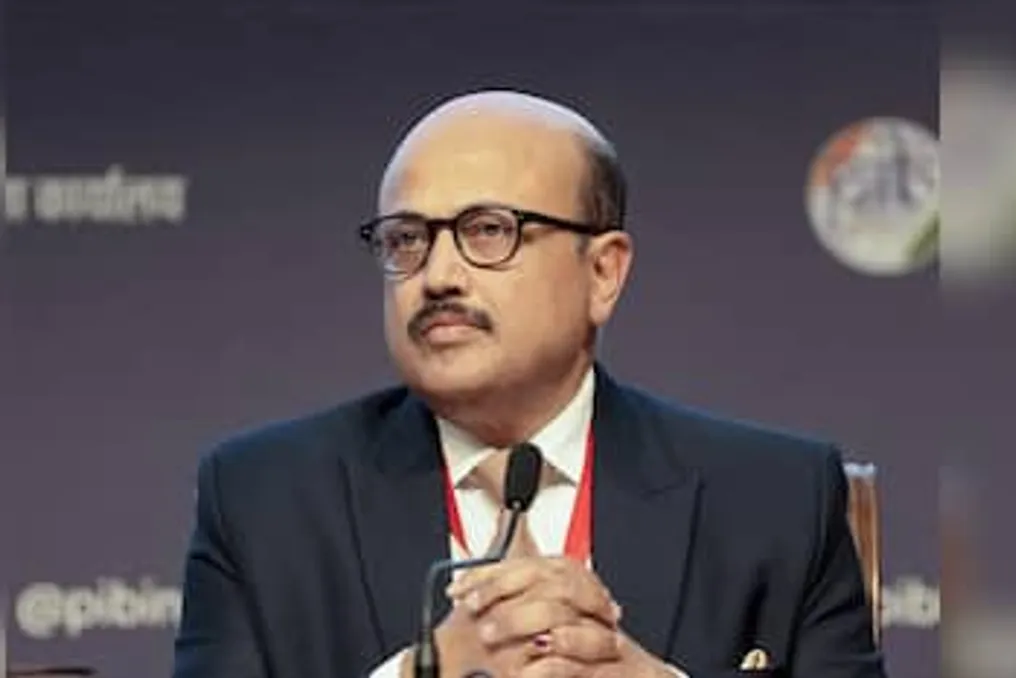
Trade Secretary Rajesh Agrawal stated on Tuesday that India and China are likely to continue engagement to settle bilateral trade issues, ranging from structural imbalance to supply chain problems.
Agrawal's comments came after the meeting between Indian Prime Minister Narendra Modi and Chinese President Xi Jinping, which took place on Saturday during the BRICS summit in New Delhi. India's Commerce Minister Piyush Goyal also met with his Chinese counterpart as part of this event.
Agrawal noted that the leaders had previously indicated that both sides must work together to resolve mutual issues, as well as attempt to address the structural trade imbalance, solve supply chain issues, and strengthen trust between the two nations.
He added that, following the leaders' directives, both sides are actively studying each other's positions, and that this meeting was the first, after which further negotiations will follow to advance these discussions.
China is India's main source of imports, accounting for 17 percent of India's total incoming supplies in the 2025-26 fiscal year. In the previous fiscal year, India had a trade deficit with China amounting to $112 billion.
Meanwhile, India's exports to China have shown significant growth in recent months. The volume of supplies to the East Asian country increased by almost 37 percent, reaching $19.47 billion in the 2026 fiscal year. With exports valued at $9.61 billion, China ranked among India's top three export destinations from April to August.
According to Agrawal, India's exports to China include engineering goods, electronic products, petroleum products, organic and inorganic chemicals, and iron ore. In addition to the trade imbalance, New Delhi's concerns regarding China include Beijing's restrictions on the supply of rare earth and critical minerals.
The Secretary emphasized that these discussions are taking place after a long hiatus, so each side will require time to fully formulate its issues and positions. He also noted that there has been an improvement in bilateral relations in terms of people movement and direct connectivity over the past year, and that gradual trust is building on both sides now.
India's engagement with China recently resumed after the deterioration of relations in 2020, caused by the border conflict in Galwan Valley. Although India did not suspend trade with China after the conflict, New Delhi has tightened rules for Chinese investments in India.
The BRICS summit marked Xi Jinping's first visit to India in seven years. Structural trade imbalance, supply chain issues, and ensuring significant and predictable market access were also discussed by Modi and Xi.
Besides China, New Delhi maintains contacts with other regions to stimulate trade. Agrawal reported that India and New Zealand are expected to implement their Free Trade Agreement (FTA) in the second half of October. Both sides signed the deal in April, and the exact date will be announced later after assessing the entry into force procedure.
India's agreement with the European Union (EU) is also progressing according to schedule. The Secretary predicts that it will be signed before the end of the current year.
Furthermore, India is conducting the fourth round of FTA negotiations with Canada in New Delhi, which will conclude on Friday. According to Agrawal, the parties have already agreed on two sections, and the upcoming week of negotiations will be intense due to the tight deadlines, as both sides aim to finalize the agreement by the end of this year or sooner.