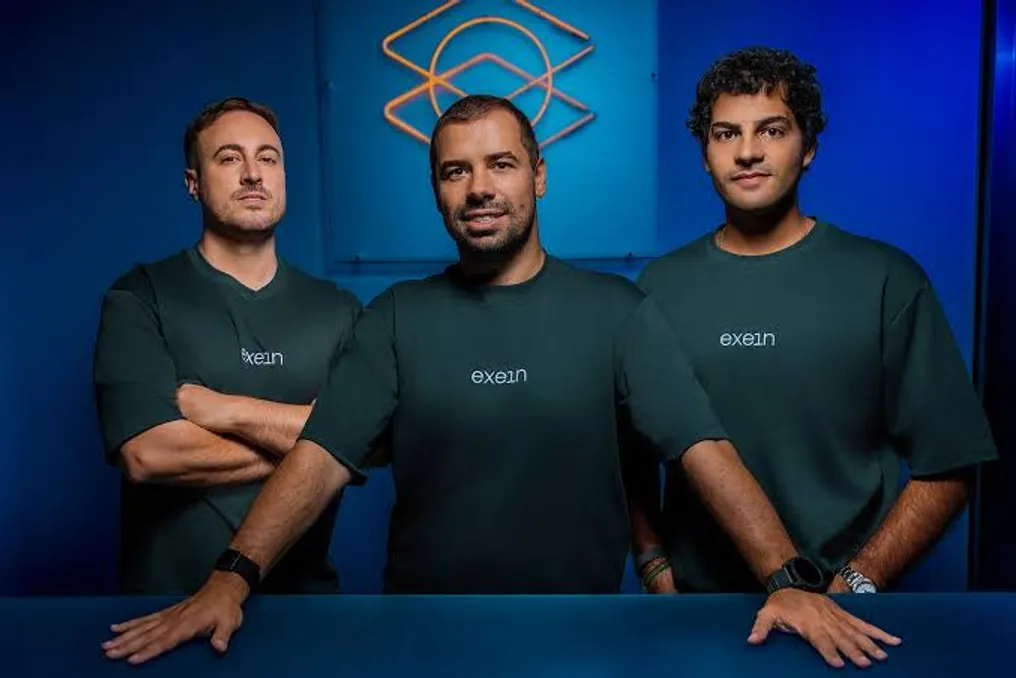
Exein raises $270 million to create security system for physical AI
Read more
Ventureburn
ventureburn.com

Exein raises $270 million to create security system for physical AI

As artificial intelligence integrates into all machines around us capable of making independent decisions, there is a risk of causing harm to people if these devices are hacked. In this regard, Exein has raised $270 million to develop a new type of protection for AI.

Exein announced the raising of $270 million, which boosted its valuation to $1.7 billion on September 15. This made the company the most valuable cybersecurity startup in Europe.

Leading investors participated in the round, including Goldman Sachs, Sofina, the European Investment Bank, KfW Capital, and T.Capital. Existing investors Balderton and Lakestar also added additional funds to their previous investments. The round was oversubscribed, meaning there were more interested parties than anticipated.

In addition to increasing equity capital, Exein expanded its credit line with J.P. Morgan. The company's growth is inevitable: just two years ago, its value was significantly lower, and in the first half of 2026, revenue increased fourfold compared to the same period in 2025.

Previously, concerns focused on hacking websites or social media accounts, but now AI has acquired much greater significance for humanity. Such systems include factory robots, drone delivery vehicles, autonomous cars, and smart medical devices, which are classified as Physical AI—machines capable of independent thought.

The risks now extend beyond just data; a hacked robot can cause physical harm, and a malfunction in an autonomous vehicle can lead to an accident. Old cybersecurity tools designed to protect servers and laptops are not suitable for protecting real-world moving machines.

Exein specializes in creating security specifically for this type of Physical AI. Instead of protecting cloud accounts or logins, the company protects the code running inside these machines. Exein's technology is already used in over 2 billion connected devices.

Earlier this year, they implemented a system called Photon, which operates at the 'kernel level,' meaning the deepest part of the device's software. This system is designed to prevent an attack before it occurs, rather than mitigating its consequences. Such speed is critically important, for example, for an autonomous car that requires instantaneous reaction.

Exein describes its product as a kind of 'digital immune system' for everything connected to the internet. Furthermore, the company is developing its own AI model specifically designed to detect and stop attacks on these physical machines. Since people already trust AI-driven machines, the consequences of a hack become not just digital, but take on a physical nature.

This is precisely the problem Exein aims to solve. This funding round demonstrates the direction of cybersecurity development: protection must extend not only to cloud services but also to the streets, factories, and the airspace above us. Europe now has the most valuable cybersecurity company created specifically to protect machines that allow AI to interact with the real world.

Similar stories

Cognition raises $2 billion with a $48 billion valuation to develop AI coding company
Read more
ventureburn.com

Cognition raises $2 billion with a $48 billion valuation to develop AI coding company

Amid growing demand for software and a shortage of engineers who hinder teams from completing features, fixing vulnerabilities, and updating systems, Cognition has introduced a solution based on AI coding tools. The core idea is to allow engineers to act as architects while artificial intelligence agents perform the actual coding, testing, and deployment.

Cognition AI successfully raised $2 billion in a Series E round. The round was led by new investors Andreessen Horowitz and Accel, with participation from existing partners including Founders Fund, General Catalyst, and Avenir.

Cognition's annual revenue increased from $492 million in May to nearly $900 million currently. The startup has developed Devin—an autonomous software development agent capable of planning, writing, testing, and deploying code with minimal human involvement.

Devin differs from simple code auto-completion tools like Copilot because it operates based on high-level requirements. The user only needs to give a command, such as 'fix this bug' or 'create this function.' Devin independently determines the necessary steps, writes the code, verifies it, resolves any shortcomings, and then deploys it to a secure test environment.

Recent feature additions include Devin Auto-Triage for analyzing production incidents, Devin Security Swarm for finding code vulnerabilities, and Devin Automations, which runs agent tasks via Slack, GitHub, and Linear.

Large corporations are already using the product. Cognition's clients include Nvidia for chip design, GE Aerospace in the aviation industry, Citi in financial services, Mercedes-Benz in the automotive industry, and Goldman Sachs. Since the system is not tied to one AI company, it can select the most suitable AI 'brain' for a specific task, whether it be OpenAI, Anthropic, or Cognition's own development. Engineers focus on design and verification, while agents handle execution.

Scaling AI coding requires significant expenditure, as Cognition leases a large number of Nvidia chips, costing them hundreds of millions of dollars annually. Experts predict that the company's expenses could reach $800 million just in 2026. To address this, Cognition is training its own model based on open-source alternatives, aiming to reduce dependence on expensive third-party models and approach the break-even point.

The company is also expanding Devin's capabilities and entering new markets. Annual revenue is expected to reach $4–5 billion by the end of 2026. The growing demand for software is driven by AI development: every company needs AI features, but implementing them requires code, creating a closed loop where AI needs more software, and software needs more AI for writing. Cognition is betting that this cycle is so massive that it can support several $50 billion companies.

CEO Scott Wu's vision is for engineers to transform into AI agent managers. Instead of writing every line of code, they will focus on verifying, directing, and approving it. If this model proves successful, the potential for software creation globally could multiply, allowing for faster security fixes and launching startups in weeks instead of months.

Having reached a $48 billion valuation, Cognition has become another giant in AI coding. Four months ago, its valuation was $26 billion, and it could grow even more by next year. Investors are clearly betting that the future of software lies not in one AI, but in many, and that coding will become the first task AI can truly automate at scale.

Popular