The consequences of the war with Iran are obvious to most Americans: gasoline prices have remained above $4 for weeks, mortgage rates are rising to seven percent, and companies are adding surcharges to shipping costs to offset record diesel fuel expenses.
These increases in the cost of living have lasted longer than the Trump administration claimed, although they should eventually reverse if and when the United States and Iran reach a ceasefire agreement.
However, other economic changes are not as easily reversible. The war has brought long-term changes to the global economy that have altered the world's approach to doing business.
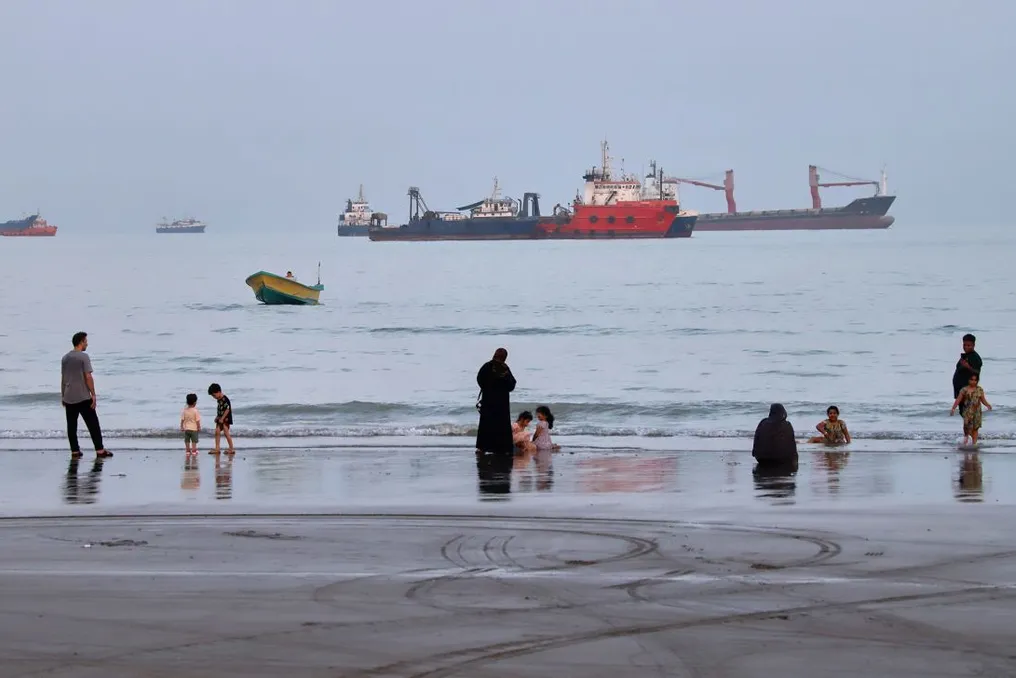
Before the conflict, ships flying the flag of any country could freely pass through the Strait of Hormuz to load and unload goods in the Middle East. One-fifth of the world's oil volume passed through this narrow passage daily.
The concept of control over the strait fundamentally changed after the United States and Israel attacked Iran at the end of February. Iran declared that the strait was under its control and began attacking vessels attempting to enter or leave the Persian Gulf. The effective closure of the strait gave Iran economic leverage over the United States and its allies in the Gulf countries, blocking 13 million barrels of oil supplies to the global economy.
In May, Iran adjusted its tactics regarding the strait. Instead of trying to completely close it, it began regulating the use of the channel. A Persian Gulf Strait Administration was created, and transit vessels were required to register with this body, follow an approved navigation route, and pay a passage fee.
After signing a Memorandum of Understanding with the United States in June, Iran agreed to suspend fees for 60 days, but it continued to attack transit vessels that were not registered with this administration.
Following the de facto breach of the memorandum, U.S. military forces began coordinating and escorting night transits through the strait to increase oil exports from the Persian Gulf and avoid Iranian drone attacks. This work is yielding results, but the need for such a large-scale, costly, and expensive operation demonstrates how much influence Iran has gained over the Strait of Hormuz.
Ross Mayfield, an investment strategist at Baird, noted: 'Iran will likely emerge from the war in a stronger position regarding control of the strait, forcing countries dependent on Middle Eastern crude oil to adapt. The closure of Hormuz has turned from a hypothetical risk into a demonstrated and effective tactic.'
Oil analysts believe that a final resolution to the conflict may include some agreement allowing Iran to charge a fee for safe passage through the strait. Some critics fear this will set a precedent for other countries demanding fees from vessels for passage through international waterways.
However, Natasha Kaneva, Head of Commodity Analysis at JPMorgan, pointed out that such a precedent already exists. The United Nations allows countries to charge service fees—but not for transit through waterways, but for ensuring navigational safety, traffic management, security escorts, emergency response, and environmental protection. Kaneva cited examples of Turkey, Denmark, Sweden, Russia, and Indonesia charging service fees for passage through various straits.
Kaneva added that this change could add about a dollar to the price of oil if Iran adopts a fee structure similar to what Turkey charges for passage through Turkish straits. A large tanker could pay around $260,000 for a round trip.
China, although not a major oil producer, emerged as the most influential force in the oil market during the war with Iran. This happened because China demonstrated a unique ability to regulate its demand, according to Joe Brussawell, Chief Economist at RSM US.
China's strong dependence on vast oil reserves accumulated before the war significantly reduced the country's crude oil imports by about 5 million barrels per day. At some point, the country will need to replenish its reserves, and demand will rise again.
Nevertheless, some changes in Chinese consumer behavior will become permanent. For example, during the five-day May Labor Day holiday, electric vehicle charging on Chinese highways increased by 55.6% compared to the previous year, according to data from the China Ministry of Transport. During the holiday, slightly less than a quarter of cars on Chinese highways were electric vehicles—a 33% increase compared to the previous year.
China also managed to quickly switch from oil and gas-powered power plants to using coal, demonstrating unprecedented resilience in the face of an unprecedented oil shock.
Oil demand dropped sharply during the war—much more than oil analysts expected, proving that the world is far more flexible in its use of oil than previously thought. Of the 1.9 billion barrels of Middle Eastern crude oil lost to the market during the war, 800 million barrels—just under half—were absorbed by people and businesses that consumed less oil, according to JPMorgan.
It is unclear what portion of this flexibility is permanent and what is temporary. But a sustained decrease in oil consumption, even only in China, could lower demand so much that it never fully recovers. Perhaps we have reached peak oil.
Kaneva noted: 'History shows that past oil shocks often left behind a sustained decline in gasoline demand, and this episode may not be an exception.'
Another significant adjustment during the war with Iran was the growth of oil production from unexpected sources. Environmental research and the development of alternative energy outside the Middle East are being activated, noted Andy Lipow, President of Lipow Oil Associates. Existing oil production projects are increasing drilling: Brazil increased crude oil production by 800,000 barrels per day. Guyana added 300,000, Canada 200,000, and Norway 150,000, according to JPMorgan.
The United States, which initially resisted increasing production due to fears of a temporary spike in oil prices, is now producing 900,000 barrels per day more than in the same period last year. Most of the increase in American production came from private drilling rigs that send oil to refineries for aviation fuel and natural gas for the European market, which is experiencing supply shortages. Although U.S. production may slightly decrease after the full opening of the Strait of Hormuz, JPMorgan expects America's output to remain close to current levels.
Brazil surprised oil analysts by producing much more than currently thought possible, but the successful implementation of its oil projects is likely to lead to further production increases. The arrival of a new offshore drilling vessel off the coast of Guyana this month will help the country accelerate production from its giant field.
To compensate for the situation, Middle Eastern producers are changing how they transport crude oil by developing alternative routes. Saudi Arabia has hired massive convoys to transport goods across the country to the Red Sea and has maximally loaded its east-west pipeline to bypass the strait. Iraq is negotiating with Chevron to build a pipeline to the Mediterranean Sea.
Meanwhile, OPEC is fighting for its own survival after the United Arab Emirates, one of the consortium's largest members, announced its withdrawal in April. It is reported that Iraq, the second-largest producer in the bloc, may be next to leave—the Iraqi oil minister told Bloomberg that Iraq will have to decide whether to remain in OPEC if production targets do not increase significantly. Iraq wants permission to produce a record 5 million barrels per day after the war, with a long-term goal of up to 7 million barrels per day, Bloomberg reported.
This could force Saudi Arabia to allow other countries to produce more oil than the world requires. This could be good for consumer prices by lowering them. But it could also create a permanent oil surplus that could sharply reduce oil profits.
_