Scan of 38,500 South Africans reveals many people who look like Springbok squad players
Read more
IOL
iol.co.za

Scan of 38,500 South Africans reveals many people who look like Springbok squad players

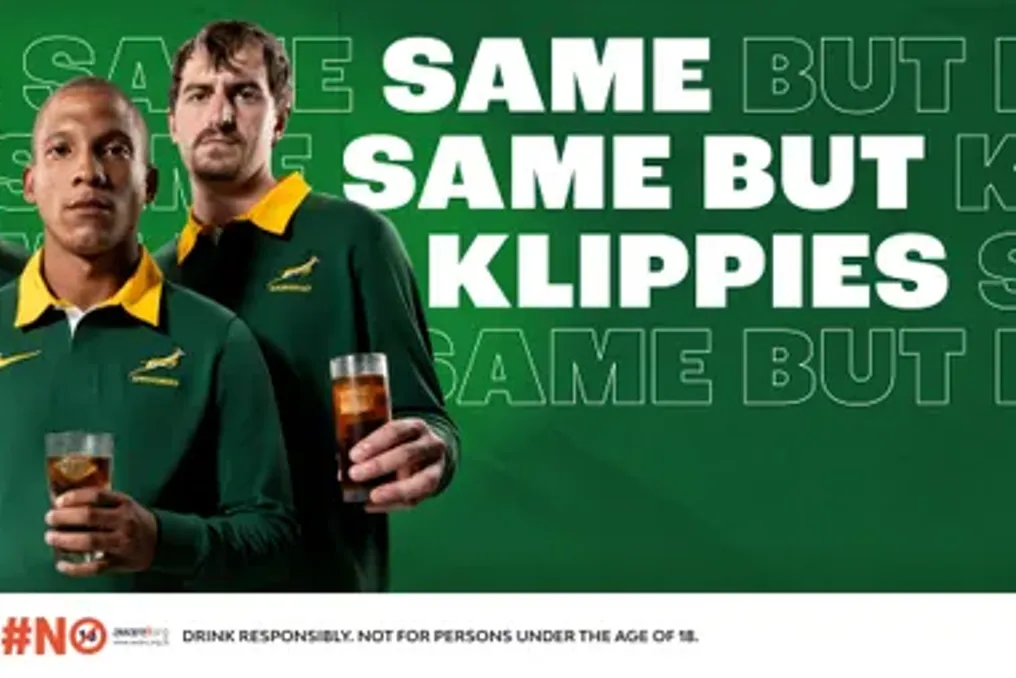
Klipdrift conducted the campaign 'Same Same but Klippies,' inviting rugby fans to upload photos to determine which Springbok player they most resemble using facial recognition technology.

Following the tour 'Springboks-All Blacks Rugby's Greatest Rivalry 2026,' the results of this selection process, which differs from traditional player selections, were revealed. Over the period since June, Klipdrift Same-Same Scanner registered more than 38,500 scans, demonstrating the involvement of South Africans in this initiative.

The campaign revealed several notable trends. The highest number of matches (1,885 fans) was recorded with Neeltjie Fourie. Lud de Jager came in second with 1,577 matches, and Vilko Lou was third with 1,469 matches.

Geographically, South Africa accounted for 95% of all scans, surpassing the UK. Gauteng demonstrated the highest activity among regions, providing almost half of all scans, as did the Western Cape.

This data confirms a previously made conclusion that there is a kind of 'second Springbok team' in South Africa, consisting exclusively of ordinary fans. The scanning process continued to reveal striking similarities, sparking discussions and friendly debates across the country.

Donne Wolf, Head of Marketing at Spirits, noted the incredible enthusiasm of South Africans for the campaign. He emphasized that what started as a lighthearted rugby celebration turned into something more, showing the deep connection people have with the Springboks.

Wolf added that regardless of whether a person matched a forward, defender, or winger, the excitement remained the same. Friends competed against each other, families compared results, and social media filled up with comparisons to the national team players, reminding everyone that supporting the Springboks is a feeling of belonging to something bigger.

As a result of the campaign, a national 'Bok Look-alike Squad' was formed, consisting of fans whose features are most similar to those of the national team members. Thus, it became clear that South Africans do not just support the Springboks, but in many cases, they look very much like them.

Similar stories

Springboks demonstrate growing superiority over All Blacks in series of matches
Read more
iol.co.za

Springboks demonstrate growing superiority over All Blacks in series of matches

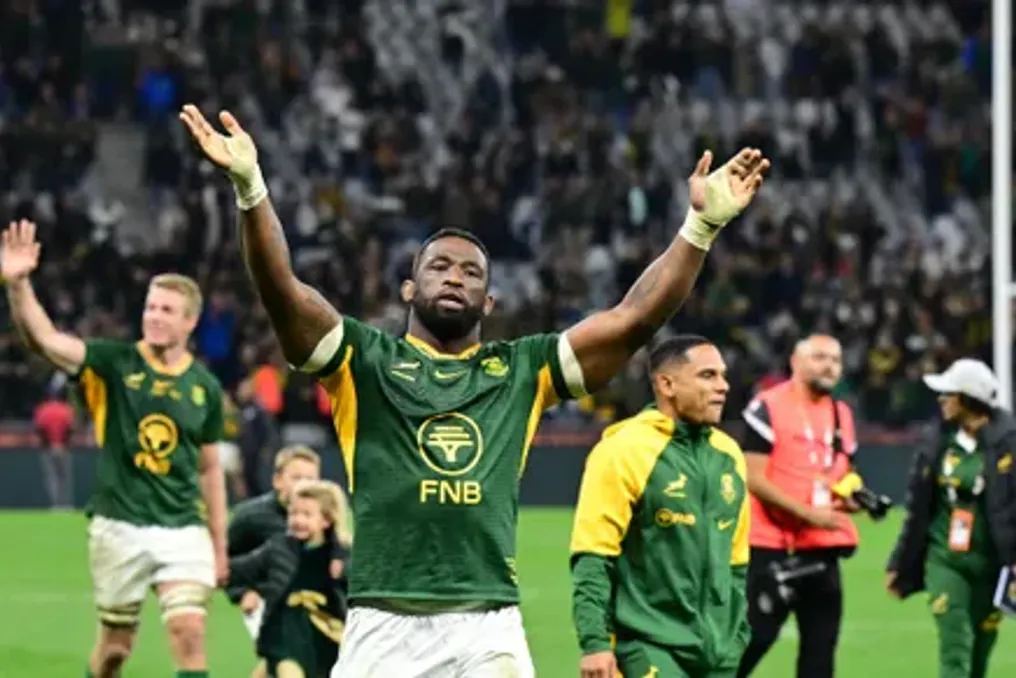
Springboks captain Siya Kolisi and his teammates achieved an impressive result against the All Blacks led by Russell Erasmus, further solidifying the team's dominance over their arch-rival.

The triumphant series for the Springboks, with a score of 3:1 against the All Blacks, revealed a significant gap between these two Southern Hemisphere giants. After the fourth test in the greatest rugby rivalry in Baltimore, where the world champions won 43:28 and secured their first trophy, it is becoming increasingly difficult to claim that these two teams are evenly matched.

The Boks are now operating at a different level, and even the mighty representatives of New Zealand are struggling to keep up. To win three consecutive matches against the All Blacks requires a special team, and this is exactly what the Boks did, concluding the series after a loss in the first match at Ellis Park in August. However, three dominant performances, backed by immense squad depth, allowed them to defeat their bitter rivals.

Squad depth is the defining advantage of the Springboks

What makes the defeat of the world's second-ranked team even more significant is that in the last 10 encounters, the Springboks have won eight times, while the All Blacks have managed only two victories—one in Auckland and one in Ellis Park.

Meanwhile, the Boks have dominated them, especially in the match where they crushed the team 35:7 in Twickenham, the 43:10 victory in Wellington, and the latest win in Baltimore. This indicates that the evolution of the Springboks machine has surpassed the development of the mighty black team, and they are currently dominating their competitors. It is almost unheard of for the New Zealanders to lose three consecutive matches to the same team, let alone eight out of the last ten meetings against them.

However, this is the current situation between the two sides. And the most worrying thing is that in none of the Greatest Rivalry matches were the Boks playing at their best level. Issues such as lineup changes due to injuries, uncharacteristic errors, inability to convert numerous attacks in the 22-meter zone into points, and a high number of penalties slowed down the Springboks at various times. Nevertheless, even making these mistakes, the world champions find a way to win.

This is what currently distinguishes the teams: the depth of the Boks' squad, the ability of all players to fulfill any role, and the quality of that depth. New Zealand has failed to catch up over four tests, and injuries have severely undermined them, with the loss of captain Ardie Savea in the third match likely being the most significant. South Africa has shown them how to cope and win despite various changes, and this kind of depth is currently unprecedented in world rugby. The task now is to continue moving in this direction. Erasmus has demonstrated that they can change tactics and still beat the best in the world.

A warning for the 2027 World Cup

Before the matches against the Wallabies and Italy, before they meet France and Ireland in the Nations Cup, opportunities open up for further squad experimentation from Erasmus and his management. If they manage to include players such as Paul de Villiers, Cameron Hanekom, Johan Grobbelaar, Jan-Hendrik Vessels, Morne van den Berg, Ntutuku Mchunu, Zack Porten, Ben-Jason Dixon, Ethan Hooker, and Edwill van der Merwe, it will put the Boks in an even stronger position ahead of the 2027 Rugby World Cup.

The Boks have already won the World Cup, defeated the All Blacks on home soil, dominated them in South Africa, and crushed them on neutral ground. More importantly, they did this with different combinations, different players, and under different circumstances. Perhaps this is the biggest wake-up call for the rest of the world: this Springboks team is not just beating the All Blacks—it is building sustainable dominance over them, making it a dangerous contender. Currently, the New Zealanders are chasing the world champions, and Erasmus and his management will want to maintain this state for many years to come.

South African Desert Turns into Field of Flowers in Spring
Read more
cgtn.com

South African Desert Turns into Field of Flowers in Spring

Every year for two months, the semi-desert landscape in western South Africa transforms into a breathtaking sea of wildflowers.

In the West Coast National Park, millions of native flowers bloom after winter rains, covering the area in shades of white, yellow, orange, and purple. This park is located in the Cape Floral Kingdom region—one of the world's richest biodiversity centers, home to thousands of plant species found nowhere else on the planet.

In 2026, the blooming season started earlier than usual due to a warmer and drier winter, making this spectacle even more fleeting.

UN supports the use of the new Equal Earth map projection for more accurate depiction of continent sizes
Read more
sputniknews.uz

UN supports the use of the new Equal Earth map projection for more accurate depiction of continent sizes

The UN General Assembly approved a resolution supporting the wider use of the Equal Earth map projection, which allows for a more accurate reflection of the actual area of Africa and other regions.

According to RIA Novosti, the document was supported by 164 states, while six countries abstained from voting. The United States was the only country that voted against it.

The initiative was put forward by the states of Togo, Africa. The country's Minister of Foreign Affairs, Robert Duesse, stated before the vote: 'A just world begins with a fair map.'

This concerns the Mercator projection, created in the 16th century. Although it is convenient for maritime navigation, it distorts areas near the poles, making them larger, while relatively reducing continents around the equator. For example, on this map, Greenland looks almost as large as Africa, although Africa's area is approximately 14 times larger.

The Equal Earth projection, conversely, maintains a more accurate ratio of continental areas. It is important to note that this resolution is not mandatory, and it does not prohibit the use of the Mercator map for maritime and air navigation.

Togo plans to update maps in school geography textbooks by the end of the year. Furthermore, the head of the African Union, Mahmoud Ali Yusuf, emphasized the need to depict Africa according to its 'real size and worthy place in the world.'

Popular