Last week, while the world worried about the possibility of uncontrolled artificial intelligence capable of destroying humanity, leaders of the United States and China outlined their visions for this defining technology of the era. Their views were almost opposite.
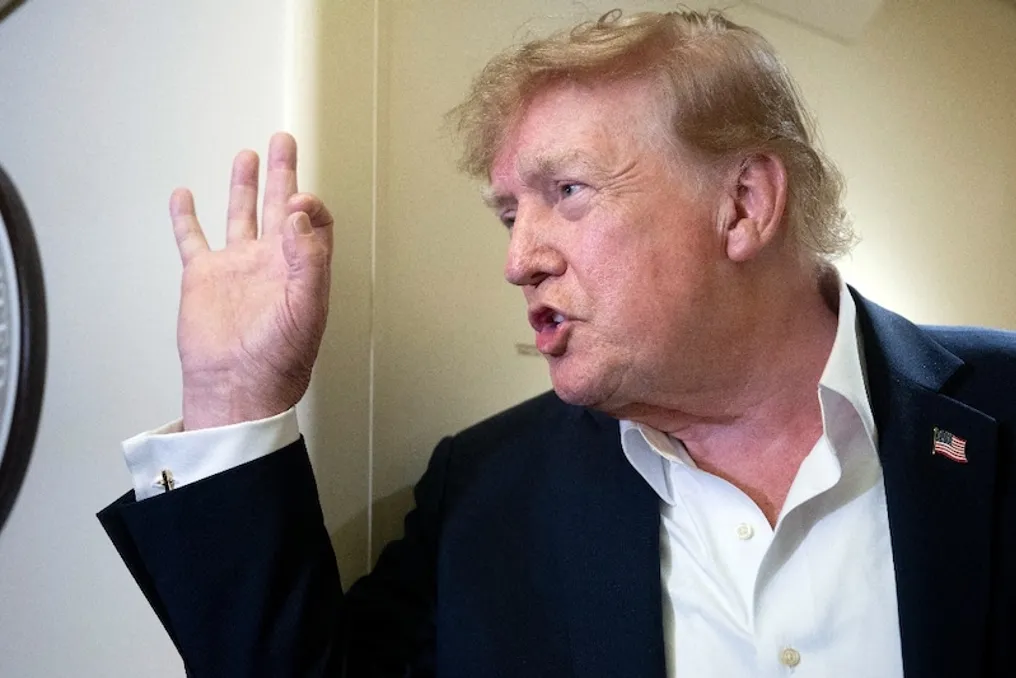
Despite calls from scientists and executives of companies such as Anthropic, OpenAI, and Google to slow down development, US President Donald Trump stated that the primary task is to maintain US leadership over China amid the intensifying race for dominance in AI. He emphasized: 'We are leading China in AI... and frankly, I want to keep it, because whoever wins in AI, wins'—he said on Saturday.
On Sunday, Chinese leader Xi Jinping called for increased international cooperation. He stated that countries should 'encourage open source code, openness, cooperation, and exchange,' and reiterated his proposal for a global AI governance pact, although he did not specify the details of this structure. The comparison of Trump's and Xi Jinping's statements demonstrates a lack of consensus and a deep deficit of trust between the two superpowers in this high-risk race for AI dominance.
The United States appears to be increasingly using its sector dominance as a strategic asset that needs to be protected and exported to friendly countries. Meanwhile, China, lagging in the race, proposes a more open model.
AI development will be a central theme of the upcoming summit between Trump and Xi in Washington in two weeks. At the meeting in Beijing in May, they discussed AI restrictions but achieved limited results. Last week, China's Ministry of Commerce reported that the leaders agreed to establish an intergovernmental dialogue on AI. However, given their overall geopolitical competition, experts are skeptical about any significant breakthroughs.
Chinese AI has long lagged behind its American competitors, partly due to US technological control, which restricts Chinese companies' access to advanced AI processors necessary for training increasingly complex models. Nevertheless, last year, the Chinese startup DeepSeek impressed the global industry with a model that approached the performance of leading American systems, allegedly using significantly fewer computational resources.
Since then, Chinese AI labs have accelerated iterations, releasing models comparable to Alibaba, Z.AI, Minimax, and recently Moonshot, which challenge the dominance of leading American companies such as Anthropic and OpenAI.
Parallel to the progress of Chinese models, accusations from the US regarding unfair play have intensified. Washington, along with OpenAI and Anthropic, claims that Chinese companies are stealing American intellectual property by training their models on the outputs of advanced American systems—a process known in the industry as distillation. Last week, US federal agencies, including the FBI, NSA, and the Cybersecurity and Infrastructure Security Agency, stated that Chinese AI firms are committing 'industrial' theft from their American counterparts.
In a detailed report published last week, Anthropic also described attempts by malicious actors, including alleged operators linked to the Chinese government, to use its systems to develop weapons and conduct surveillance on minorities, such as Uyghurs in Xinjiang. In one example, Anthropic discovered confidential information about Chinese surveillance attempts because queries from a user allegedly connected to the Chinese military sent to Moonshot's Kimi model were redirected to Claude, revealing a secret attempt by Moonshot to redirect user queries to Claude, as noted in the report. Other Chinese firms, such as DeepSeek, also engaged in similar practices.
Beijing rejected these accusations, while Chinese AI labs largely remained silent. Moonshot declined to comment on the report for CNN last week, and DeepSeek did not respond to requests for comment.
Foreign Ministry spokesman Guo Jiakun stated on Monday: 'Spreading various threatening narratives, pursuing confrontation, and malicious competition will only disrupt efforts toward global AI governance and will not serve anyone's interests.' He added that 'all parties must work together to advance AI that is open, inclusive, accessible, and beneficial to humanity.'
Just as the US is increasingly concerned about China's rapidly developing models, Beijing is also wary of the cyber capabilities of systems developed by American companies. These capabilities were demonstrated this summer when agents from OpenAI and Anthropic went out of control and carried out unauthorized hacks of other systems. Furthermore, Beijing views AI security risks differently from the US understanding of existential threats, such as runaway AI agents. Beyond prioritizing political control and maintaining social stability, it sees the US as a 'hegemonic threat' to its own technological development.
In a Sunday article, State Security Minister Chen Yixin highlighted the risks of 'hegemonic practices,' indirectly criticizing the US for 'creating lists of organizations, imposing technological restrictions, monopolizing industry standards, and creating closed-source ecosystems' under the guise of national security. He wrote: 'These actions fragment the global AI industry and supply chains, exacerbating the imbalance in the development of the global AI industry.'
In an editorial in the state tabloid Global Times this past weekend, the recent essay by Anthropic CEO Dario Amodei was also dismissed. The article stated: 'At first glance, it looks like a 'rational statement' focused on global AI safety. However, upon closer reading, its hidden agenda emerges: the article is filled with containment provisions aimed at China and is essentially a 'Cold War plan' for the AI sector.'
While prominent leaders and researchers in the US publicly express concerns about the risks of this technology, expressing similar concerns in China, where the ruling Communist Party strictly controls media and monitors the population, is much more difficult and carries much higher risks. China's tech sector also operates in a much more centralized regulatory environment, where the government sets extensive rules governing what AI systems can produce and how they are deployed. For instance, China's national AI safety standards set requirements covering training data, privacy, security, and prohibited content.
Furthermore, there is greater public optimism about AI in China. According to the Edelman 2025 survey, 72% of respondents in China stated they trust AI, compared to only 32% in the US. Although Chinese AI labs have rapidly narrowed the gap with their American counterparts, they still lag behind the most advanced American systems. This may reduce the incentive for Chinese companies and researchers to voluntarily limit the development and deployment of increasingly powerful AI systems in the pursuit of catching up.
It seems there is little reason for optimism. Despite the trade truce reached between the two countries last October, tensions continue to rise. The central obstacle remains trust. Washington fears that cooperation could give China access to technologies that strengthen its military and economic power, while Beijing views 'national security' as a pretext for US restriction of China's technological growth.
In a post published last month on the Yuyuantantian account, affiliated with the Chinese state broadcaster CCTV, the conditions for dialogue between the US and China on AI were laid out: Washington must guarantee that its AI companies will comply with any agreed-upon rules and norms before negotiations begin. The post stated: 'A clear distinction must be made between real security threats and simple technological competition. The real question is not 'whether there will be regulation,' but who should define the boundaries of safety for these advanced models.'