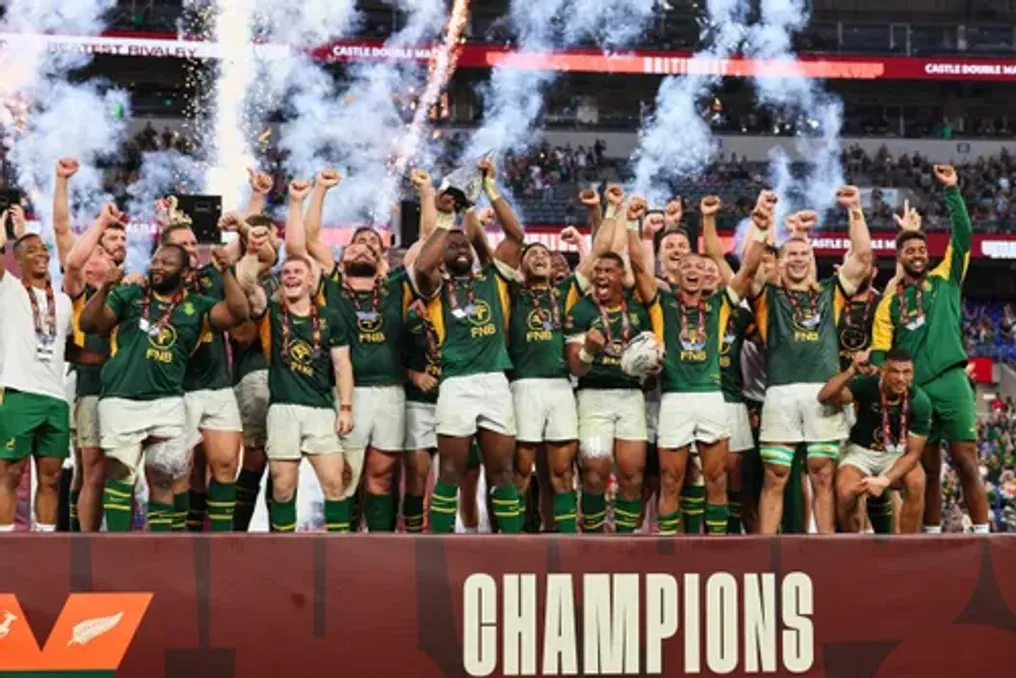
Unsporting incidents and off-field drama during the main rugby rivalry between Springboks and All Blacks
Read more
IOL
iol.co.za

Unsporting incidents and off-field drama during the main rugby rivalry between Springboks and All Blacks

The series of matches between the Springboks and All Blacks, dubbed the 'Main Rugby Rivalry,' concluded with a 3-1 victory for the Springboks, allowing them to avenge their loss in the 1996 series. The final game in Baltimore marked a triumph for the Springboks with a score of 43-28.

The four test matches were played at a high level and were very intense. Although the All Blacks managed to score more points (17 against 14), they lost the series. These four games generated revenue of approximately 420 to 500 million Rand, which is to be split equally between SA Rugby and NZ Rugby.

SA Rugby's Ticket Pricing Issues

The main goal of hosting the series was to generate necessary income to sustain the expensive rugby structure in both countries, especially considering that 2027 is expected to be challenging as most international matches will take place at the World Cup in Australia. Nevertheless, SA Rugby must find a more balanced approach between monetization and ensuring the sport's accessibility for fans.

Fans partially expressed dissatisfaction, as only the stadium in Cape Town was fully packed. Before the match at Ellis Park, tickets were reduced at the end of the week, which disappointed those who had bought them at full price in advance.

Scheduling Problems for Lions and Sharks

Holding the test matches at 7:10 PM on Tuesdays proved extremely unfavorable for the Ellis Park and Kings Park stadiums, where only about 15,000 spectators attended each event. Significantly better attendance was recorded in the Stormers matches, which drew 47,000 people, and the Bulls, who attracted 31,000 spectators, when their games were held on Saturday afternoons.

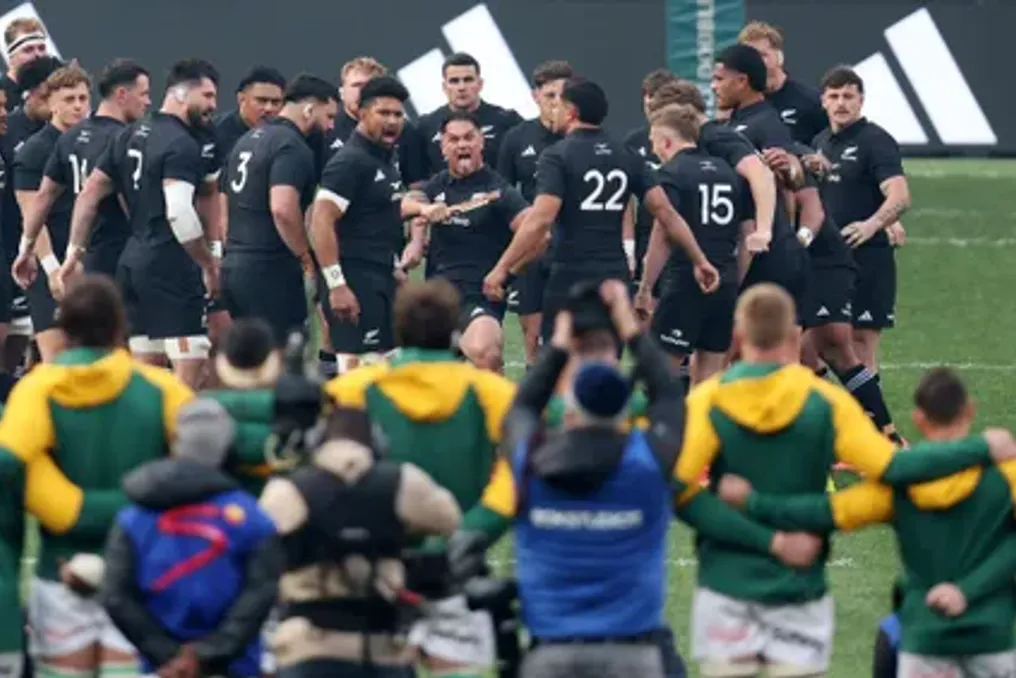
During the Sharks match, which was generally modest in unseasonably cold and damp conditions, the performance of Mâa Nonu with his solo Haka before former teammates was a highlight. This episode will forever remain one of the iconic stories of the series.

Trophy and Captain Interaction

There was significant interest in the new 'Main Rugby Rivalry' trophy before the first match. The trophy was made from black Pakoche stone from New Zealand and green Verdite from South Africa. It was intentionally designed with two magnetic halves, each symbolizing one of the rugby nations. The winner of the four-match series took both halves, and in case of a draw, each country received one.

Ultimately, the Boks won the right to take the entire trophy home. Even before the series began, the Haka was a topic of discussion. Rassie Erasmus made an unusual public request before the first match: he urged South African fans to respect the All Blacks' Haka instead of trying to drown it out. This was important due to events at Ellis Park in 2024, when the crowd noise, amplified by an airplane flyover, fireworks, and other pre-match shows, almost drowned out the Haka.

Erasmus noted that his assistant, Tony Brown, who is from New Zealand, helped the Boks understand the significance of the Haka to the All Blacks. He described it as an honor to watch, not something South Africa should 'cancel.' The crowd listened to Rassie, and the Haka was performed in silence, setting a respectful tone for the series.

Cape Town: When a Flyover Became the Main News

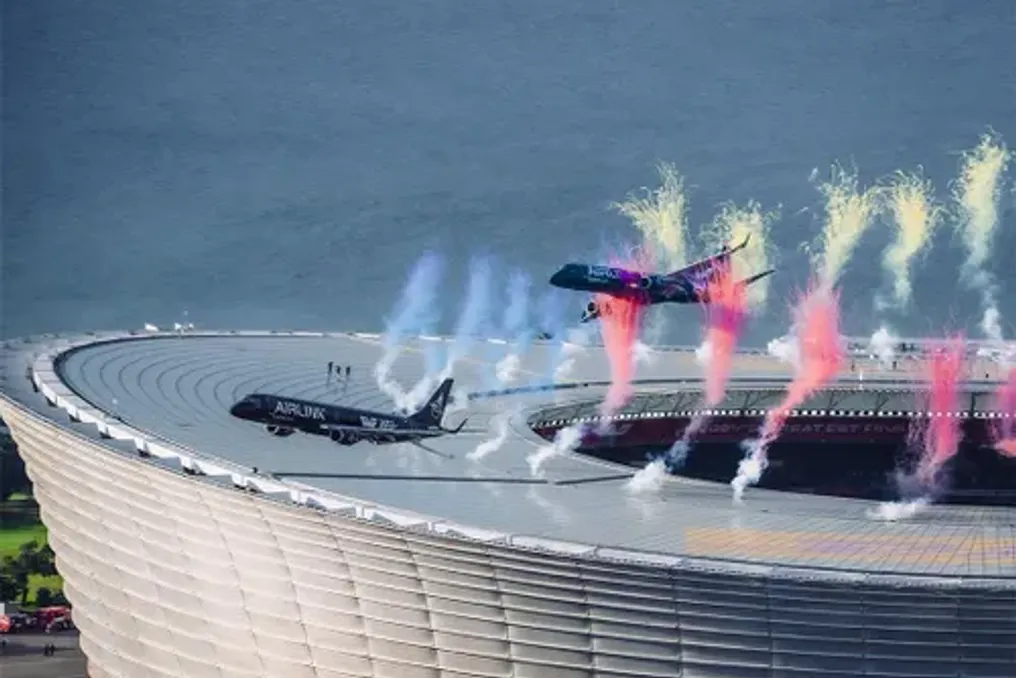
In Australia, the main news on television channels became a supposed 'near disaster' at the stadium in Cape Town after two Airlink Embraer E-Jets flew over a crowd of 58,000 people. Global aviation experts condemned this 'reckless' flyover, despite experienced Airlink pilots insisting that everything was done according to regulations. Subsequently, Airlink canceled the planned flyover for the match in Soweto.

However, Airlink directors might have been pleased with this incident, as the incredible amount of free global advertising it brought was priceless.

Rassie vs. Renne's Psychological Battle

The psychological games started early. Before the match, Dave Rennie told the media that he was concerned that South African players were deliberately slowing down the game to undermine his team's full-scale approach. The response from the South African side was that the Kiwis were illegally hitting in the rucks with their shoulders. The next strike from the 'Black Men' came after they were destroyed in the scrums at Ellis Park: they suspected the Boks were seeking penalties by illegally 'going around' in the scrums. It was here, some believe, that Rennie lost the psychological war.

Rassie skillfully brought scrum coach Dan Human into focus at the press conference on Monday. Coach Dan, with a grim face under his signature hat, told the world that his integrity was being questioned. His memorable response was: 'I am a farmer, I cannot cheat.' And then came the warning: 'I took that to heart.' The Boks players responded to this with appropriate emphasis in their scrum work.

Rassie's 100th Match and Achievements

The extensive experience of the Springboks squad was reflected in the significant achievements gained during the series. Pieter-Steph du Toit and Damian de Allende joined teammates Eben Etzebeth and Siya Kolisi in the club of centurions. The trio of players, consisting of Jasper Wiese, du Toit, and Kolisi, set a new Springboks record by starting 18 matches together.

Kolisi also became the most successful captain in Springboks history, securing his 55th victory in a match, surpassing John Smith's previous record of 54 victories. However, perhaps the most fitting achievement was that the Boks won the series in Baltimore in Rassie Erasmus's 100th match as Springboks leader. This was another pleasant detail in the Springboks' 'cake,' which they have decorated since Erasmus helped save South African rugby from the crises of 2016 and 2017.

}, 2.
Similar stories

The rivalry between the Springboks and All Blacks remains the greatest in rugby due to mutual respect
Read more
iol.co.za

The rivalry between the Springboks and All Blacks remains the greatest in rugby due to mutual respect

Despite the rivalry between the Springboks and the All Blacks being arguably the greatest in world rugby, respect between the players and teams is maintained even after the match concludes.

Unlike many other sporting confrontations where players might avoid interacting after the game, the opposite occurs in this rivalry. Although players fight fiercely during the 80 minutes of play, and coaches sometimes exchange sharp remarks at press conferences, the atmosphere quickly normalizes after the match ends, and both teams demonstrate mutual respect.

Erasmus and ReNNy shared a beer

This rivalry between South Africa and New Zealand illustrates the essence of the sport. The Springboks coach Rassie Erasmus and his colleague from the All Blacks, Dave Rennie, although they may have tactical disagreements, set these differences aside after the final whistle and media duties.

These two coaches have repeatedly met over a pint before and after various series matches, serving as a reminder that their confrontation is based on respect, not hatred. Erasmus mentioned that they drank beer after the match and planned to meet in Cape Town.

Dave Rennie confirmed that they shared a beer immediately after the game, despite verbal sparring over the score.

This friendly relationship extends to the players. Springboks captain Siya Kolisi and All Blacks captain Ardie Savea have developed a deep friendship that goes beyond rugby. They have attended church together, and Savea's children show particular affection for the Springboks captain, calling him 'Uncle Siya.'

Kolisi emphasized that when he plays against a friend, he shows respect by giving everything he can on the field, which he believes is very important. This says a lot about what lies beneath what could be considered the most intense rivalry in international rugby.

For 80 minutes, Kolisi and Savea lead their teams into battle, ready to risk their bodies for victory. Although Kolisi delivered a strong hit to Savea in Cape Town, Savea admitted feeling it, but after the battle, respect remains.

Springboks and All Blacks share a flight

The rivalry does not need to become personal. On the contrary, the mutual respect between the players makes this spectacle special. This was demonstrated in an unusual way before the fourth and final match in Baltimore, when the Springboks and All Blacks traveled together on a charter flight from Johannesburg to Washington.

Most of the journey passed in silence, according to eighth player Jasper Wiese, but the mere fact of the joint long journey was symbolic. The silence was understandable, as one team had won while the other had lost. Despite harsh words, powerful hits, tactical battles, and continuous competition, it is still rugby, and that is why the Springboks and All Blacks rivalry will go down in history as perhaps the greatest contest on the planet outside the Rugby World Cup. Because the Boks and the All Blacks might want to destroy each other for 80 minutes, running the oval ball across the field, but when it is over, they can still share a beer, eat together, attend church, and call each other friends.

Discussion of the overflight incident above the stadium in Cape Town and the reaction to it
Read more
iol.co.za

Discussion of the overflight incident above the stadium in Cape Town and the reaction to it

The world spent a week discussing an overflight at twelve meters above the sky of Cape Town, while the Springboks team prepared for an eighty-minute match at the FNB stadium. However, as noted, only one of these factors will matter on Saturday evening.

On August 29th, during the second match of the greatest rugby rivalry, two Airlink Embraer aircraft—one in Springbok colors, the other in All Black colors—crossed the roof of the DHL stadium shortly before the game began. According to Flightradar 24 calculations, the leading aircraft passed over the roof at an altitude of 41 to 46 feet, which is approximately 12.5–14 meters. Airlink reported that the flight was conducted at a speed of about 150 knots, received approval from the South African Civil Aviation Authority (SACAA) and the Air Traffic and Navigation Service, and the crew consisted of three senior captains on each aircraft.

As a result, the Springboks defeated New Zealand with a score of 33–26 in front of an audience of 56,589 people, thus leveling the four-match series at one win for each team. ESPN estimates that this overflight 'attracted more attention than the rugby itself.'

Global Reaction

The newspaper The Daily Mail informed its readers that the two aircraft nearly collided with the stadium, while the publication Australia's 7News felt it necessary to confirm that the footage was not the result of artificial intelligence. The New Zealand Herald gathered global reactions under the headline 'left fans in horror.' Scottish pilot Scott Batman noted that hundreds of professional aviators watched the images with concern, while admitting it might sound like a 'policeman watching the fun of the flights.' Australian consultant Keith Tonkin warned that turbulence or a bird strike at such an altitude would leave the crew with no margin.

Within internal circles, the reaction was more restrained. The President of the South African Owners and Pilots Association, Chris Martinus, called the overflight 'somewhat careless' from a safety perspective but refused to call it reckless, assessing the probability of a serious problem as very low. SACAA confirmed on September 2nd that it was reviewing the flight data and requested additional information from Airlink, emphasizing its role in protecting the 'culture of compliance.' Airlink provided the regulator with a full digital flight record and withdrew the application for a third overflight at the FNB stadium, citing weather forecasts unsuitable for safe construction.

Two ministers present at the stadium spoke out directly. Minister of Public Works Dean McPherson deemed the expert concerns laughable. Sports Minister Gethon Mackenzie stated that 'it is a well-known fact that we have the best pilots in the world.'

What If the All Blacks Had Won

A fair question arises: would all this have happened if the score had been different? The honest answer has two parts. Questions concerning aviation would have been asked regardless of the result. Flightradar 24 data on altitude does not change depending on the match outcome, and a regulator who would ignore an overflight at less than 50 feet over 56,000 people just because their team won at home would not be a worthy regulator. South African commercial airlines have a zero fatality record, which SACAA rightly monitors. Thorough checking is not an insult; it is the reason our pilots are trusted worldwide.

However, the tone would have been completely different. A week earlier, Airlink conducted the first of three approved overflights over Ellis Park. The All Blacks won 33–16, ending a 12-match winning streak for the Springboks and inflicting the heaviest defeat of the era of Rassie Erasmus. This overflight did not cause international concern. No one abroad measured the height of the overflight over the roof. The story then was about New Zealand's 'epic comeback in the second half' and how the Boks 'undermined themselves,' according to Pieter-Steph du Toit.

A loss, and the spectacle is forgotten. A win, and the spectacle becomes history. This pattern is familiar to South Africans and says more about how the world perceives the success of the Springboks than about the pilots themselves. Rugby, it seems, requires repetition: New Zealand arrived in Cape Town as, in the words of the Associated Press, an 'unexpected favorite' of the series. They left having suffered their first defeat under Dave Rennie's tenure. The Springboks led from the second minute, scoring three touchdowns in the first half, and Cheslin Kolbe converted all seven of his kicks, remaining perfect in terms of penalty kicks in the series.

After the match, Ardie Savea frankly stated: 'You cannot give the Springboks such a start.' Siya Kolisi replied more briefly: 'Last week we didn't take chances; this week we did, and we brought the fire.' The world rugby press was generous after the defeats. Publications described the match as 'blood and thunder' and proclaimed that the 'Boks were back,' even questioning Erasmus's decision to replace the entire forward pack at the last minute. This gamble with the forward pack certainly worked; Deon Fourie came on as hooker three weeks before his 40th birthday, and Malcolm Marx earned two decisive penalties on substitution.

None of this requires arrogance. South Africa owns four Webb Ellis Cups: 1995, 2007, 2019, and 2023, more than any other nation, and the last two consecutively. This is not boasting; it is a record. What this record shows is a team that is most dangerous the week after being written off. The 43–10 victory in Wellington in 2025 followed a loss in Eden Park. Cape Town followed Ellis Park. This trait is consistent enough that the All Blacks themselves know what to expect, as The New Zealand Herald called the 'Bok-lash.'

To the Springboks team, before the FNB stadium: there will be no overflight in Soweto on Saturday. It is not necessary. The pilots have already stated their point: South African competence, in the cockpit as well as on the field, is world-class, regardless of what foreign headlines want to emphasize. The regulator will do its job, as it should, and the airline cooperated fully. That is how a serious country behaves. Your task is simpler and more difficult. The series is tied, and the next match will be in Johannesburg on September 5th, followed by Baltimore. New Zealand will approach you with the memory of Ellis Park and the pain of Cape Town. They are a good team, and they will not boast this week. You don't need the noise. You have the same thing as in Paris in 2023 and in Cape Town last Saturday: 60 million people who believe in you when the rest of the world decides you are not at your peak. Critics will continue to measure overflights over the roof. You continue to measure the score. Show them again what champions are made of.

IOL Sport Podcast Discusses Tense Rugby Match Series Between Springboks and All Blacks
Read more
iol.co.za

IOL Sport Podcast Discusses Tense Rugby Match Series Between Springboks and All Blacks

IOL Sport correspondents, Zachier Adams, John Goliath, and Layton Cupman, analyzed the intense week of South African rugby in the third episode of the IOL Sport Podcast. They covered both bright victories and incidents related to aviation and verbal spats as the 'Greatest Rugby Rivalry 2026' series remains uncertain.

Return to Cape Town

The trio began the discussion with a detailed breakdown of the Springboks' triumph, who defeated New Zealand 33-26 at the DHL Stadium in Cape Town. This victory served as a response to a heavy 33-16 loss in the first match at Ellis Park. The world champions demonstrated the fierce intensity characteristic of the era of Rassie Erasmus. Goliath noted that thanks to adjustments, tactical kicking, and physical strength, the Boks team managed to disrupt the pace of the All Blacks, leveling the four-match series at 1-1 before the decisive third game.

Erasmus vs. Rooney Dispute: A Scrum War

However, the conversation quickly shifted to escalating external disputes that threaten to overshadow the match itself. New Zealand coach Dave Rooney provoked a conflict by publicly questioning the Springboks' scrum technique in Cape Town, accusing the South African squad of deliberate 'pushing' when securing the ball. Erasmus, who never shies away from confrontation, responded with fierce defense of his forwards. As Cupman pointed out during the discussion, the series is beginning to suffer from this 'artificially created drama.' Meanwhile, Boks scrum guru Dan Human insists that their focus is solely on advancing, not on playing for the sake of play. The podcast team urged both sides to abandon theatricality. Cupman aptly observed that it is time to silence the noise and let the great rugby rivalry speak for itself.

The Airlink Flight Saga

The drama was not limited to the coaching sidelines. Adams and Goliath discussed the strange story of the Airlink flight, which dominated weekend headlines. An ultra-low flight over the DHL stadium caused panic on social media, leading to an immediate investigation by the South African Civil Aviation Authority (SACAA). Consequently, Airlink was forced to suddenly withdraw its application for the planned third flight before the upcoming Johannesburg match while compliance checks are underway. The panel agreed that while iconic flights over the stadium evoke warm memories of 1995, the subsequent safety issue became an unnecessary distraction for the team striving for series victory.

All Eyes on FNB Stadium

Looking ahead to the third match at the FNB Stadium in Soweto, the IOL Sport team painted a picture of a finely balanced battlefield. The All Blacks, acting as a 'wounded beast,' are expected to arrive in Johannesburg seeking revenge. However, history shows that underestimating the critically positioned Springboks squad is a dangerous gamble. Since the series is in doubt, and external intrigues have finally subsided, the conclusion of the IOL Sport Podcast is clear: the talk is over. Saturday afternoon in Soweto is the time for rugby to be the main event.

Popular