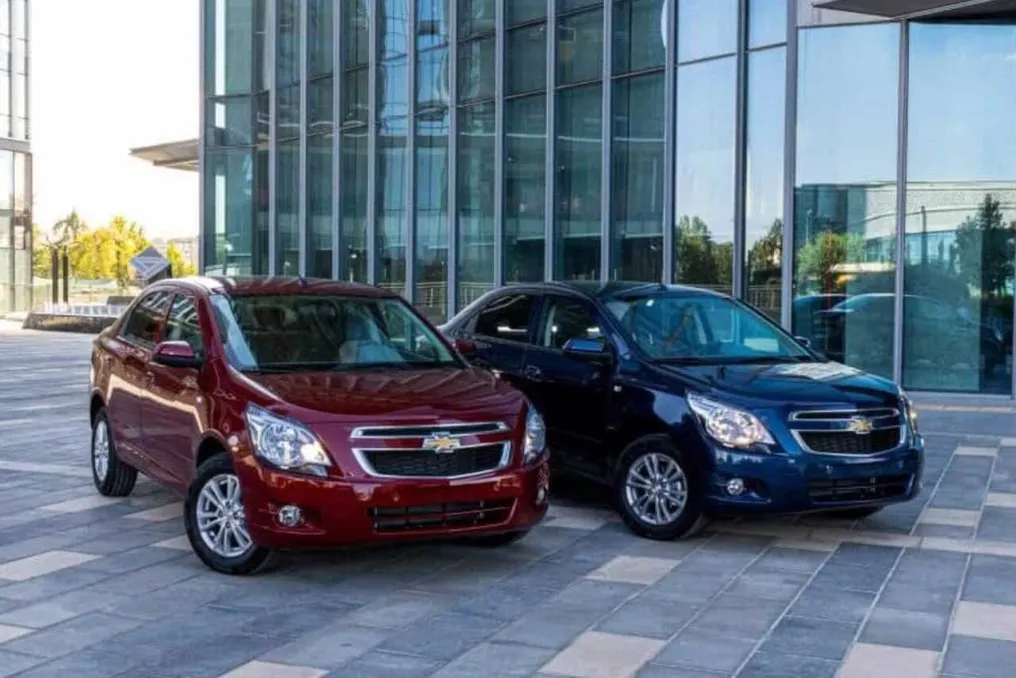
Car sales volume in Uzbekistan in August exceeded July figures but lags behind 2025 levels
Read more
Podrobno.uz [uz]
podrobno.uz

Car sales volume in Uzbekistan in August exceeded July figures but lags behind 2025 levels

In August, 37,798 cars were sold in Uzbekistan. This figure showed a growth of 20.4% compared to July, but it was 17.2% lower than in the same period last year. For the period from January to August, the volume of passenger car sales approached the mark of 250 thousand units, which is 5.9% less than in the corresponding period of 2025.

Sales dynamics and market leaders

According to information provided by the Automobile Business Association of Uzbekistan via Podrobno.uz, the market leader in August was the Chevrolet brand, accounting for about 28 thousand sales. It was followed by BYD with over four thousand units sold, Kia with 2.7 thousand, HAVAL with 878, and CHERY with 732. Growth in sales of the Nevo and Geely brands was also noted, amounting to 210 and 201 cars, respectively.

The most popular model in August was the Chevrolet Cobalt. In this month, buyers purchased over 12 thousand such cars, which is significantly more than the less than six thousand in July. Thus, sales of this model more than doubled, accounting for 32.3% of the total market volume.

Consumer demand shows uneven changes depending on the car class. Sales in segments A and B, as well as in larger categories E/F, minivans, and light commercial vehicles, decreased compared to last year. At the same time, there is a trend towards choosing crossovers and more spacious models. Sales growth was recorded in the SUV-E, SUV-D, SUV-C segments, as well as among C-class sedans. Premium SUVs showed the most noticeable positive dynamic, with sales increasing almost threefold.

The August sales growth coincides with an increase in domestic car production. The National Committee on Statistics reported that from January to July, 263.7 thousand passenger cars were produced in Uzbekistan, which is 9.4% higher than the figure for the same period in 2025. Among manufacturers, UzAuto Motors led with 185.8 thousand cars, ADM Jizzakh with 27.7 thousand, and BYD with 17.8 thousand cars.

It should be noted that in July, the Uzbek car market maintained a high level of activity, selling almost 80 thousand cars. In July, the increase in sales of new cars and electric vehicles was particularly noticeable, with demand rising by 10.8%.
Similar stories

Car production in Iran reached 926 thousand units in 1404
Read more
www.tehrantimes.com

Car production in Iran reached 926 thousand units in 1404

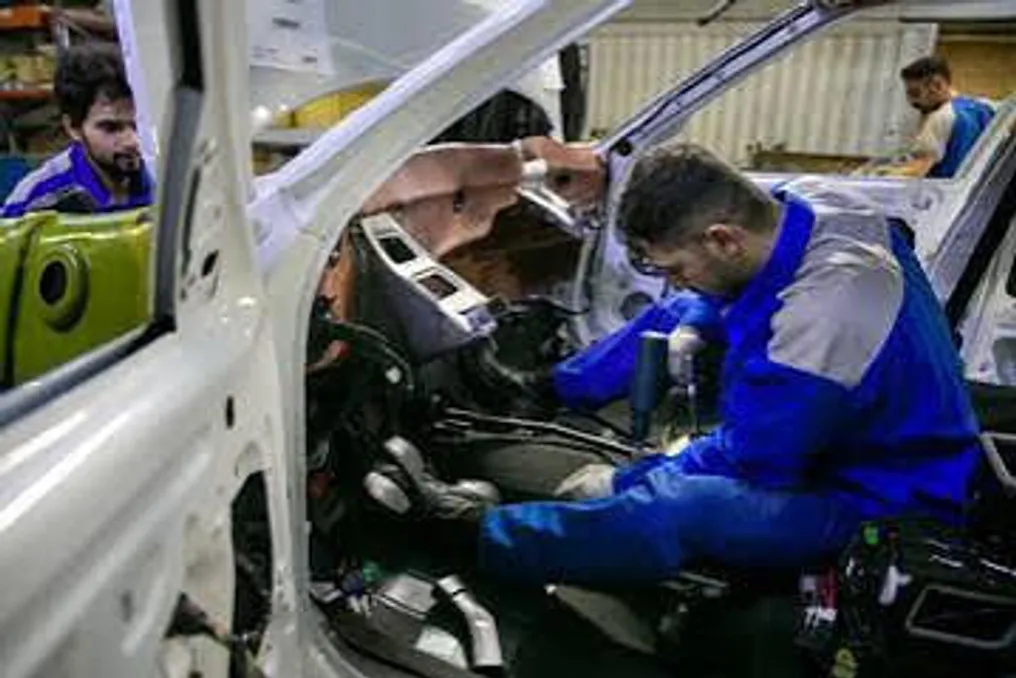
According to a recent report by the Iranian Parliament Research Center on the automotive industry, 926,000 vehicles were produced in the past Iranian calendar year 1404 (which ended on March 20). This figure represents a decrease of 17.4% compared to the previous year.

IRNA reports that the comprehensive overview of production, imports, exports, and scrapping of old cars, presented in the Parliament Research Center's report, shows that in 1403, production reached approximately 1,121,000 units, while last year it fell to 926,000, a drop of more than 17%.

Although there are multiple reasons for the decline in production, supply chain disruptions and various imbalances observed in recent years have been cited as the most significant factors.

Import and Export Dynamics

According to published statistical data, the volume of imports in 1404 reached about 67,000 units, indicating a growth of 6.3% compared to the 63,000 cars imported during the same period in 1403. However, export value in 1404 decreased by 48% relative to 1403. Last year, the export value in the automotive and auto parts industry amounted to approximately 65 million US dollars, whereas in 1403, this amount was about 126 million dollars.

The scrapping of old vehicles last year totaled 204 units, which is less than the 350 units in 1403, reflecting a decline of 41.7%.

New Scrapping Policy

The 14th government's policy aims to accelerate the process of scrapping old cars. In this regard, the Organization for Development and Modernization of Iranian Industries (IDRO) has been tasked with implementing this plan. Thanks to recent amendments to the executive provisions of the Automotive Industry Law, Article 10 is expected to increase the country's annual scrapping capacity to over 350,000 units.

One of the most important changes in the new regulations concerns Article 15. Previously, one vehicle had to be taken out of circulation for every 12 produced. However, according to the new amendments and the note to Article 10 of the law, this ratio has been changed to one vehicle for every four, meaning that manufacturers must compensate 25% of their monthly output by scrapping old models.

Furthermore, in the car import sector, hybrid models received a 50% exemption, and domestic electric vehicles received a 100% exemption from scrapping fees to facilitate the entry of environmentally friendly vehicles into the country.

Providing financial incentives for scrapping old transport also contributes to modernizing the transport fleet, reducing air and environmental pollution, and improving fuel consumption management.

Most in-demand cars in the taxi sector in Uzbekistan determined for the first eight months of 2026
Read more
podrobno.uz

Most in-demand cars in the taxi sector in Uzbekistan determined for the first eight months of 2026

Based on data analysis for the period from January to August 2026, the most popular car models in the passenger transport sector were identified in Uzbekistan, where 242 taxi aggregators are integrated with tax authority information systems.

During this period, passengers made 329 million trips, and the total income from taxi services exceeded 7.2 trillion soms. A significant portion of payments was in cash—4.5 trillion soms, accounting for 63.1% of the total amount, while 2.6 trillion soms (36.9%) were paid electronically. The average cost of one trip reached 21,785.5 soms.

Approximately 481.1 thousand self-employed drivers operate in the passenger transport sector through aggregators, including 4,107 women. Income analysis showed that over 7.9 thousand drivers earned more than 100 million soms per year. Furthermore, 31.5 thousand people earned between 50 and 100 million soms, and 124.4 thousand carriers earned between 10 and 50 million soms.

The distribution of income among drivers was also diverse: 59.9 thousand drivers reported an income of 5 to 10 million soms, 123.6 thousand reported an income of 1 to 5 million soms, and 133.7 thousand drivers earned less than 1 million soms.

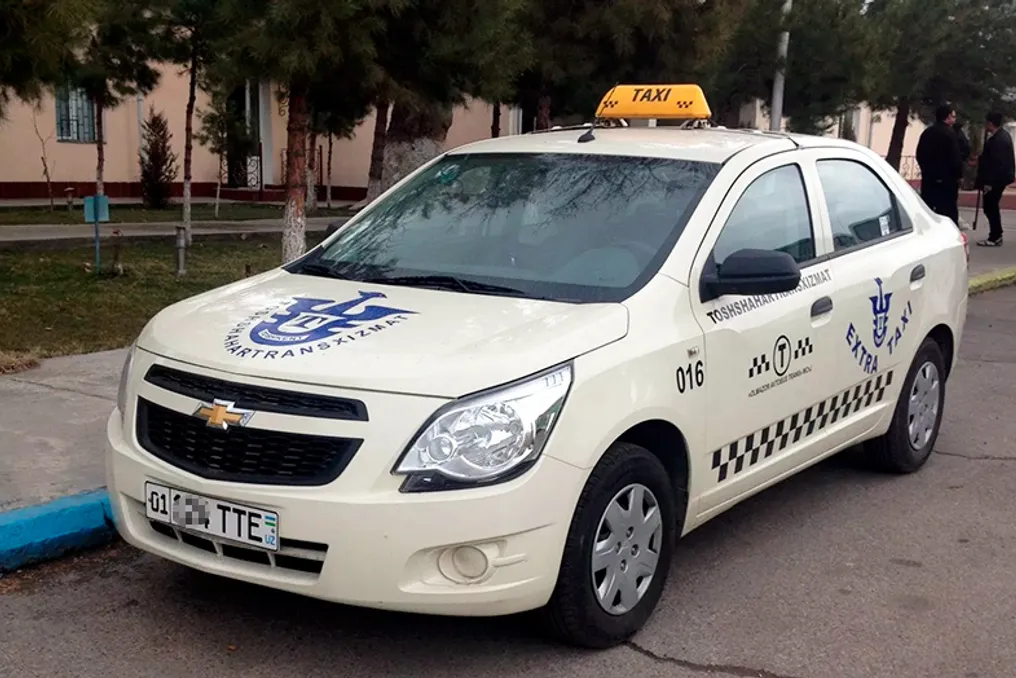
Among the models that proved most in-demand by carriers, Cobalt leads with a 27% share, Nexia with 19.3%, and Lacetti with 16.1%. The share of electric vehicles in the total fleet was 2.5%. Regarding the age of the fleet, cars aged 3 to 5 years constitute the largest share at 37.1%, while 29.2% of the vehicle fleet is older than 10 years.

Over the eight months of 2026, taxi aggregators contributed 149.2 billion soms in taxes to the budget, of which 46.8 billion soms was VAT.

Popular