India and New Zealand may soon conclude a Free Trade Agreement (FTA) that will open up new business opportunities for both countries. This is particularly beneficial for Indian exporters, as they will be guaranteed duty-free entry of goods into New Zealand.
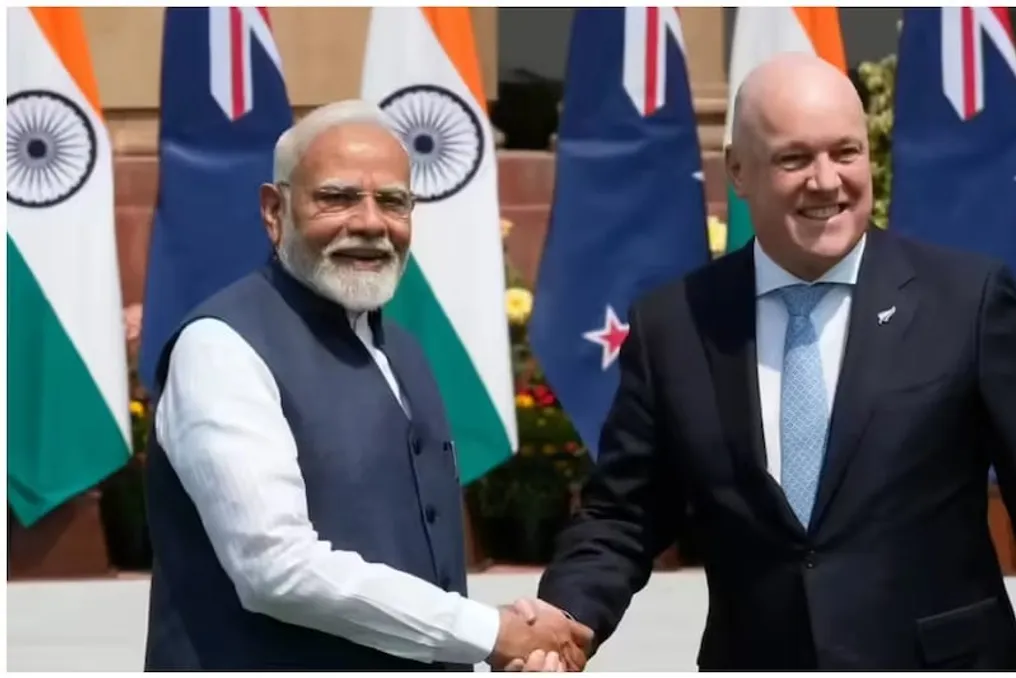
According to the report, the free trade agreement between India and New Zealand could come into force on October 19. The effective date will be determined by mutual consent of both parties. The signing of this agreement took place on April 27 at the Indian Mandapam in New Delhi. The signing ceremony was attended by India's Union Minister Piyush Goyal and Todd McClay from New Zealand, in the presence of New Zealand Prime Minister Christopher Luxon. The main goal of the deal is to stimulate growth in trade of goods and services, as well as investment attraction between the two states.
This agreement is part of India's expansion of trade partnerships, which previously concluded agreements with countries and blocs such as Mauritius, the United Arab Emirates, Australia, the European Free Trade Association (EFTA), and the United Kingdom.
The most significant advantage for Indian exporters will be the possibility of duty-free import of Indian products into New Zealand after the FTA comes into force. This benefit will apply to more than 8,200 product lines, including textiles, clothing, leather, footwear, engineering equipment, processed foods, and pharmaceuticals. Previously, New Zealand applied tariffs of up to 10% on certain Indian goods, such as ceramics, carpets, automobiles, and auto components; now these items can compete in the market at more favorable prices.
The benefits of the trade agreement will not only be felt by Indian exporters. India will also change its tariff policy regarding products from New Zealand. Under the agreement, India will grant preferences to approximately 70% of product lines, covering about 95% of New Zealand's export value. Furthermore, about 57% of product lines will become duty-free immediately, while tariffs on the remaining products will gradually decrease. However, India has excluded dairy products and several individual agricultural crops from its commitments.
It is expected that due to this agreement, New Zealand products such as wool, wine, coal, mutton, timber, and wood products will gain better access to the Indian market. Additionally, horticultural crops, including kiwis, apples, avocados, and blueberries, will also benefit from the deal. It is worth noting that the parties paid special attention to agricultural cooperation, planning to assist Indian farmers in adopting cultivation technologies for crops like kiwis and apples.
The agreement does not only cover trade in goods. It also includes provisions on visa regimes for temporary employment of Indian specialists. A quota of 5,000 visas will be established. Moreover, the agreement simplifies the mobility of students and professionals, meaning its benefits are not limited to just imports and exports.
New Zealand has also pledged to make direct foreign investments (FDI) of $20 billion in India over the next 15 years. If this investment program is implemented, it is expected to create new opportunities for business, investment, and employment in India, demonstrating the impact of the FTA on the level of investment.
India and New Zealand have set a goal to increase bilateral trade to $5 billion within five years. In 2024-25, trade between the two countries was about $1.3 billion, and in 2024, the total trade volume reached $2.4 billion. Negotiations for the FTA lasted about a decade and a half, starting in 2010. Discussions resumed in March 2025 and were finalized after five official rounds in December 2025.
For participants in the export business sending goods from India to New Zealand, this agreement will bring direct benefits. After the FTA comes into force, many Indian goods will be able to enter the New Zealand market without import duties, which will increase their competitiveness and boost demand for Indian products. Furthermore, Indian consumers and entrepreneurs will benefit from reduced tariffs on certain goods imported from New Zealand.