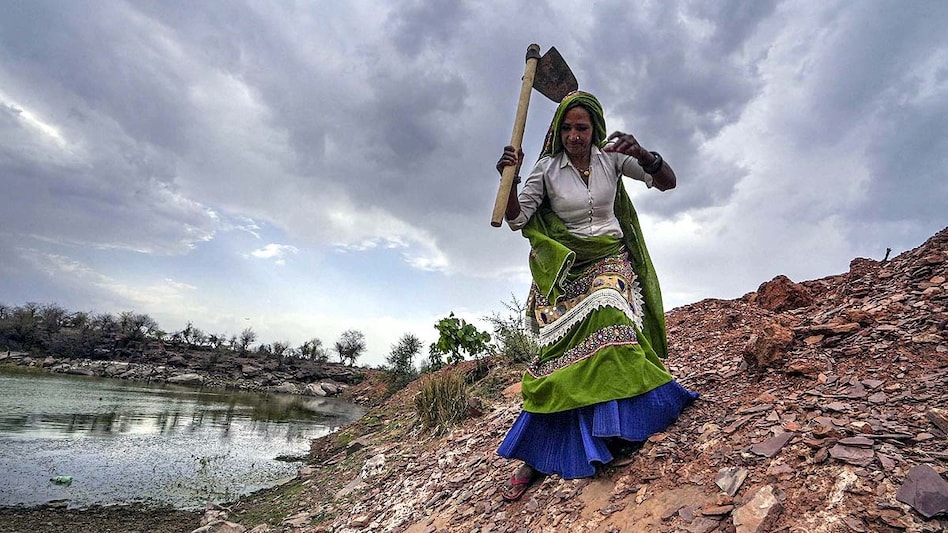
The Indian Meteorological Department reported on Monday that the southwest monsoon may begin to withdraw from parts of Western Rajasthan around September 19. This process usually starts around September 17, but this year it is happening with a slight delay; last year the withdrawal began on September 14.
As of September 13, a 15% decrease in rainfall was recorded across the country. In June, this deficit reached 40%, but thanks to good rains in July, it dropped to 13%. At the end of August, it stood at 14%, and has now stabilized at 15%. The influence of El Niño this season is evident, which has weakened precipitation in many regions.
The South Indian province has recorded a deficit of 28%, while the East North East has seen a deficit of 25%. Average India showed a lag of 6%, and the North West lagged by 10%. Many key agricultural states are facing a very low probability of completely eliminating this deficit. Among these states are Punjab (40%), Haryana (23%), Rajasthan (25%), Bihar (35%), Karnataka (29%), Kerala (27%), Telangana (20%), Andhra Pradesh (43%), Tamil Nadu (26%), Arunachal Pradesh (42%), and Meghalaya (59%).
At the beginning of the monsoon season, the government activated emergency plans for 315 districts due to concerns over weak rainfall. Of these, 111 districts were considered most vulnerable as irrigation coverage was less than 25%. 76 districts had an average risk, and 128 had relatively better irrigation. These districts are mainly located in the states of Madhya Pradesh, Maharashtra, Gujarat, Uttar Pradesh, Rajasthan, Karnataka, Bihar, Jharkhand, Telangana, Andhra Pradesh, and Odisha. According to August data, hundreds of districts across the country were experiencing rainfall shortages. One report noted that about 310 districts were marked as having a deficit, and 38 were in the severe deficit category. Over the last four weeks, 218 districts have shown signs of drought.
Many districts in Bihar, over 24 districts in Andhra Pradesh, about 20 districts in Karnataka, more than 14 districts in Punjab, and several districts in Rajasthan are suffering from the deficit. Most of the territories of Meghalaya and Arunachal Pradesh face a serious shortage. There are concerns that this will affect the crops of rice, maize, cotton, and pulses.
Before the monsoon completely withdraws, rain is expected in some areas. Significant rainfall is forecasted for Jammu and Kashmir and Ladakh from September 15 to 17. Heavy rains are possible in Punjab, Haryana, and Delhi on September 16-17. Localized rains are expected in Rajasthan, and scattered rains in Uttar Pradesh until September 18. In the south, in Tamil Nadu and Puducherry, heavy rains are predicted in various places until September 20, and in Kerala until September 16. Localized rains are also possible in central and eastern India. This precipitation may provide local support but is insufficient to cover the overall deficit. The meteorological department had previously forecast that September rains would be below normal, amounting to less than 91% of the annual average.
The lack of rainfall could put pressure on the harvest of rice, maize, cotton, and pulses. The situation is exacerbated in areas with low irrigation levels. Farmers are adhering to recommendations for planting short-duration and water-loving crops. Water availability, groundwater levels, and electricity demand may also be affected. This year's weak monsoon was caused by El Niño, leading to uneven rainfall distribution: some areas received heavy rains, while other districts fell into drought zones. With the monsoon's withdrawal, a rise in temperature is expected. In the near future, monitoring local rainfall is necessary, and the government and local administrations may continue restoration work under emergency plans. Overall, this season has been challenging for many agricultural states, where the deficit is unlikely to be easily replenished.