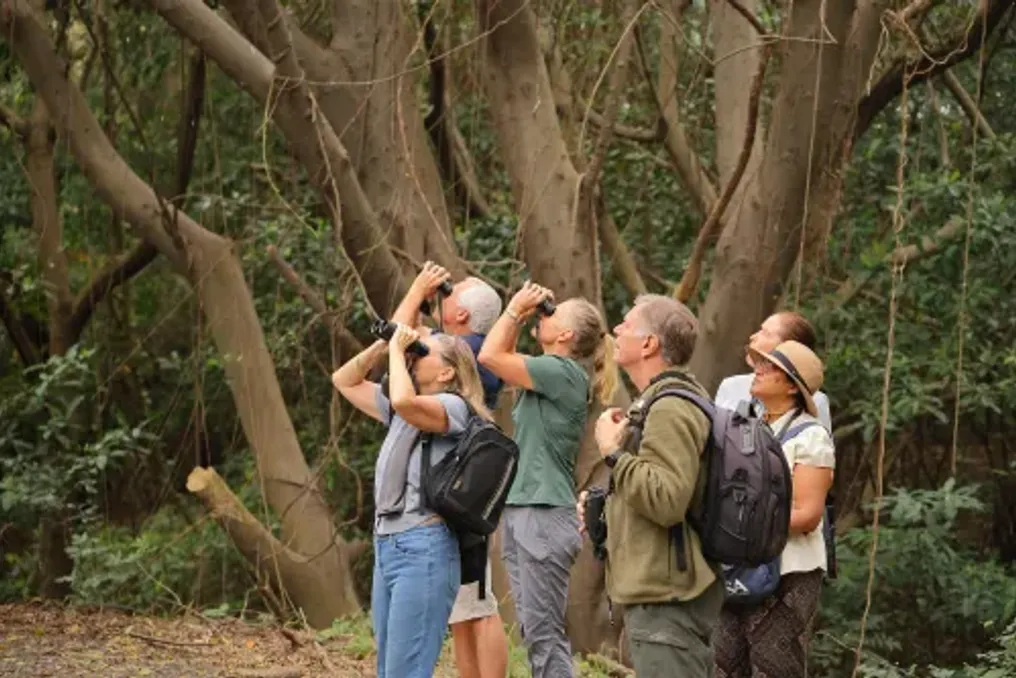
Thanks to a unique combination of forests, wetlands, mountains, grasslands, and scrub, KwaZulu-Natal has become one of the richest places in South Africa for birdwatching, with over 650 species recorded.
The province offers ornithology enthusiasts the opportunity to see species such as the Drakensberg Rockjumper and the Two-spotted Pink, which are difficult to find elsewhere. However, some of the habitats that make KZN so important for birds are experiencing increasing pressure from agriculture, logging, pollution, habitat fragmentation, and human interference.
Steve Davis, a member of the BirdLife eThekwini KZN conservation committee, noted that the province's strength as a birdwatching destination lies in the diversity of habitats concentrated in one region. He emphasized that KZN possesses an enormous variety of habitats, including subtropical coastal and montane forests, dune and sand forests, extensive estuarine systems like Lake St Lucia, mid-altitude grasslands and wetlands, the Drakensberg mountains, and vast scrubland in Zululand.
Davis reported that KZN is home to four endemic South African species: Radcliffe's Swift, Cape Parakeet, Knysna Warbler, and Knysna Woodpecker. Furthermore, 21 species found in the province are endemic to the wider region of South Africa, Eswatini, and Lesotho, and 88 species recorded in KZN are listed in the Red Data Book.
For dedicated bird lovers, some species are a reason for travel in themselves. Among KZN's sought-after birds are the Lemon-breasted Canary, Eastern Bronze-necked Pigeon, Woodward's Batis, Livingstone's Turaco, Neergaard's Sunbird, Palm-crested Snakeeater, Spotted Ground Thrush, Blue Swallow, Herni's Sugarbird, and the Drakensberg Siskin. One of the province's most unusual attractions is the Green Barbet, whose population in South Africa is restricted to the Ongoe forest in Zululand.
Attractiveness for birdwatching tourism
This diversity also lends birdwatching a tourist value that extends beyond the reserves themselves. Davis mentioned that several tour operators serve the birdwatching market, and accommodation providers participate in the BirdLife South Africa 'Bird-Friendly' initiative. He explained that the mere fact that bird lovers travel to different areas and stay in these locations generates income and makes local residents aware of the tangible benefits of wildlife and habitat conservation.
Foreign birdwatchers also contribute to foreign currency inflow by visiting South Africa to experience the local avifauna. Zululand remains one of the main birdwatching hubs in KZN, offering a wide range of species in places such as Ndumo Reserve, uMkhuze, Hluhluwe-iMfolozi National Park, and iSimangaliso Wetland Park. Montane forests and grasslands are also significant, especially for birds like the Cape Parakeet and Blue Swallow, while Hluhluwe-iMfolozi National Park combines mountain landscapes with species such as the Cape and Bearded Vultures.
Davis added that lesser-known destinations, including Winen Reserve and Itala Reserve, also offer good birdwatching opportunities. Although interest in birdwatching in KZN has existed for a long time, Davis noted a constant influx of new enthusiasts. Young enthusiasts sometimes start studying ornithology in school, drop the hobby due to early career or family demands, and then return to it.
Technology has also changed how people search for, photograph, and share information about birds. The availability of high-quality binoculars, digital cameras, online information, and social media has simplified participation in this pursuit, and WhatsApp groups and online webinars allow bird lovers to quickly share sightings and data. Davis concluded that it is now much easier to find and exchange information about birds and viewing spots, and even people who could not travel could follow sightings and events online.
Bird lovers become citizen scientists
Bird lovers do more than just tick off species on a list; their observations are used in citizen science projects that allow researchers to track bird habitats, population changes, and threatened habitats. Davis stressed that there are not enough scientists to monitor bird populations and habitats at the required scale and frequency, making the information provided by ordinary enthusiasts extremely valuable for nature conservation.
The South African Atlas of Birds 2 (SABAP2) collects long-term data on bird distribution, including information on conservation-of-concern species such as vultures, secretary birds, south African shrews, and cranes. Regular biannual counts of waterfowl also record the number and types found in important wetlands. Davis noted that this data is used in South Africa's reporting under international agreements, including the Ramsar Convention on Wetlands and the Convention on Migratory Species.
The data demonstrates shifts in the ranges of certain species. Davis reported that bird lovers and atlasers have recorded the southward spread of several species from areas where they were previously more common in northern KZN. These species include Woolly-necked Cranes, Red-billed Queenbeaks, Violet-throated Sunbirds, and Palm Nut Vultures. An increase in the numbers and distribution of the Southern White Ibis has also been noted compared to about 30 years ago, which Davis attributes to conservation efforts. Egyptian Geese have also become more widespread, as Davis said this species adapts easily to environments such as parks and golf courses. At the same time, counts have shown a decline in some coastal, estuarine, and wetland birds, including plovers, sandpipers, and gulls. Davis believes that the main causes of this are habitat destruction, pollution, and human interference.
Habitats under pressure
Among the habitats causing the most concern are montane forests, Midlands grasslands, wetlands, and estuaries. Davis pointed out that agricultural expansion and logging put pressure on grasslands. Where vulnerable habitats were once in protected areas, protection seemed sufficient, but fragmentation remains a serious long-term threat to species dependent on specialized habitats.
The critically endangered Blue Swallow is particularly vulnerable as it depends on a specific type of Midlands grassland at a particular altitude—land also suitable for commercial plantations. The highly threatened White-tailed Puffback relies on specific marshy and wetland areas. Davis noted that due to the secretive nature and difficulty in locating this bird, its actual population size is unknown. Vultures face other dangers, including lead poisoning from carcasses killed by lead ammunition, deliberate poisoning by poachers, and collection of body parts for traditional medicine (muti).
For Davis, protecting KZN's reputation as a birdwatching destination over the next decade will require more active involvement from bird lovers in conservation efforts. He urged people to join local bird clubs and BirdLife South Africa, participate in monitoring projects, and submit sightings to SABAP2 via the BirdLasser app. Davis emphasized that simply watching birds for personal interest does not contribute to bird conservation. He added that individual bird lovers and clubs do not always have enough influence on decisions regarding birds and their habitats, whereas the collective voice of BirdLife South Africa has greater influence on decision-makers. Education will also be crucial, especially among young South Africans. Davis stated that environmental conservation should be taught in schools so that future generations understand the importance of protecting natural systems. Birds, in his opinion, are not only a magnet for tourists and enthusiasts but are also widely recognized indicators of the health of the surrounding environment.