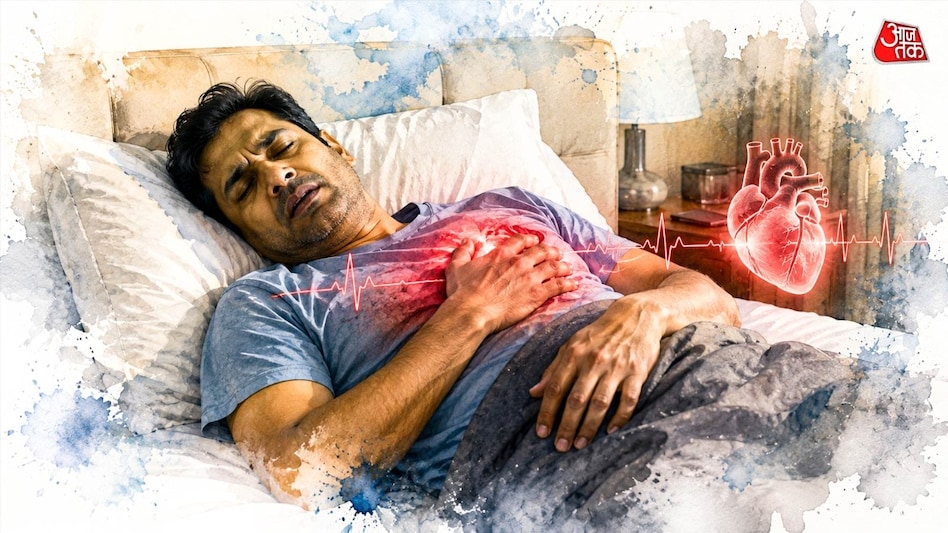
The common misconception that a heart attack can only happen if there is a blockage in the heart's blood vessels is not entirely true; for some people, a heart attack can occur even without large blockages in the arteries. In medical terminology, this condition is called Myocardial Infarction with Non-Obstructive Coronary Arteries (MINOCA), which accounts for 6 to 10 percent of all heart attack cases.
Dr. Tarun Kumar, a professor of cardiology at Medanta Mulchand Medicity in Delhi, explained in an interview with Aajtak.in that a heart attack can arise not only from artery blockages. An infarction can occur if the blood supply to the heart muscle is disrupted for other reasons.
Dr. Tarun explains that sometimes patients experience a heart attack, but no large blockages are found in the vessels during angiography. This phenomenon is known as Myocardial Infarction with Non-Obstructive Coronary Arteries (MINOCA). There are many causes for this condition. For example, sudden narrowing of a heart artery leads to insufficient blood supply, which is classified as coronary artery spasm.
Furthermore, the doctor points out the existence of very small vessels inside the heart. If blood flow is disrupted in these, it can cause a heart attack due to microvascular dysfunction, where the presence of a blockage in these small vessels is not decisive. The risk also increases if a small thrombus in the arteries ruptures, or if a blood clot formed anywhere in the body reaches the heart's vessels, causing coronary embolism. There has been an increase in such problems among patients since the COVID-19 pandemic.
If angiography or cardiac CT angiography does not reveal significant blockages in the heart, doctors may conduct further tests. They analyze the patient's symptoms, ECG results, repeated troponin tests, and heart visualization. Methods such as OCT/IVUS and cardiac MRI are used if necessary.
The risk is higher for people who experience severe psychological stress, live in cold conditions, frequently smoke, or abuse any type of drugs.
It is necessary to be cautious when experiencing pressure or chest tightness, chest pain that radiates to the arm, shoulder, back, neck, or jaw, shortness of breath, sudden weakness, and cold sweats.