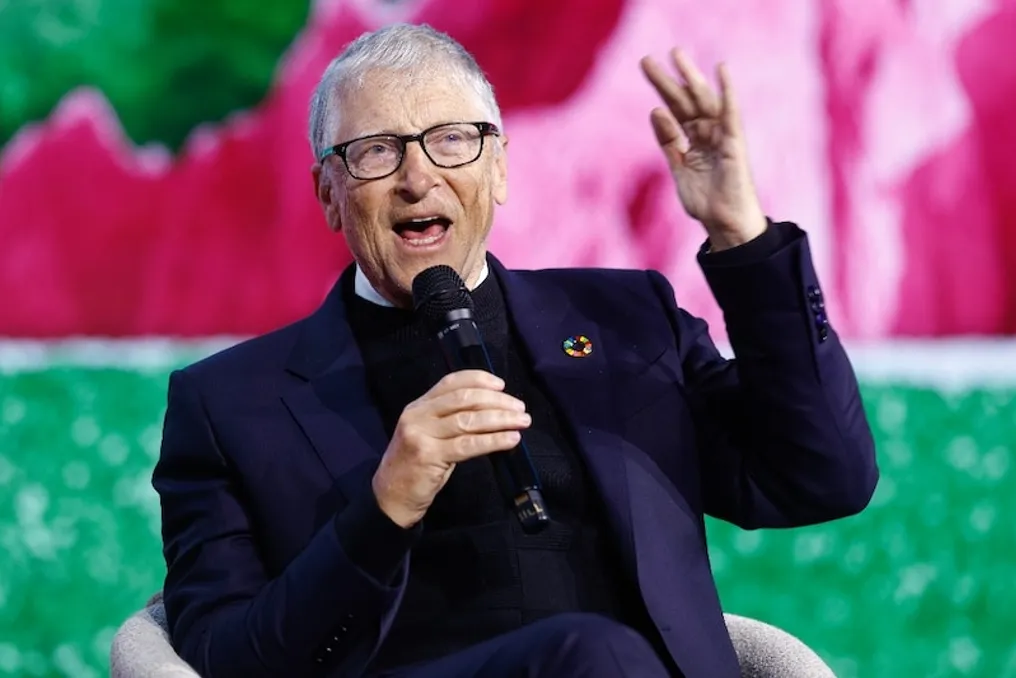
Bill Gates warns that the world is not ready for AI-driven changes and calls for international cooperation
Read more
Aaj Tak
www.aajtak.in

Bill Gates warns that the world is not ready for AI-driven changes and calls for international cooperation

Amidst heated global discussions surrounding artificial intelligence (AI), where alarming statements are emerging daily to the general public, Bill Gates has issued a serious warning. While leaders from OpenAI and Anthropic call for AI restrictions, US President Donald Trump asserts that stopping AI development is impossible, lest China overtake America. Among these remarks, the statement by Microsoft co-founder Bill Gates has garnered particular attention.

Gates warned in a recent interview that no government in the world is fully prepared for the massive transformations that AI could bring to society. He noted potential risks related to AI's impact on the labor market, increased cyberattack threats, and the possibility of human dependence on interacting with AI.

In an interview with Reuters, Bill Gates stated that governments' preparation for the coming changes driven by AI lags significantly behind the required level. Previously, Gates expressed optimism about AI's capacity to transform sectors such as healthcare and education. However, he now emphasizes that alongside accelerated development, there are threats the world is not yet ready for.

One of the main problems, according to Gates, is the impact on jobs. AI is already capable of performing tasks that previously required exclusively human involvement. In the future, as AI capabilities expand, working methods in many fields may change, and the demand for certain professions may decrease.

Furthermore, Gates expressed concern regarding AI-based cyberattacks and threats. He also cautioned about the growing popularity of digital companions with whom people interact via AI, fearing that users might become overly dependent on them.

Gates highly praised the rapid development of AI in China. He noted that institutions exist in both the US and China capable of creating some of the world's best AI models. This represents a major AI competition between the two countries. The US President and American AI companies also fear that China might surpass the US in AI development. This is why Trump claimed in his post that the winner of this race would determine the outcome.

According to Gates, the difference between the best AI models in both countries is not critically large. This technological race has implications not only for technology but also for business, security, the labor market, and global politics. Gates believes that the benefits of this race should not be limited only to the US and China.

He insists that AI must be accessible to developing countries as well as to people who currently lack access to quality healthcare and education.

Parallel to his warnings, the Gates Foundation announced a major step in AI. It is planned that over the next two years, the Foundation will allocate at least $1 billion, equivalent to approximately 8000 million rupees. These funds will be used to expand access to AI in sectors such as agriculture, education, and healthcare. The Foundation's goal is to ensure that the benefits of AI are not available only to wealthy nations and large corporations.

The Foundation will also focus on languages and regions that existing AI models do not understand well enough. This means funding will be directed towards developing more advanced AI models and collecting data for local languages.

Gates believes that AI should be viewed not only as a threat but also as a powerful tool that can help poorer nations.
Similar stories

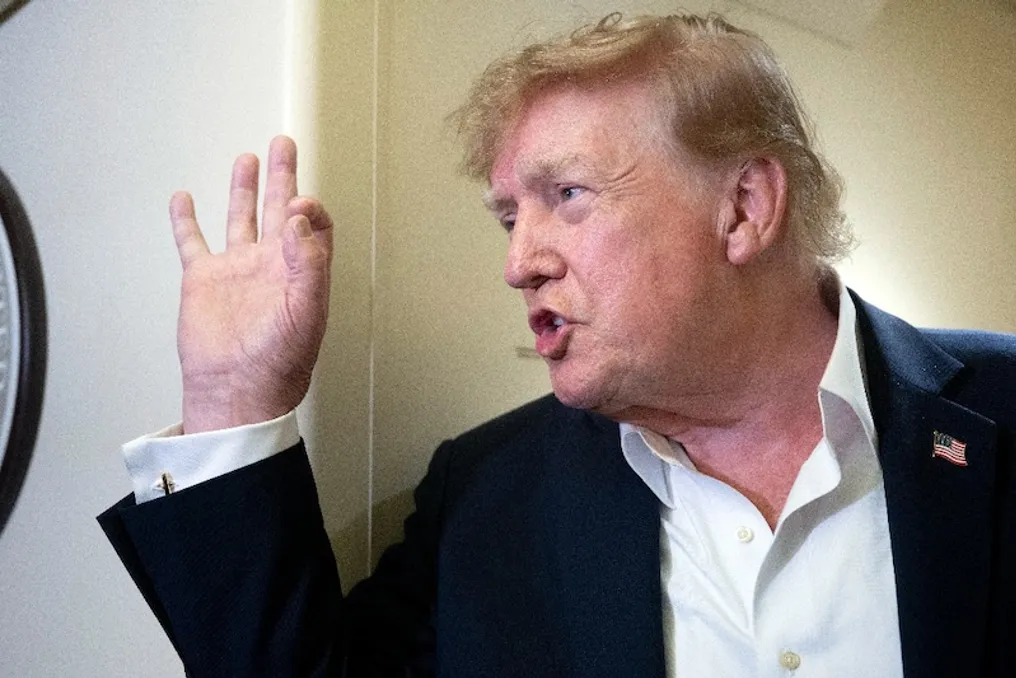
Donald Trump opposed slowing AI development, stating it benefits China
Read more
www.aajtak.in

Donald Trump opposed slowing AI development, stating it benefits China

In ongoing discussions among the world's largest technology companies regarding artificial intelligence (AI), US President Donald Trump intervened directly. Leaders of giants such as OpenAI and Anthropic advocated for limiting the pace of AI development. Specifically, leaders of OpenAI and Anthropic, Altman and Dario Amodei, proposed regulating AI to a certain extent.

However, Trump takes the opposite stance, asserting that AI does not need additional 'fences.' In his view, America already possesses criminal and regulatory powers over AI companies, and a strong president is capable of controlling this technology.

Trump also criticized Amodei, hinting that he is trying to portray himself as an 'ideal angel.' The President stated that slowing down the pace of AI development does not align with American interests.

The main reason for Trump's opinion is China. He emphasized the thesis, 'Whoever wins in AI wins,' pointing out that the country that triumphs in the AI race will gain immense future power. Trump believes that America currently leads China, and maintaining this advantage is crucial. He suggested the existence of a conspiracy against AI and data centers that, in his opinion, will ultimately benefit China.

Donald Trump insists that AI only requires one thing—a strong and wise president. It does not need additional control mechanisms or fences because America has such a president, and the Trump administration possesses significant authority to take action against AI companies. He noted that the administration had previously hindered the actions of individuals related to AI who might commit unlawful or potentially unlawful acts, such as Dario from Anthropic, who, according to him, is now presenting himself as completely innocent and ideal.

Trump stated that they already have extensive criminal and regulatory rights against these corporations, and they will continue to use them. He accused China of rejoicing in a 'very unfair and dangerous scheme' against AI and data centers. Furthermore, he warned those spreading conspiracy theories, spies, and information leaks: 'Whoever wins in AI wins. America is currently ahead of China and all other countries, and we will maintain this advantage.'

It should be noted that Anthropic's leader, Amodei, argues his position by stating that the rate of growth in AI capabilities is so high that safety systems cannot keep up. He particularly emphasized recursive self-improvement and AI agents capable of going beyond their assigned duties and committing attacks similar to cyberattacks. His proposal is not a complete halt to AI, but rather leveling the pace of development so that safety testing and independent evaluation do not lag behind progress.

However, another question arises in the US: what happens if American companies slow down while China continues to develop? This is where issues of AI safety and geopolitics collide. Amodei himself admits that the limits of any slowdown will be determined by how far ahead America is of China and other nations.

China also reacted to this discussion. Chinese officials and state media condemned Amodei's initiative, linking it to American technological dominance and Cold War mentality. Thus, the debate, which began with AI safety concerns, transforms into a direct confrontation of technological wars between America and China.

Popular