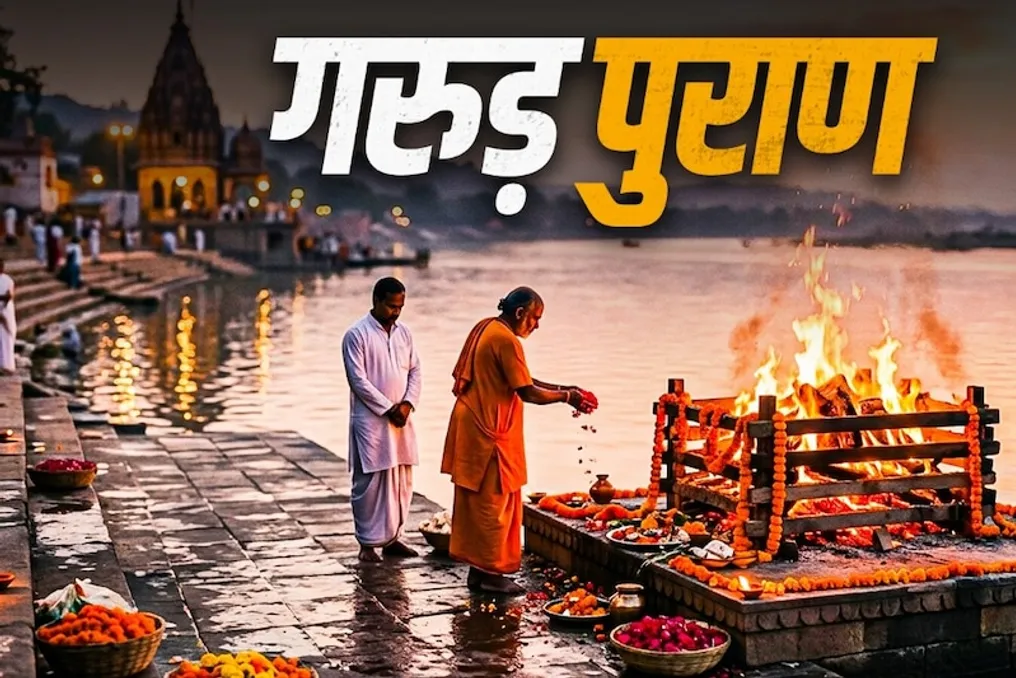
Death is an inevitable part of life, and every person born on this earth will eventually leave this world. In the Bhagavad Gita, Shri Krishna also stated that the soul moves from one body to another because the body is mortal, whereas the soul is considered immortal.
A natural question arises: what happens to a person after their death if the soul is immortal? The Garuda Purana describes in detail the journey of the soul after death, including the path it must take to reach Yamaloka.
What happens to the soul after death?
According to the Garuda Purana, as the time of death approaches for a living being, their voice begins to weaken. In the final moments before death, divine vision is granted to them. In this state, they experience the world completely differently, and their senses gradually weaken.
After this comes the moment of death, when the messengers of Yamaraja arrive. It is believed that upon seeing them, the living being experiences fear and leaves its body. After exiting the body, the yamadutas carry the soul away.
The Journey of the Pure and Sinful Soul
According to the beliefs of the Garuda Purana, the path of a soul that has performed good deeds differs from the path of a soul that has committed sins. A soul that has sinned has to go through a difficult journey and face various tortures before reaching Yamaloka.
According to tradition, after the soul leaves the body, it is returned to the house from which it departed. The soul tries to re-enter its body but fails. Then it watches its family conduct the funeral. This is why rituals after death and pindadana are considered extremely important in Hinduism. It is believed that these rites help the deceased soul in its further journey.
Why are rituals performed within 13 days after death?
In Hindu tradition, various rituals are performed after death for thirteen days. According to beliefs associated with the Garuda Purana, these rituals and pindadanas strengthen the subtle body of the deceased for the onward journey. After this, the soul's journey to Yamaloka begins, which includes passing through many routes and difficulties.
The Necessity of Crossing the Vaitarani River
The Garuda Purana also describes the Vaitarani River. According to religious beliefs, this river is one of the most difficult obstacles on the path to Yamaloka. It is said that Vaitarani is extremely terrifying and crossing it is not easy. It is believed that those who cared for cows or had merits related to cows in life receive assistance in crossing this river. At the same time, a soul that has sinned has to face difficulties when crossing it. In religious texts, Vaitarani is depicted as an extremely frightening river. According to beliefs, after crossing it, the soul continues its journey and reaches Yamaloka.
What happens after arriving in Yamaloka?
According to the beliefs of the Garuda Purana, upon arrival in Yamaloka, an accounting of the soul's deeds takes place. Depending on the actions a person performed in life, they receive corresponding retribution. Therefore, in Hinduism, emphasis is placed on performing good deeds. It is believed that wealth, relationships, or material possessions do not leave with a person after death; only their deeds accompany them.
Thus, regardless of how complex life circumstances may be, we must always strive to do good. The Garuda Purana contains many profound truths about life and death that prompt a person to reflect on their actions and the meaning of their existence.