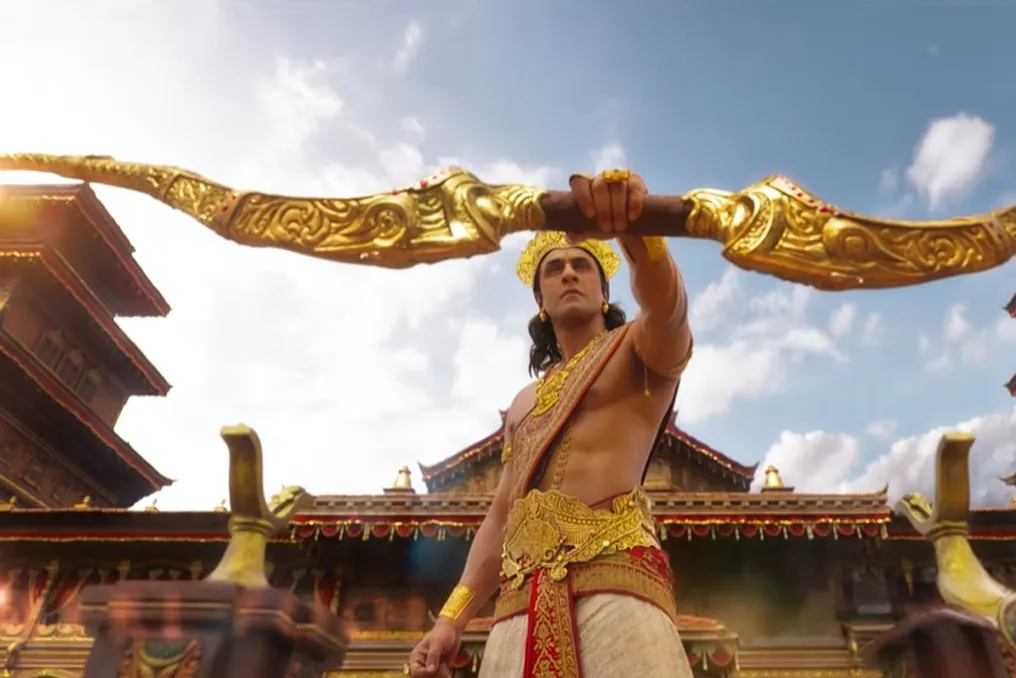
The song 'Jai Jai Ram' for the film 'Ramayana' by director Nitish Tiwari has been released. This track was issued on the occasion of Ganesh Chaturthi and has received wide public acclaim. The song features beautiful scenes depicting the love story of Shri Rama and Sita's mother, their wedding, the streets of Ayodhya, and the warrior appearance of Shri Rama.
A scene is shown within the song where Shri Rama (Rambir Kapoor) lifts the bow during Sita's mother's samvara. This is a significant moment from the Ramayana that remains in people's memory. Subsequently, the reasons why Shri Rama broke the bow of the god Shiva are narrated.
Sita's samvara is considered one of the most important events in the Ramayana. The central element of this samvara was the mighty bow of the god Shiva, known as 'Pinaka'. The King of Mithila, Sita's father, organized the samvara, setting the condition that the marriage with Sita would happen to whoever could draw the string of the divine bow Pinaka. This bow belonged to the god Shiva, was enormous in size, and was believed to be endowed with divine powers.
During the samvara, many powerful kings and warriors were unable to lift this bow or draw its string. Following this, Shri Rama easily lifted the bow and broke it while drawing the string. This event is interpreted as evidence of Shri Rama's exceptional power and divine purpose.
According to the Ramcharitmanas, Shri Rama began to lift and draw the string of the bow. As soon as he pulled, the bow split. This demonstration of his incredible strength and skill astonished everyone present, who could not understand what was happening. Thanks to Shri Rama's naturalness, agility, and amazing ability, all the spectators were captivated. At that very moment, the bow shattered into three pieces with a loud roar, which became a symbol of Shri Rama's victory. The loud sound of the bow breaking echoed throughout the gathering, making this moment the most memorable part of Sita's samvara.
This episode highlights Shri Rama's divine power. While great kings and warriors could not lift the bow, Shri Rama broke it through his humility. This was not merely a display of physical strength but also proof of his divinity.
The breaking of the bow symbolizes the collapse of arrogance, pride, and obstacles, indicating the supreme victory of Dharma (righteousness) and the will of the Divine. Furthermore, this event strengthened the divine union of Shri Rama and Sita's mother, which is a symbol of the balance between masculine and feminine energy in the Universe.
According to local legends of the Mithila region, when Shri Rama broke the divine bow Pinaka during Sita's samvara, it shattered into three parts:
- One piece flew into the sky.
- Another piece fell into the underworld (Patala Lok).
- The third piece fell onto the Earth.
It is believed that the fragment that fell on Earth ended up in Dhanushdham, located approximately 18 kilometers northeast of Janakpurdam in the Mithila region. This place holds immense religious significance, and it is said that a piece of the bow is preserved there. Pilgrims visit Dhanushdham to pay homage to this sacred fragment, especially during the Makar Mela festival, which is held every Sunday of the month of Magha (January-February). This tradition has existed for centuries and attracts thousands of devotees from Nepal and India.