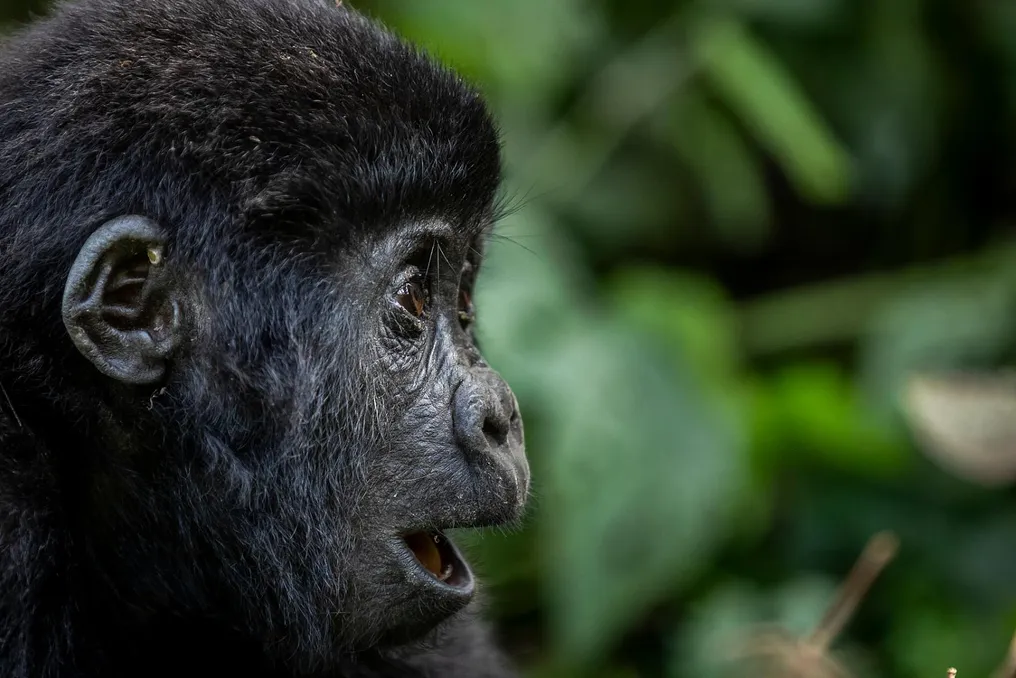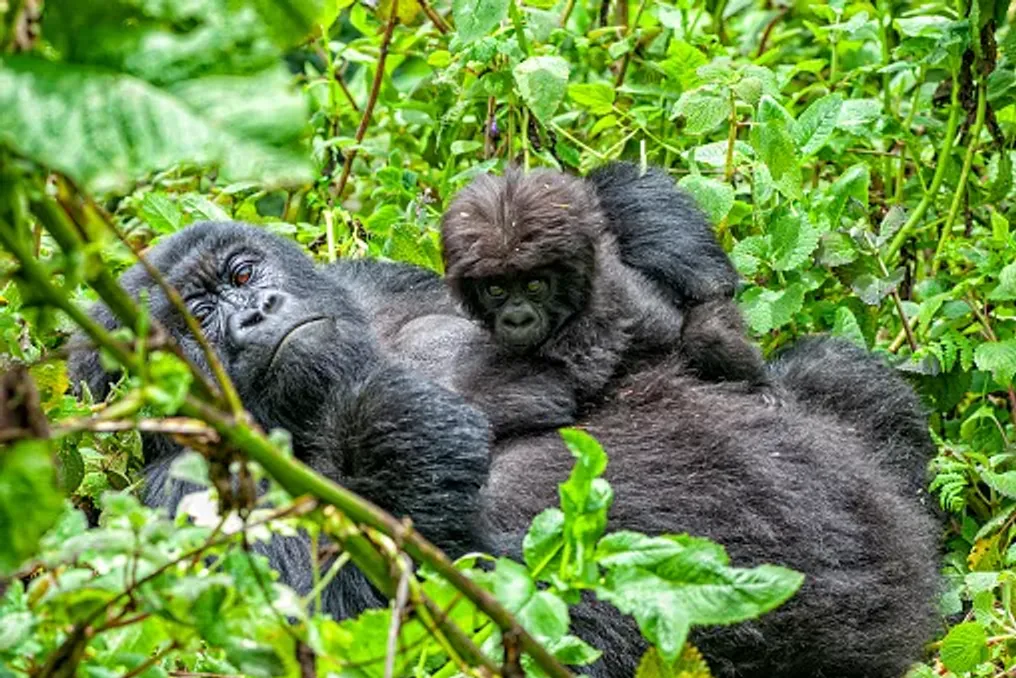
A gorilla rescued from illegal wildlife trade as an orphan has achieved significant success in species conservation by giving birth in the wild in the Democratic Republic of Congo (DRC).
The animal, named Lulingu, was saved in 2016 when it was only 18 months old, after being taken from the wild and sold on the black market. It was subsequently under the care of the GRACE Gorillas reserve, which is the world's only sanctuary dedicated to rescued Eastern Lowland Gorillas, also known as Grauer's gorillas.
According to People Magazine, Lulingu became the first of four females successfully reintroduced into the wild by GRACE who were able to give birth.
After being rescued, Lulingu received round-the-clock care at GRACE. She was later adopted into a surrogate gorilla family, where another gorilla named Pinga took on the maternal role. Lulingu grew up with three other females—Mapendo, Njingala, and Isangei—who were also removed from the illegal wildlife trade.
After years of preparation, these four gorillas were moved to Virunga National Park at the end of 2024 as part of a large-scale rewilding project. They were released on Mount Tshiaberimu, a remote mountainous area of the park where a small and isolated population of Eastern Lowland Gorillas resides.
These females became among the first Eastern Lowland Gorillas from GRACE successfully returned to the wild environment. Since their release, a monitoring team has been closely observing the gorillas, tracking their behavior, feeding habits, and health status while allowing them to adapt to the new environment.
Additional Information
Lulingu gave birth to her first infant on May 21, 2026. Conservation groups waited several months before announcing the birth so that the mother and infant could bond without interference.
Mwas, a wild silverback male living on Mount Tshiaberimu, is presumed to be the father of the infant. His involvement is particularly significant as it indicates that Lulingu has successfully integrated into a wild family group.
Monitoring teams reported seeing Lulingu feed, cuddle, and play with her infant. The infant also attracted the attention of another young gorilla in the group.
Benoît Ishaba, head of gorilla monitoring on Mount Tshiaberimu, stated in a statement released by Re:wild: "Lulingu is doing excellently with caring for her infant and is a central figure in the family group."
Eastern Lowland Gorillas are classified as critically endangered, and the population on Mount Tshiaberimu faces specific conservation challenges. Before the four rescued females were introduced, only eight gorillas lived in the isolated population. Conservation modeling showed a high probability that the group could become extinct within 50 years without the addition of reproductive females. The reintroduction increased the population size to 12.
Thus, Lulingu's birth is more than just a species conservation success story. It demonstrates that a gorilla rescued from trade and raised in human care is capable of adapting to life in the wild, integrating with wild gorillas, and contributing to the future of its species.
The monitoring team will continue to closely observe Lulingu and her infant as they settle into the forest.
Marie Brown, head of the Re's Africa program, noted: "Every healthy infant represents not just a population increase—it is a sign of resilience, recovery, and what is possible through long-term care, collaboration, and targeted protection."
The three other reintroduced females are also under observation, and conservation workers hope that Lulingu's birth may mark the beginning of a new generation for this small population of Eastern Lowland Gorillas.