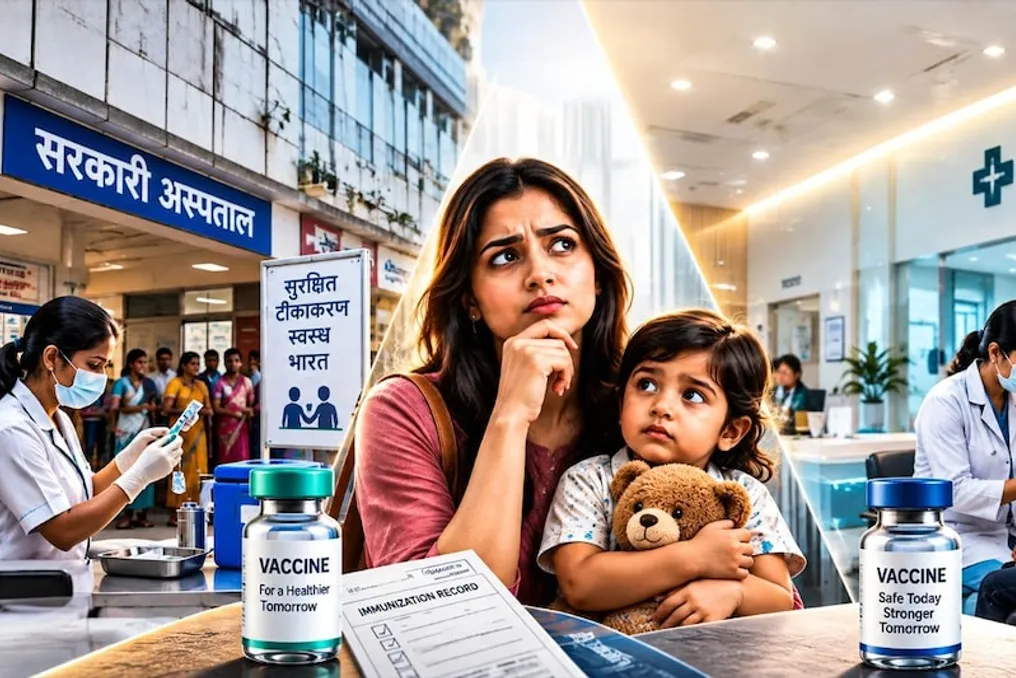
After the birth of a child, parents often face the question of whether to get vaccinated at a state hospital or a private one. In private medical institutions, doctors sometimes recommend vaccines that are unavailable in state clinics, leading people to assume that services in state institutions are substandard. On the other hand, people who are not facing financial difficulties prefer to undergo vaccination in the private sector, believing that state vaccines may be of poor quality. However, specialists have clarified whether this is true and advised on which type of institution is best for vaccinating a child.
First, let's look at state vaccination. The Universal Immunisation Programme (UIP) of India is a large-scale free vaccination program. Under this program, all necessary vaccinations are provided free of charge to children and pregnant women. These include vaccines such as BCG, polio, hepatitis B, pentavalent, rotavirus, PCV, IPV, MR, and DPT. In regions with a high risk of disease, the Japanese encephalitis (JE) vaccine may also be administered. State hospitals ensure the administration of all vital vaccines capable of protecting against serious future diseases and guarantee that vaccines are stored according to all established parameters, maintaining their safety.
Dr. L.H. Ghotechkar, Medical Superintendent of Lady Harding Medical College, commented on this matter. He explained that in addition to the national immunization schedule, doctors in private clinics offer supplementary vaccines. These additional preparations include vaccines against hepatitis A, influenza, conjugate vaccine, and chickenpox, which are not included in the state stock and are only available in the private sector. The government did not include vaccines for influenza, hepatitis A, and chickenpox in the UIP schedule due to their high cost, as the state aims to provide protection to the largest number of people, thus these vaccines were assigned lower priority. Nevertheless, these vaccinations are extremely necessary for individuals at high risk.
Private clinics also use vaccines that are administered without needles. Professor Dr. Jugal Kishor, Director of Community Medicine Department at Safdarjung Hospital, commented on the choice of vaccination location. He emphasized that all necessary vaccinations are conducted in state hospitals, making vaccination in state institutions advantageous because its cost does not fall on the patient. However, if a doctor recommends a vaccine not included in the universal program, it can be administered in a private clinic. Some private hospitals offer so-called painless vaccines, which use modern and painless methods, something not available in state institutions, which is one of the reasons why some people choose the private sector. When deciding on vaccination, one should consult a doctor regarding the benefits, necessity, appropriate age, and cost.
It is important to remember that the entire vaccination course must be completed in one place. One should avoid a situation where some vaccinations are done in a state clinic and another part in a private one. This is because the manufacturers and composition of vaccines may differ in different places, so it is preferable to use the same type of vaccine throughout the entire course.