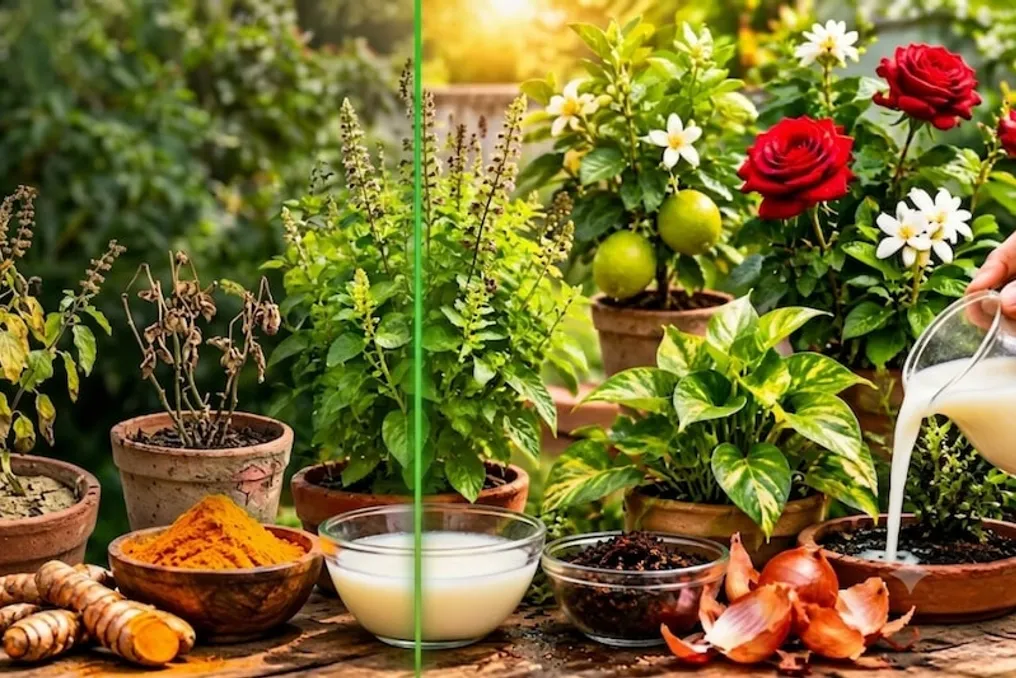
Caring for plants indoors may seem like a simple task, but maintaining their constant greenery and abundant flowering can be a difficult challenge. Although some people hire gardeners to care for their plants, many prefer to do it themselves. Various problems can arise: basil leaves turn yellow, lemon flowers drop immediately after blooming, and mogora and roses produce many leaves but do not form buds. Additionally, the growth of monstera may slow down, and new leaves become smaller compared to previous ones.
If you regularly spend money on expensive fertilizers, growth stimulants, or other gardening products to fix these minor issues, it is not necessary. Many items you have at home in the kitchen can be useful for plant care. However, it is crucial to use them correctly and in the right proportions. If your plants are growing poorly or having trouble flowering, you can try applying some simple homemade care methods that will not require financial expenditure.
How to help if basil leaves are turning yellow?
If your basil starts turning yellow instead of staying green, do not panic. First, check if there is an excessive flower stalk on the plant. If so, you need to remove dry or weak leaves. You also need to regularly prune the flower stalks so that the plant's energy is directed towards developing new leaves. There is also a folk method—adding a small amount of turmeric to the soil. Nevertheless, turmeric is not a guaranteed cure for basil problems; sufficient light, proper watering, and preventing waterlogging are necessary for good growth.
What to do if lemon flowers drop immediately after blooming?
Lemon flowering is a positive sign, but if the flowers fall to the ground immediately after opening, it can hinder fruit production. In this situation, it is important to maintain a balance of moisture and nutrition in the plant's soil. To solve this problem, it is recommended to use a method where diluted sour buttermilk (chaach) is watered at the base of the plant. When using this method, the buttermilk should be thoroughly diluted and not used too often or in large quantities. The lemon tree also requires a lot of sunlight and well-drained soil.
How to revive small and wilted monstera leaves?
If the monstera leaves look smaller and paler than before, the cause may be insufficient light, improper watering regime, or lack of space in the pot for growing roots. Some advise spraying the leaves with a solution of one glass of water and 1-2 drops of unpasteurized milk. However, leaving milk on the leaves in large amounts is undesirable, as it can cause stickiness, unpleasant odor, or fungal diseases. Therefore, it is more important to provide the plant with good light, protecting it from intense direct sun, and maintaining the correct watering schedule.
How to stimulate flowering in mogora and roses?
If you have mogora and rose plants, but they only produce leaves for a long time without flowering, you should pay attention to lighting conditions, fertilization, and pruning. Within home gardening, you can use the method of adding dried and sifted tea dregs to the soil in small amounts, as well as watering with water prepared from onion peels. The tea dregs should be used without adding milk or sugar, while avoiding excessive application to the soil. Water from onion peels must also be freshly prepared and diluted, using it in limited volume. It is important to understand that homemade fertilizers alone do not guarantee flowering; the plant also needs good light and adequate nutrition.
Important reminder before using any plant treatments
It is important to remember that the effect of any home remedy may differ for different plants. Often, the real reasons for yellowing leaves, flower drop, or slowed growth lie in overwatering, poor drainage, lack of light, pests, or nutrient deficiencies in the soil. Therefore, before applying anything to the roots or leaves, use the remedy in small doses and carefully observe the plant's reaction.