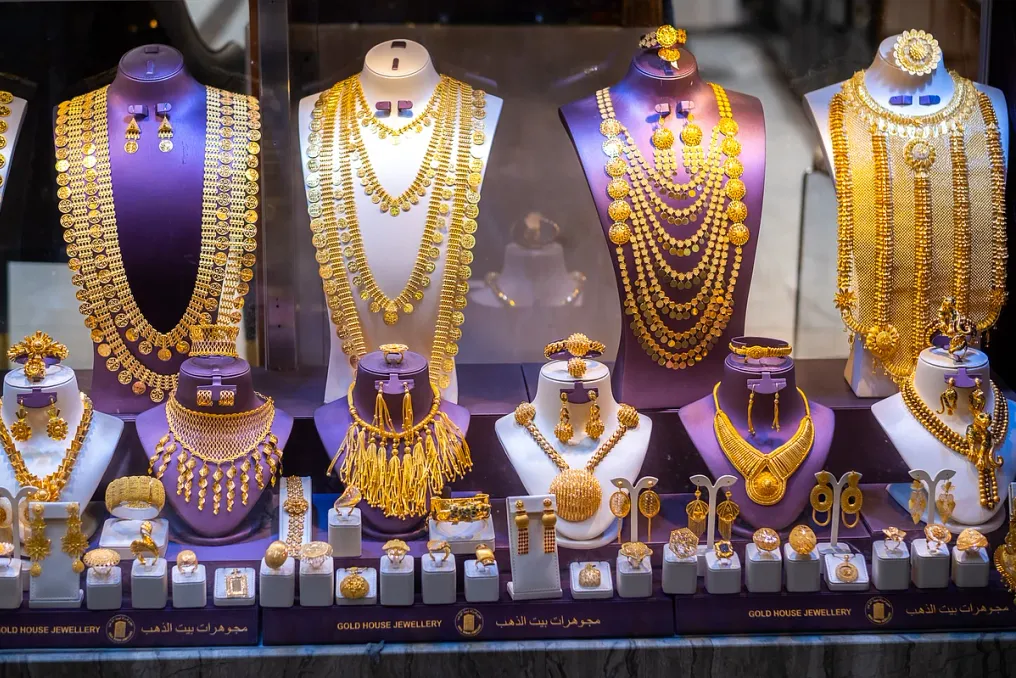
On Tuesday morning, gold prices in Dubai showed no changes as rising oil prices combined with expectations of a US Federal Reserve interest rate hike this week put pressure on the precious metal.
At the opening of trading on Tuesday, a 24-karat gold bar was priced at 518.75 dirhams per gram. Other varieties—22K, 21K, 18K, and 14K—traded at prices of 480.50, 460.50, 394.75, and 308 dirhams, respectively.
The global spot price for gold stood at $4304 per ounce, declining by 0.18 percent. Silver traded at $63.26 per ounce, showing a drop of 0.62 percent.
Financial analyst and Investment Director at Century Financial, Vijay Valecha, attributed the rise in oil prices to the postponement of a planned meeting between Iran and several Persian Gulf countries aimed at establishing a temporary shipping corridor through the Strait of Hormuz. He also noted that the shutdown of the Saudi 'East-West' pipeline over the weekend intensified this pressure.
Valecha explained that the crisis in the Middle East caused an inflationary impulse in the global economy, triggering a rise in crude oil, natural gas, and petroleum products, including diesel fuel. He added that even before the pipeline attack, oil production from the kingdom was under pressure. Recently, Riyadh informed OPEC that its crude oil production last month reached its lowest level since 1990.
Following US data indicating an acceleration in price growth in August, the Federal Reserve is widely expected to raise rates this week, which will negatively affect gold prices. Nevertheless, from a technical standpoint, gold is forming a triangular pattern on the hourly chart. It should be noted that the metal faces technical weakness in the support zone of $4310–$4325. A break below the $4310 level could trigger a bearish move towards $4225, while a rebound from this level could support a bullish sentiment.