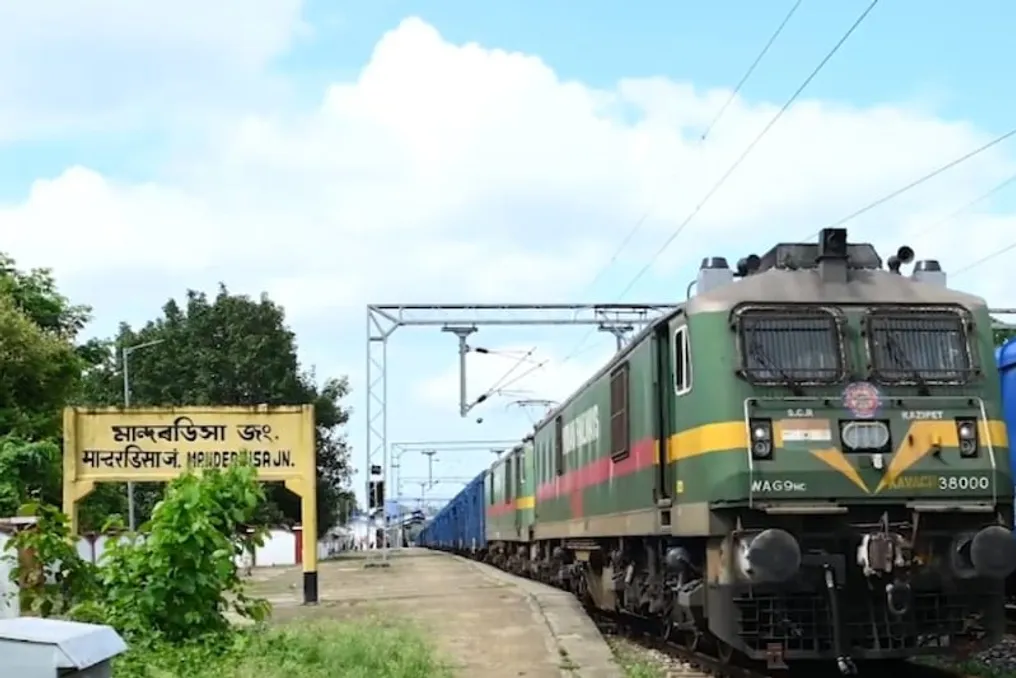
Assam's tracks fully electrified: Transport Minister reports success on challenging section
Read more
Aaj Tak
www.aajtak.in

Assam's tracks fully electrified: Transport Minister reports success on challenging section

Indian Railways has achieved a significant milestone in the state of Assam, as reported by Transport Minister Ashwini Vaishnaw via social media. He confirmed that the entire railway network of Assam is now fully electrified. The completion of work on the extremely difficult Lumding-Badarpur mountain branch has brought 100% success.

The total length of the railway track in Assam is 2589 kilometers, and this entire broad-gauge route has been fully electrified. Among these is the complex 'Lumding-Badarpur Hill Section' of 169 kilometers in the Dima Hasao district, which was completed after years of effort. Minister Ashwini Vaishnaw shared this news on the social network Twitter (now X).

In his message, he wrote that the railway network of Assam has become fully electric. He noted that the completion of the electrification of the 169-kilometer Lumding-Badarpur mountain section allowed the state to complete its journey toward railway electrification.

In addition to the social media post, the minister announced the full electrification of the entire railway network of Assam, which the Chief Minister of Assam called a major achievement for the state. Thanks to this, train movement in the region has become completely ecological and environmentally friendly.

The Chief Minister emphasized that this achievement was realized in just 12 years, especially in a state where most of the territory did not even have broad-gauge lines until 2014. CM Himanta Biswa Sarma highly praised this progress made under the leadership of Prime Minister Narendra Modi, noting that the modernization of the railway lines eliminated the need to replace locomotives, reduced diesel fuel consumption, improved scheduling, and decreased costs.

Furthermore, he pointed out that the electrification of the entire railway network of Assam increased the capacity of the route connecting the Barak Valley with the rest of India, thereby paving the way for modern trains such as Vande Bharat.

Similar stories

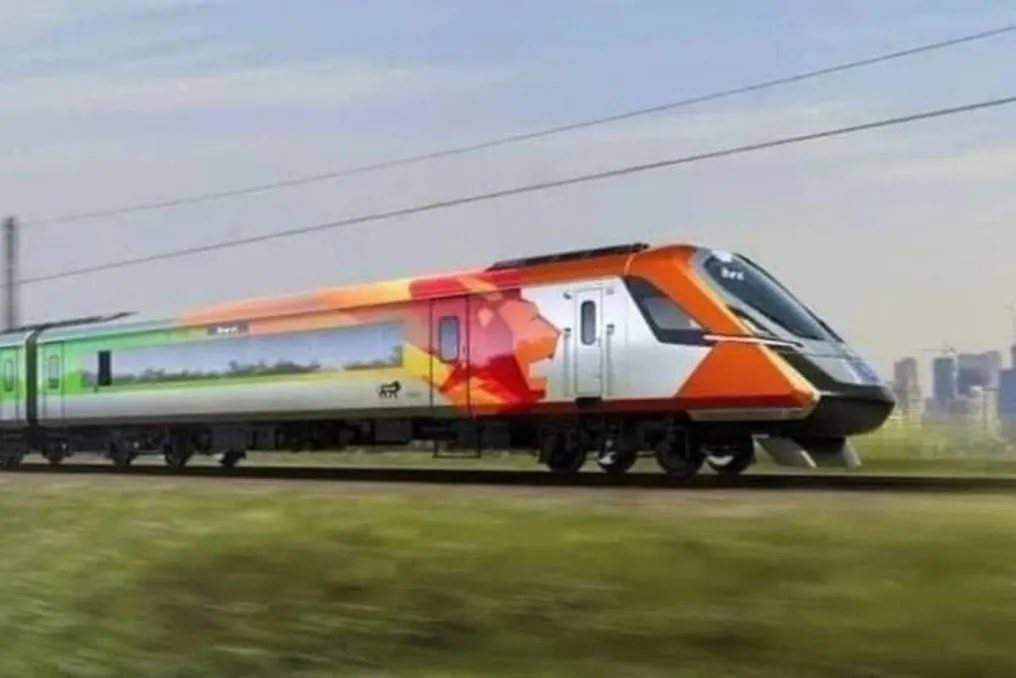
Vande Bharat Sleeper high-speed train tested at 160 km/h with Kavach system check
Read more
www.aajtak.in

Vande Bharat Sleeper high-speed train tested at 160 km/h with Kavach system check

During journeys, passengers usually pay attention to speed, schedule, and amenities; however, the faster the train moves, the more serious the safety issue becomes. This is especially relevant in conditions where the railway is preparing to expand its network of semi-high-speed and high-speed trains in the country. Therefore, it is crucial not only to accelerate train movement but also to ensure that the safety system operates quickly and reliably in case of danger.

As part of this process, Indian Railways has taken an important step. On the Hazrat Nizamuddin – Palwal route, a 16-coach Vande Bharat Sleeper train was run at a speed of 160 kilometers per hour to test the 'Kavach' safety system. During these tests, special attention was paid to the communication system between the train and the station.

The North Western Railway conducted this high-speed test between Hazrat Nizamuddin and Palwal. For the first time on this section, the 16-coach Vande Bharat Sleeper train was launched at a speed of 160 kilometers per hour. According to the report, the train departed from Hazrat Nizamuddin on September 9th around 13:38 and arrived at Palwal at 14:21. After a stop of approximately 31 minutes, the train departed again at 14:52 and returned to Hazrat Nizamuddin at 15:32.

Approximately 50 kilometers were covered between the two stations during this movement. However, the train did not move continuously at 160 kilometers per hour across the entire route. Construction work was underway on the Faridabad main line, and both main lines were closed. As a result, the train traveled on a loop line, and its speed had to be reduced when passing through stations.

The purpose of this high-speed run was not only to test the speed of the Vande Bharat Sleeper. The Kavach communication system was also tested during the trials. According to the report, communication between the driver and the station remained uninterrupted throughout the journey. Railway representatives stated that no communication failures were observed. This system is considered critically important when operating trains at high speeds.

Kavach is an indigenous automatic train protection system of Indian Railways. Its function is to provide the driver with necessary warnings during movement and enhance the level of safety in case of a threat. If necessary, this system can automatically brake the train. The goal of Kavach is to minimize risks associated with signal violations, train collisions, and human error. In January, the Ministry of Railways announced that the Kavach complex developed in the country has been installed in the Vande Bharat Sleeper train.

According to officials, the high-speed check was successful. Previously, about 30 such tests were conducted on the New Delhi – Palwal route. Now, Indian Railways is working on a large-scale expansion of the Kavach system across its network. This is important for the railway because the number of high-speed trains is planned to increase in the future. Under such conditions, simply increasing the train's speed is not enough; the safety technology must be equally reliable. This Vande Bharat Sleeper test is considered an important step in this direction.

Bandra Bharat train's braking system generates electricity during deceleration
Read more
www.aajtak.in

Bandra Bharat train's braking system generates electricity during deceleration

The Bandra Bharat train is being actively integrated into India's railway network and operates on most routes across the country. Many passengers have likely traveled on the Bandra Bharat express or heard about its luxurious amenities and design, but they may be unaware of a specific feature of its braking system.

The Bandra Bharat braking system functions similarly to an automobile's, which distinguishes it from standard systems used in trains. This system employs electro-pneumatic disc brakes installed near the wheels rather than directly on them.

The operation of the braking system is transmitted via electricity, ensuring a high response speed and immediate effect when the brake is applied. This system is comparable to how disc and drum brakes work in cars, making the Bandra Bharat train safer compared to other trains.

The Bandra Bharat train features a special system that allows the train to stop easily in case of an emergency. It integrates an Emergency Braking Distance (EBD) system, similar to those used in automobiles. This system is capable of safely stopping a high-speed train in an emergency. Testing of this system was completed in August, and it guarantees a smooth stop without any damage; however, it has not yet been implemented in passenger trains.

When the train is moving at high speed and braking is activated, the kinetic energy, which is usually lost in conventional brakes, can be converted in the Bandra Bharat. During braking, the electric motor can operate as a generator. The train's wheels rotate this motor, resulting in the generation of electricity. This energy can be fed back into the railway's electrical system or used as needed by the system.

Nevertheless, this does not mean that the full amount of energy is recovered with every braking event. Some energy is lost due to wear and tear of the motor, electronics, and other components. Estimates suggest that this technology can generate up to 30 percent of the electricity.

Popular