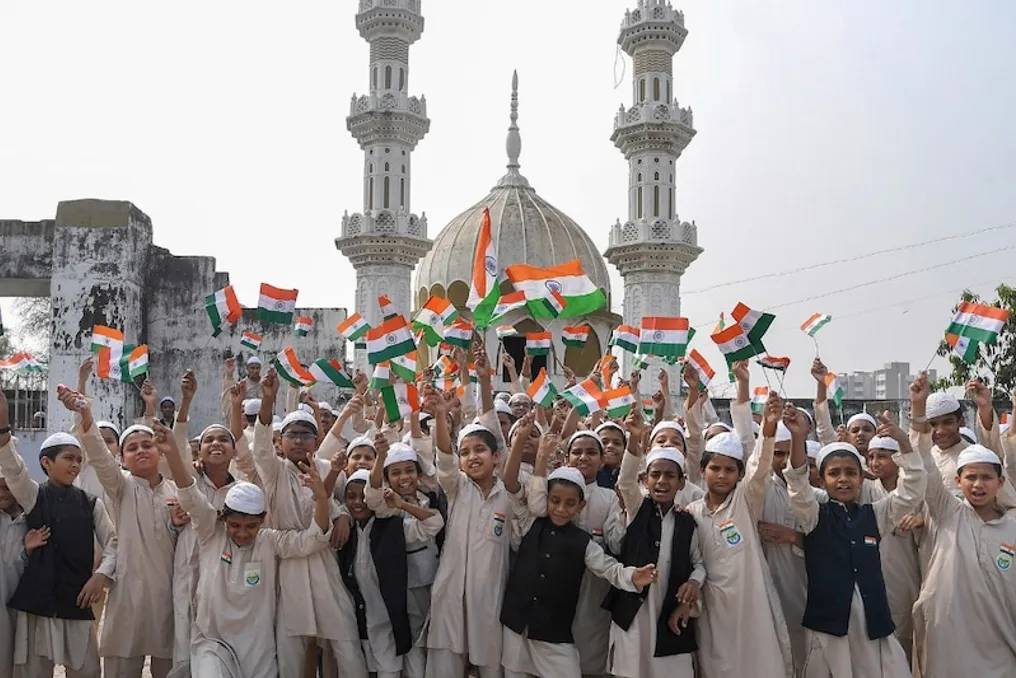
A complete picture of the process for registering and recognizing madrasas in India has been presented. Education in madrasas is predominantly under the purview of state government bodies, and each madrasa must first register as a legal entity.
The state of Uttar Pradesh has the most developed madrasa system. In November 2024, the Supreme Court ruled that the state's madrasa education law largely complies with legal norms. Furthermore, in January 2026, the Allahabad High Court clarified that madrasas cannot be closed solely on the basis of lacking accreditation.
For any madrasa to function, granting it a legal form is paramount. There are three ways to do this: registration as a society, creation of a trust, or establishment of a Section 8 company. If this procedure is not completed, the madrasa receives neither legal recognition, nor the ability to open a bank account, nor access to government programs.
The accreditation process is highlighted separately. In most states, there are specialized bodies for this purpose, such as the Madrasa Education Council or similar structures. Uttar Pradesh operates under the Madrasa Education Council Act of 2004, which was approved by the Supreme Court last November.
The court established that the state government has the right to monitor the level of education, curriculum, and examinations in madrasas. However, it was deemed unconstitutional to grant university-level accreditation to diplomas such as Kamil and Fazil, which was declared invalid.
Madrasas can operate without official recognition. In January of this year, the Lucknow Bench of the High Court stated that there are no rules allowing madrasas to be closed exclusively due to a lack of accreditation. Nevertheless, such institutions do not receive government funding, are not entitled to participate in council exams, and their diplomas are not recognized by the state.
In Uttar Pradesh, since 2017, it has been mandatory to register every accredited madrasa through a special madrasa portal. This promotes transparency and allows for the integration of modern subjects into madrasas, such as mathematics, science, and English. Additionally, central government programs, such as SPEMM, are only available to accredited madrasas.
The situation varies in other states. In Uttarakhand, the old madrasa council was abolished and a new body, the Minority Affairs Department, was created, which requires linkage with the state education council. In West Bengal, a mandatory requirement for registration and inspection was recently proposed. In many states, the number of so-called 'hardi-madrasas' without accreditation is quite large.
Overall, the management of madrasas is a fundamental right under Article 30 of the Constitution; however, the state may establish rules to maintain educational standards. If madrasas require government assistance, participation in exams, and securing the future of students, then registration and accreditation become necessary steps.